
A center split changes how your whole face reads. Middle part hairstyles draw attention to the eyes, balance the forehead, and work on straight, wavy, or curly hair. Some need only a comb, while others need a barber’s help every few weeks.
Face shape matters more than most guys expect. Round and square faces usually need some height or texture around the part, while oval and long faces can handle flatter, wider shapes. Choosing between middle part hairstyles gets easier once you know how your hair naturally falls.
Your daily routine counts too. A student who rolls out of bed needs something different from an office worker who blow-dries every morning. This guide sorts middle part hairstyles by length, so you can match a cut to your hair and the time you actually have.
What Are the Best Middle Part Hairstyles for Men?
They are cuts where the hair splits down the center and falls evenly to both sides. The strongest ones follow your natural growth pattern, so the part sits without a fight. The styles below are grouped by top length, from short and sharp to long and loose.
SHORT STYLES (4–5 Inches on Top)
Short middle parts keep 4–5 inches on top, which is enough to split and fall but still easy to manage. They suit straight and slightly wavy hair and dry in minutes. Expect cleaner sides and a tidier outline than in the longer groups.
1. Short Curtain Bangs

Short curtain bangs are a cropped, center-split fringe that stops right at the eyebrows. The sides stay tight while the front falls into two small panels, which is much shorter than a full curtain.
Style Snapshot: Boyish and neat, with a soft brow-skimming fringe.
Perfect Match: Oval or long faces with straight hair; the short fringe visually shortens a tall forehead.
What to Ask For: Scissor-cut the fringe to eyebrow length, split it in the center, and taper the sides with a #2 guard.
Styling Level: Easy, since it needs only a quick dry and a comb.
Care & Styling: Blow-dry the fringe forward with your fingers, then set it with a pea-sized dab of matte clay.
Best Tip: Ask the barber to cut the fringe dry so you can see where it really lands.
2. Middle Part Fade
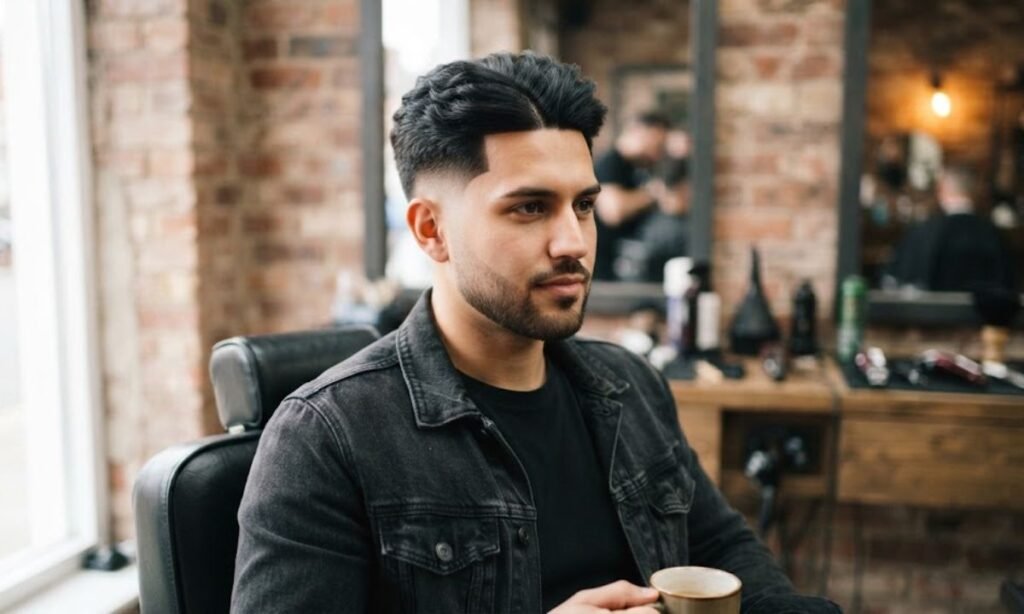
This cut pairs a clean center-split top with a skin fade that climbs from the neckline to the temples. The sharp contrast between bare sides and soft top sets it apart from blended taper cuts.
Style Snapshot: Sharp and clean, with strong contrast.
Perfect Match: Thick hair that puffs out at the sides, since the fade removes that bulk and helps control heavy sides.
What to Ask For: A mid skin fade with 4–5 inches left on top and the part marked lightly with a razor.
Styling Level: Moderate, because the fade needs a refresh every 2–3 weeks.
Care & Styling: Work a light pomade through damp hair and comb it outward from the part.
Best Tip: Book a quick cleanup between full cuts so the fade never grows out blurry.
3. Blunt Cut Middle Part

Here the hair is cut straight across at one length, so the ends look thick and solid instead of feathered. The center part drops the hair into two smooth, heavy panels around the ears.
Style Snapshot: Clean and heavy, with a bowl-like edge.
Perfect Match: Fine, straight hair, since the blunt ends make thin strands look fuller.
What to Ask For: A one-length cut with no layers, a blunt baseline at ear level, and a short taper at the nape.
Styling Level: Moderate, because the straight line loses its shape within five weeks.
Care & Styling: Spray a light volumizer at the roots and dry with a flat brush.
Best Tip: Skip home trims, because a crooked baseline shows immediately on this cut.
4. E-Boy Middle Part

This look uses long, face-hugging pieces that run past the cheekbones, usually with choppy ends. It relies on dramatic front strands and often a darker or dyed color rather than a tidy shape.
Style Snapshot: Edgy, moody, and slightly grungy.
Perfect Match: Slim or oval faces with straight to wavy hair, as the long front pieces soften sharp jawlines.
What to Ask For: Cheekbone-length front sections, light layers, and razor-textured ends.
Styling Level: High Maintenance, thanks to daily shaping and color upkeep.
Care & Styling: Flat-iron the front pieces lightly and finish with a texture spray.
Best Tip: Choose a semi-permanent dye over bleach to keep the ends from snapping.
MEDIUM STYLES (5–7 Inches on Top)
With 5–7 inches on top, the hair covers the forehead and starts to frame the cheekbones. This range leaves room for texture, layers, and a soft curve at the part. It works well on wavy and thick hair and needs a trim every 6 to 8 weeks.
5. Classic Curtains

Classic curtains split in the center and fall to each side in smooth arcs that end around the eyebrows or ears. It’s the baseline for most center-split cuts, with less texture and more length than the styles above.
Style Snapshot: Relaxed, retro, and timeless.
Perfect Match: Straight or wavy hair, and it’s a good option for growing hair longer because every stage looks intentional.
What to Ask For: About 5 inches on top, layers connected to the sides with scissors, and a light taper around the ears.
Styling Level: Easy, since it mostly falls into place on its own.
Care & Styling: Towel-dry and comb the part with a wide-tooth comb while the hair is damp.
Best Tip: Blow-dry the hair away from the part first, then let it drop back into place.
6. Textured Middle Part

Choppy layers and point-cut ends give the top a broken, piecey look. Unlike smooth curtains, the part is intentionally loose, so strands overlap instead of lying flat.
Style Snapshot: Rough, casual, and matte.
Perfect Match: Fine or oily hair, since the texture hides greasy roots between washes.
What to Ask For: Point-cut layers through the top at 5–6 inches, with a soft taper on the sides.
Styling Level: Easy, because a bit of mess is the whole point.
Care & Styling: Rub sea salt spray into damp hair, then dry with a diffuser.
Best Tip: Keep the heat low so the layers hold their shape instead of flattening out.
7. Korean Middle Part

This is a soft, airy center split where the fringe lifts slightly at the roots and curves inward toward the cheeks. The sides stay short and clean, and the top is often blow-dried or lightly permed for gentle bends.
Style Snapshot: Soft, light, and neatly fluffy.
Perfect Match: Straight, thick hair that tends to lie flat, and oval or round faces that gain a face-framing curve.
What to Ask For: A rounded top of 5–6 inches, thinned ends, and short, tapered sides.
Styling Level: Moderate, since it needs a blow-dry to get lift.
Care & Styling: Use a round brush to bend the ends inward and lock them with light hairspray.
Best Tip: Dry the roots first with quick side-to-side motions to lift the part.
8. Middle Part with Taper
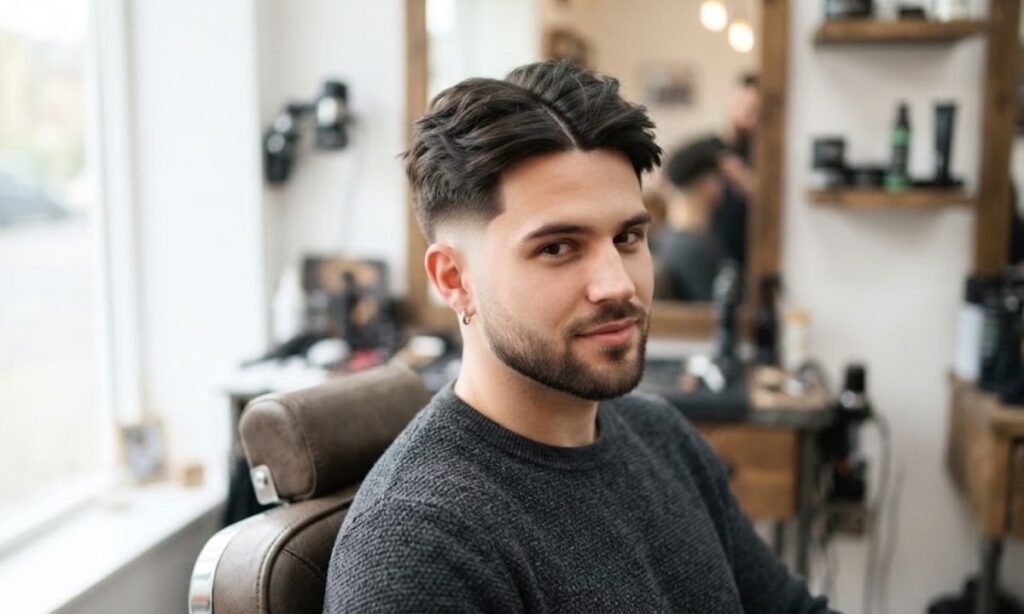
The top stays long enough to split, while the sides and neck shorten gradually without ever reaching skin. It looks more natural than a fade and grows out more gently.
Style Snapshot: Polished and office-ready.
Perfect Match: Professionals who want a low-drama grow-out, on straight to wavy hair.
What to Ask For: A scissor-over-comb taper on the sides and back, with about 6 inches on top.
Styling Level: Easy, because it grows out cleanly and only needs a trim every 6–8 weeks.
Care & Styling: Comb a light styling cream through damp hair and set the part with a comb.
Best Tip: Ask for soft edges around the ears, since squared-off edges look messy sooner.
9. Messy Curtains

Messy curtains keep the center split but drop the neat edges, so pieces fall unevenly across the forehead and ears. The result looks slept-in, with some strands tucked behind an ear and others left loose.
Style Snapshot: Loose, carefree, and slept-in.
Perfect Match: Naturally wavy or thick hair, and it works with low-maintenance routines where no exact shape is needed.
What to Ask For: Long layers through the crown and front, no sharp lines, and soft, uneven ends near 6 inches.
Styling Level: Easy, with no precise shape to keep up.
Care & Styling: Air-dry with a little sea salt spray and skip the comb.
Best Tip: Finger-part the hair rather than combing it so the split looks natural.
10. Middle Part Undercut

The sides and back are cut short or shaved, while the top stays long and splits at the center. A disconnected line separates the two lengths, which is what sets it apart from tapered versions.
Style Snapshot: Bold and contrasted, with a hard edge.
Perfect Match: Square or oval faces and anyone who wants a cooler head in hot weather, since the shaved sides shed heat.
What to Ask For: A disconnected undercut with a #1 or #2 guards on the sides and 6 inches left on top.
Styling Level: High Maintenance, because the sides need clipper touch-ups every 2–3 weeks.
Care & Styling: Use a strong-hold clay to keep the long top from flopping over the shaved sides.
Best Tip: Keep the disconnection at temple height so the shape doesn’t turn into a bowl.
11. Two Block Middle Part

A two block cut separates the head into a longer top section and a much shorter lower section, usually without a fade. The center part lets the top block fall over the ears in a layered shape.
Style Snapshot: Neat on the bottom, layered on top.
Perfect Match: Straight, thick hair and oval faces; the shorter lower block makes the top look longer than it is.
What to Ask For: A two block cut with the lower block scissor-cut short and 7 inches on top with light layers.
Styling Level: Moderate, since the two sections need shaping to stay separate.
Care & Styling: Use a light wax to hold the top block in place over the lower block.
Best Tip: Ask for the top to be thinned with texturizing shears so it doesn’t puff out over the ears.
LONG STYLES (7+ Inches on Top)
At 7 inches and beyond, the hair reaches the jaw or lower and moves more freely. Longer lengths show off natural waves and curls but need more washing and detangling. Regular trims keep the ends healthy and the shape from turning shapeless.
12. Middle Part Flow Curtains

Flow curtains are long, layered lengths that sweep past the ears and move as you walk. The hair splits down the center and falls without weight at the ends, with none of the tension of a tight style.
Style Snapshot: Flowing, wavy, and easygoing.
Perfect Match: Wavy hair on oval or square faces, and it can be styled with or without heat.
What to Ask For: 8–10 inches with long layers throughout and a trim of any split ends.
Styling Level: Moderate, because long hair needs regular washing and conditioning.
Care & Styling: Use a sulfate-free shampoo and a leave-in conditioner.
Best Tip: Detangle from the ends upward while the hair is wet to avoid breakage.
13. Curly Middle Part

Curls form two soft clusters on either side of a center line, with a rounded shape on top. Length is kept around 7 inches so curls have room to spring instead of shrinking up.
Style Snapshot: Springy, voluminous, and defined.
Perfect Match: Loose to tight curls and round or heart-shaped faces, and it works best with natural texture.
What to Ask For: A curl-aware cut done on dry or damp hair, with rounded layers and tapered sides.
Styling Level: Moderate, since it needs daily curl products.
Care & Styling: Work curl cream into soaking wet hair and dry it with a diffuser.
Best Tip: Set the part while wet and then leave it alone, since brushing dry curls creates frizz.
14. Middle Part Perm

A perm adds a loose or tight wave that keeps a center part lifted and springy. It’s a way to give straight hair to the body it doesn’t have naturally.
Style Snapshot: Bouncy and full of movement.
Perfect Match: Straight, fine hair that falls flat, as the perm adds volume to fine hair.
What to Ask For: A soft body wave or digital perm with 7–8 inches of length and medium rods.
Styling Level: High Maintenance, because a perm adds cost, chemical care, and regular touch-ups.
Care & Styling: Switch to a sulfate-free shampoo and scrunch in curl cream while damp.
Best Tip: Wait 48 hours after the perm before washing your hair.
SPECIALTY STYLES
These styles bend the usual rules with fades, braids, layers, or extra length in the back. They suit guys who want a center part that stands out from the standard curtain. Some need a skilled barber, so bring reference photos.
15. Wolf Cut Middle Part

A wolf cut combines shaggy layers on top with longer lengths at the back. The crown is short and choppy, and the ends thin out into a jagged outline that the center part frames in front.
Style Snapshot: Shaggy, wild, and textured.
Perfect Match: Wavy or thick hair on round or square faces, as the front layers create a softer, face-framing effect.
What to Ask For: Shag layers with a short crown, longer back, and face-framing pieces at the cheekbones.
Styling Level: Moderate, since the layers need texture products to look intentional.
Care & Styling: Scrunch in a texturizing spray and avoid over-brushing.
Best Tip: Ask for point cutting so the bottom doesn’t look heavy.
16. Slick Back Middle Part
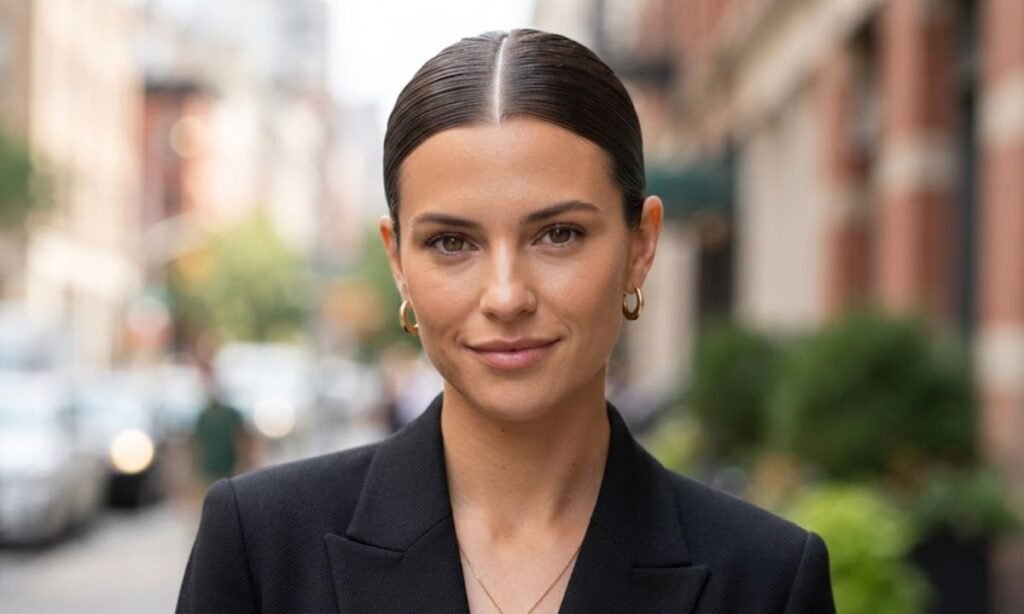
The hair is combed back and outward from a center line, forming a V-shaped hairline instead of a dropped curtain. The wet-look finish and visible part separate it from a standard slick back.
Style Snapshot: Sleek, polished, and formal.
Perfect Match: Straight hair and higher hairlines, and it suits formal settings such as weddings or interviews.
What to Ask For: 5–6 inches on top with length at the back, short tapered sides, and the part lightly marked.
Styling Level: Moderate, since it needs pomade and careful combing.
Care & Styling: Apply pomade to damp hair and comb it through with a fine-tooth comb.
Best Tip: Warm the pomade in your palms so it spreads evenly without clumping.
17. Side-Swept Middle Part
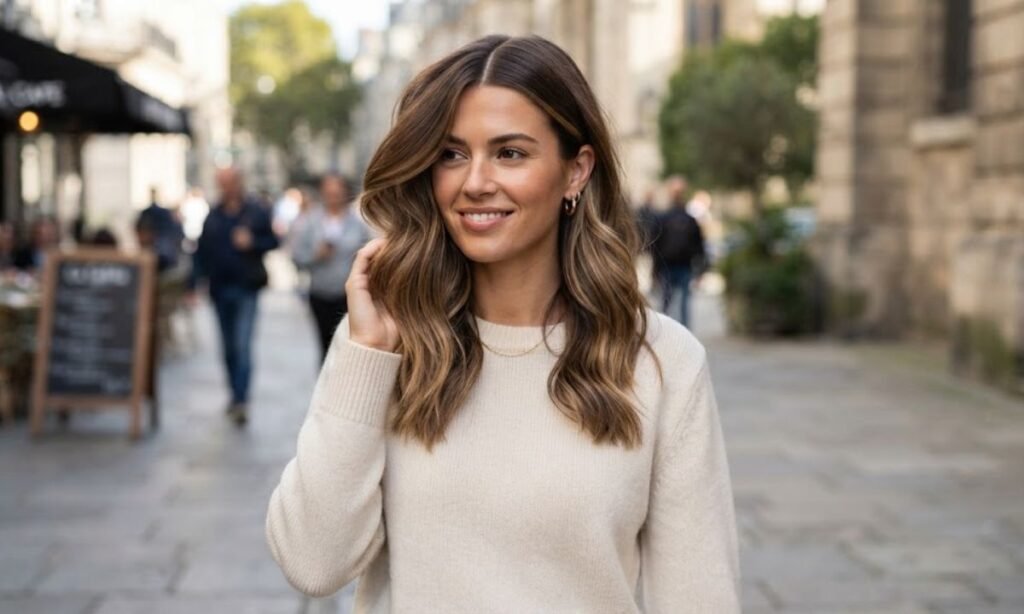
The hair splits at the center, but the strands sweep sideways across the forehead instead of dropping straight down. It reads as a hybrid of a side part and curtains, which makes it softer than a classic side part.
Style Snapshot: Soft, casual, and directional.
Perfect Match: Oval or diamond faces, and it helps tame a front cowlick by training the hair to lean one way.
What to Ask For: A longer front, angled layers, and a fringe cut to sweep across the forehead.
Styling Level: Easy, because a quick blow-dry sets the direction.
Care & Styling: Blow-dry the fringe sideways while damp and lock it with light spray.
Best Tip: Point the dryer along the direction you want the hair to lean as it dries.
18. Layered Middle Part

Several layers are cut through the top so hair stacks in steps from crown to ends. The center part sends those layers outward on each side, giving movement without extra length.
Style Snapshot: Airy and multi-dimensional.
Perfect Match: Thick or heavy hair on oval and long faces, as the layers remove weight so the hair can move.
What to Ask For: Long layers with graduated lengths from crown to ends, keeping about 6–7 inches.
Styling Level: Moderate, since layers need shaping at the ends.
Care & Styling: Use a lightweight leave-in conditioner and a loose comb-out.
Best Tip: Ask the barber to thin the mid-lengths only, not the roots.
19. Middle Part with Low Fade
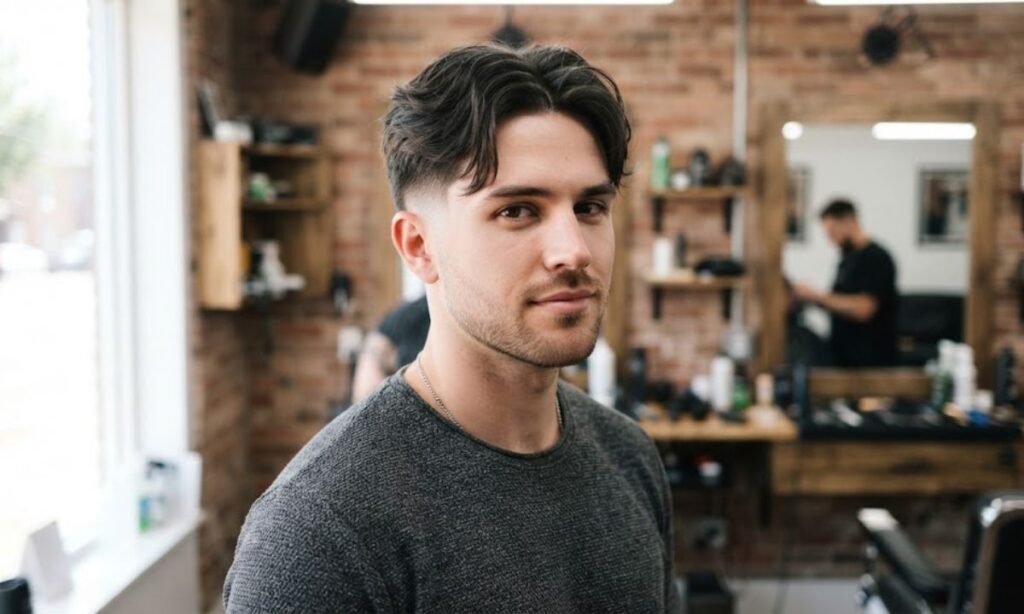
This version keeps the fade low, running just above the ears and around the neckline. It’s subtler than a standard fade and leaves more hair at the temples.
Style Snapshot: Clean and understated.
Perfect Match: Oval and square faces, and it fits professional dress codes and school rules.
What to Ask For: A low skin fade with 5–6 inches on top, blended into the length with scissors.
Styling Level: Moderate, because the fade needs a refresh every three weeks.
Care & Styling: Comb a light cream through the top and let it dry naturally.
Best Tip: Ask the barber to keep the temples soft, not squared off.
20. Middle Part Braids

Cornrows or box braids start from a straight center line and run to the back or sides. The part frames the face, and the Middle Part braids either sit close to the scalp or hang loose, depending on the pattern.
Style Snapshot: Structured, neat, and protective.
Perfect Match: Coyly or 4C hair, and it works as a protective style that helps retain length.
What to Ask For: A straight center parting with even braid sections and enough length, at least 3–4 inches.
Styling Level: High Maintenance, since installing takes hours and the scalp needs regular care.
Care & Styling: Apply a light oil to the scalp and wrap the braids in a silk scarf at night.
Best Tip: Avoid tight braiding at the hairline to prevent tension and breakage.
21. Middle Part Mullet
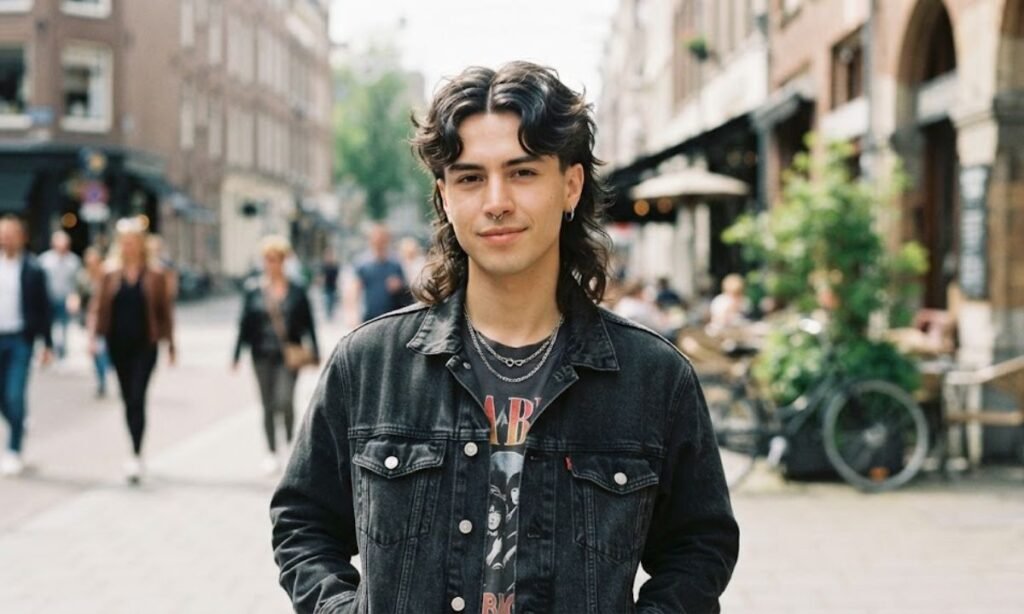
The mullet keeps the top and front shorter with a center split, while the back grows long into a tapered tail. Choppy layers run through the front and sides, and the back reaches the nape or beyond.
Style Snapshot: Bold and retro.
Perfect Match: Wavy or thick hair and confident, creative personalities, and it lets you grow length in the back while keeping the front short.
What to Ask For: Short, choppy layers on top, tapered sides, and 5–8 inches at the back with a curved tail.
Styling Level: Moderate, since the front and back need different products.
Care & Styling: Use sea salt spray on the top and a conditioner on the longer back.
Best Tip: Ask for a curved tail so the back doesn’t look boxy.
Which Middle Part Suits Your Face Shape?
Oval faces can wear almost any center part. Round faces do better with height and side texture, square faces with softer, layered fringe, and long faces with fuller sides so the length doesn’t look stretched. Most middle part hairstyles look best when the width of the part matches your jaw.
Which Hair Type Works Best with a Middle Part?
Straight hair splits cleanly but can fall flat, so it needs texture or a light perm. Wavy hair is the easiest match because it holds the part and adds movement on its own. Curly and coily hair need moisture and a rounded shape, while fine hair needs volume at the roots.
How Do You Maintain a Middle Part?
Comb the part while the hair is damp, then dry it in place with a blow dryer. Use a light cream, paste, or sea salt spray depending on the finish you want. Trim every 4 to 8 weeks and wash only as often as your scalp needs.
Frequently Asked Questions
Does a middle part work for receding hairlines?
Explains whether a center part can flatter or expose a receding hairline.
How long does it take to train hair for a middle part?
Covers the typical timeframe and process for retraining hair to sit in the middle part.
Can you get a middle part with a cowlick?
Addresses how to work around or manage a cowlick when trying a middle part.
Does the middle part make your face look wider?
Discusses the visual effect a middle part can have on face width.
What happens if you get a middle part with the wrong face shape?
Outlines the styling issues that can arise from choosing a middle part unsuited to your face shape.
Should you get a middle part if your hair parts naturally to one side?
Weighs whether it’s worth forcing a middle part against your hair’s natural growth pattern.
How long should hair be for a middle part?
About 4 to 5 inches on top is the minimum for a clean split. Anything shorter tends to stand up instead of falling to the sides.
Can guys with thin hair wear a middle part?
Yes, but keep it short to medium and add texture so the scalp doesn’t show at the part. Layered middle part hairstyles work better on thin hair than blunt ones.
How do I stop my middle part from splitting too wide?
Set the part with a comb while your hair is damp, then blow-dry from the roots in the direction you want. A small amount of clay or cream helps it stay put.
How long does it take to grow out a middle part?
Expect 4 to 6 months from a short crop, since hair grows about half an inch a month. A taper or curtain cut hides the awkward in-between stages.
What product holds a middle part all day?
Matte clay or a firm cream gives the most reliable hold with a natural finish. Pomade works if you want a shinier, slicked look.
Conclusion
This guide covered 21 middle part hairstyles, from cropped fringes to braids and mullets. Short cuts keep things sharp, medium lengths add movement, and long styles show off natural waves. Specialty options like perms and fades give the part a personality of its own. Each style can be adjusted to your hair with a few small changes from your barber.
Start with your face shape and hair type, then think about how much time you have each morning. Fine hair does better with layers or a perm, thick hair with tapers or undercuts, and curls with a rounded cut. If you dislike daily styling, choose a taper, classic curtains, or messy curtains. Whichever of the middle part hairstyles you pick, bring photos to your barber and book regular trims.