

Choosing between Fade Haircuts often comes down to one question: where do you want the shortest part to start? A low fade stays near the ears and neckline, while a high fade climbs toward the temples. That single decision changes how your head shape, face and hair texture look. Straight, wavy and curly hair all respond to it differently.
Every barber shop offers Fade Haircuts, but the same fade can look very different on two men. A guy with thick, coarse hair may want a clean, sharp finish, while someone with fine hair may want a softer blend. Round faces, long faces and square jaws also change which height works. Knowing the basics helps you ask for what you really want.
Your daily routine matters as much as your looks when you pick from Fade Haircuts. Some fades need a trim every two weeks, and others grow out quietly for a month. If you work in an office, play sports or just hate styling, one height will suit you better. This guide compares all three so you can decide with confidence.
Low Fade vs Mid Fade vs High Fade: Side-by-Side Comparison
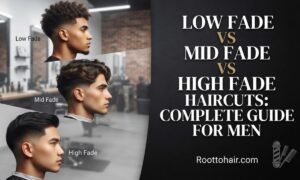
A low fade starts just above the ear and follows the natural hairline, so the contrast stays gentle. A mid fade begins around the temple line and gives a clear step between short sides and longer top. A high fade begins near the crown of the head, which creates the sharpest contrast and the most exposed skin.
What Is the Key Difference Between Low, Mid, and High Fade?
The main difference is the height where the shortest length begins. Low sits closest to the ears and neck, mid sits at the middle of the sides, and high sits above the temples. The higher the fade, the more noticeable the contrast between sides and top becomes.
Low Fade vs Mid Fade: What Is the Difference?
A low fade keeps most of the side hair intact, so it looks quieter and works with almost any hair length on top. A mid fade removes more length from the sides and draws attention to the top. Men who want a clear shape without going bold often land on the mid option.
Low Fade vs High Fade: What Is the Difference?
These two sit at opposite ends of the range. A low fade barely changes the outline of the head, while a high fade reshapes it by exposing the temples and upper sides. The high version suits men who want a striking, clean look and don’t mind frequent upkeep.
High Fade vs Mid Fade: What Is the Difference?
A high fade begins above the temple and leaves only a small area of longer hair on top. A mid fade begins lower, so the top section feels fuller and the transition looks less dramatic. The mid option is easier to grow out, and the high option shows regrowth faster.
Skin Fade vs High Fade: What Is the Difference?
A high fade describes where the fade begins, while a skin fade describes how short it gets. A skin fade goes down to bare skin with a razor or foil shaver, and it can be low, mid or high. A high fade can also stop at a short guard length, which looks softer than bare skin.
Which Fade Suits Your Face Shape?
Round faces look longer and narrower with a mid or high fade paired with height on top. Square and oval faces can carry any of the three, since the jawline already gives structure. Long faces usually do better with a low fade, which avoids stretching the face upward.
Which Fade Suits Your Hair Type?
Straight hair shows fade lines clearly, while curly hair hides them and needs more careful blending. Fine hair looks fuller with a lower fade, and thick hair benefits from a higher fade that removes weight from the sides. The right height depends on how much bulk you want to lose.
Low Fade vs Mid Fade vs High Fade for Straight Hair
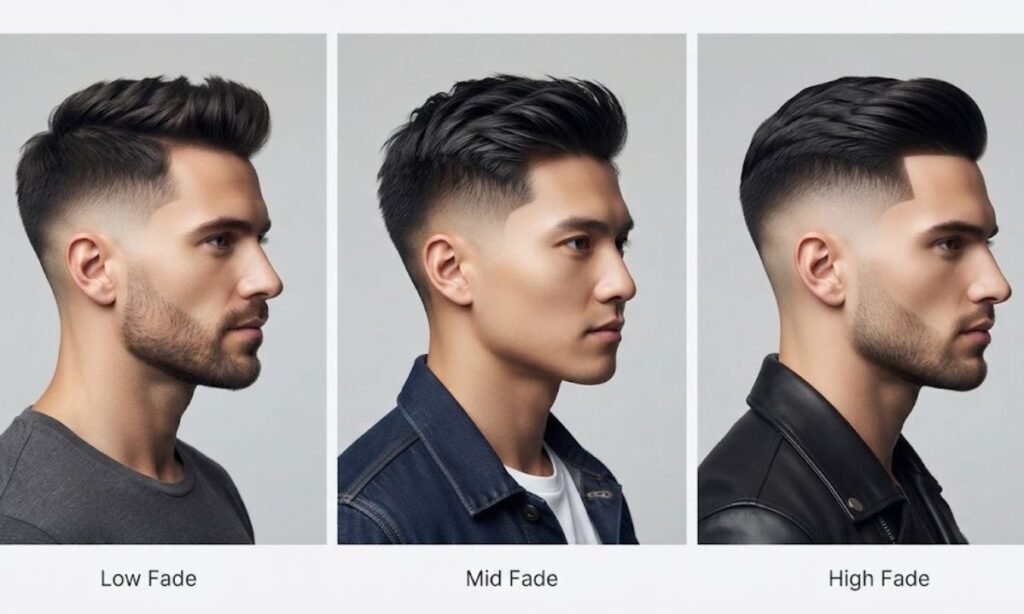
Straight hair lets the fade gradient show in full, so every step between guard lengths is visible. A high fade looks crisp and geometric here, while a low fade keeps the outline soft and tidy.
Style Snapshot: Clean, sharp gradient with visible blending lines.
Perfect Match: Straight or slightly wavy hair, oval and square faces, office-friendly styles.
What to Ask For: A mid fade starting at the temple, blended from a number 1 into a number 3, with scissor-cut length on top.
Styling Level: Easy, because straight hair sits flat and needs little product.
Care & Styling: Use a light matte paste on the top and comb it with a fine-tooth comb.
Best Tip: Ask for a soft blend at the top of the fade, since straight hair exposes any harsh line.
Low Fade vs Mid Fade vs High Fade for Curly Hair
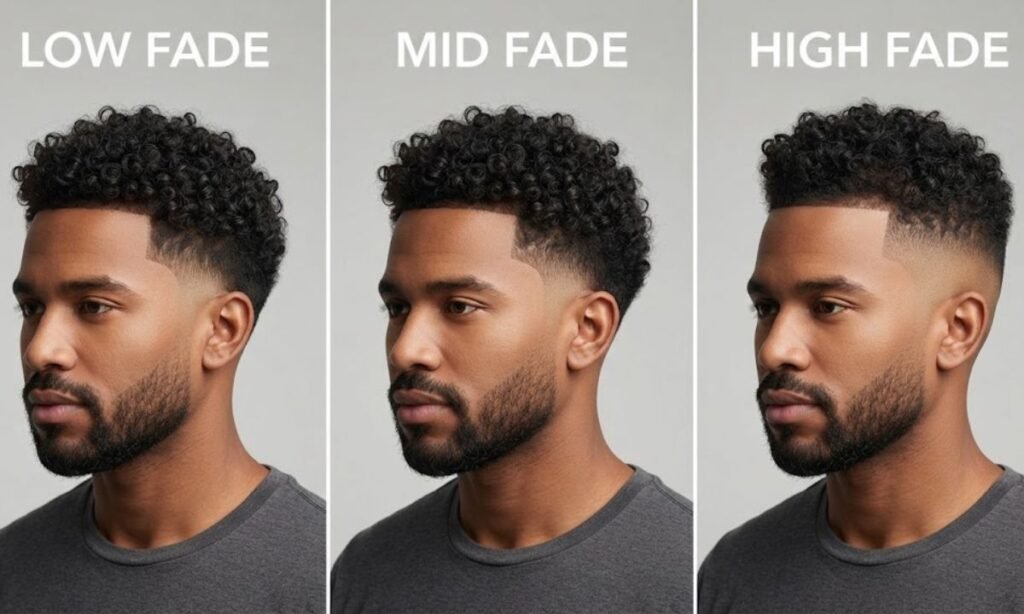
Curly hair adds natural texture and volume on top, so the fade acts as a frame. The gradient blends into curls more softly, and a high fade makes the curls on top stand out as the main feature.
Style Snapshot: Defined curls on top with a tight, tidy frame around the sides.
Perfect Match: Type 3 and type 4 curls, round and long faces, men who like natural texture.
What to Ask For: A mid or high fade with a long blend, keeping two to four inches of curl length on top.
Styling Level: Moderate, since curls need moisture and shaping to look neat.
Care & Styling: Apply a curl cream to damp hair and let it air-dry or use a diffuser.
Best Tip: Wash curls before the barber visits, so the barber cuts them in their natural pattern.
How Does Each Fade Change Your Overall Look?
A low fade gives a relaxed, polished look that suits business and casual settings. A mid fade feels balanced and current, and a high fade feels bold and athletic. The higher you go, the more the top of the haircut becomes the focal point.
Choose Your Desired Finish
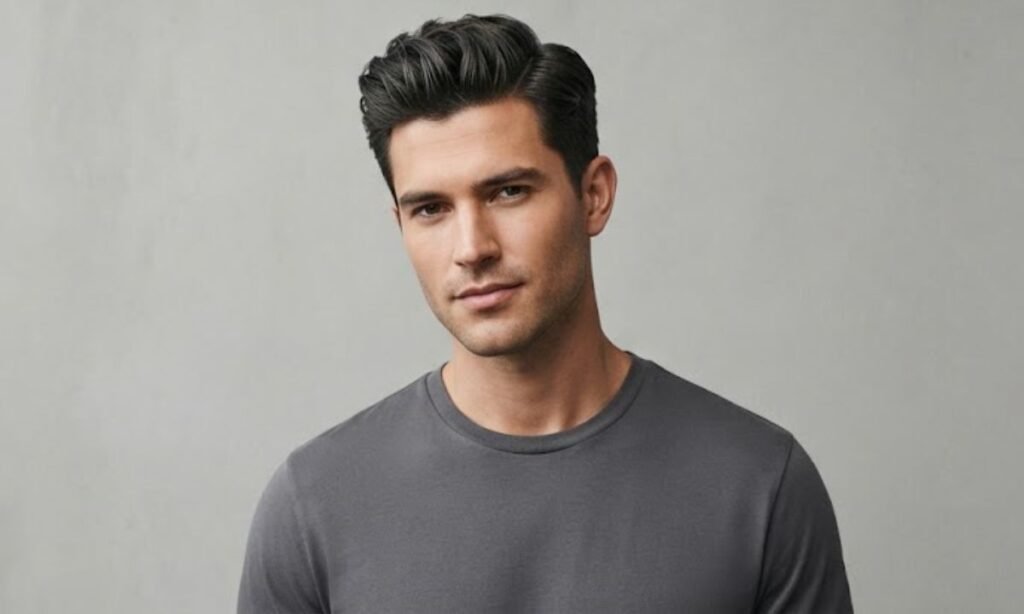
Your finish depends on how much contrast you want between the sides and the top. A soft finish uses a low fade with a blended guard. A sharp finish uses a high skin fade with a clean line-up.
Style Snapshot: Ranges from quiet and natural to crisp and high-contrast.
Perfect Match: Men who know whether they prefer a subtle or bold look, at any age.
What to Ask For: Say “soft blend” for a low fade with a number 2 guard, or “skin fade” for a razor-short finish.
Styling Level: Easy to Moderate, since sharper finishes need more frequent cleanup.
Care & Styling: Use a light styling cream for soft finishes and a firm wax for sharper ones.
Best Tip: Bring a photo of the finish you want, because one man’s “clean” is another’s “sharp.”
Which Hair Length Works Best With Each Fade?
Low fades work with short, medium and even longer tops because the sides stay mostly full. Mid fades suit short to medium tops, which keep the proportions balanced. High fades look best with a short crop or a textured top that carries height.
Match Fade With Hair Length
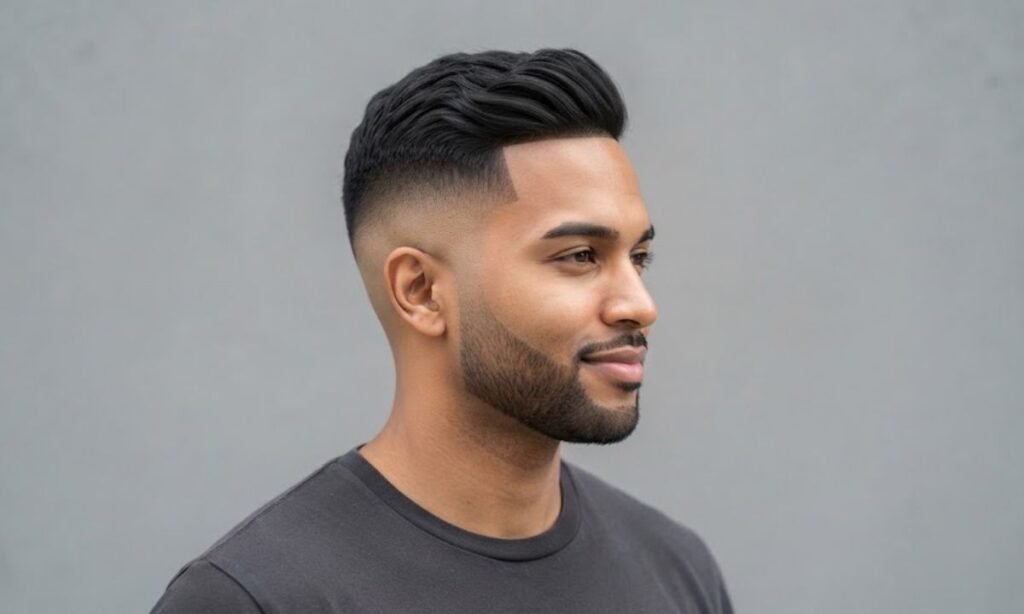
A longer top with a low or mid fade gives a smooth transition from side to top. A very short top with a high fade creates a compact, athletic shape.
Style Snapshot: Proportioned look where top length and fade height balance each other.
Perfect Match: Men growing hair out, or those keeping a short cut for work or sport.
What to Ask For: Ask for a low fade with 3 to 4 inches on top, or a high fade with 1 to 2 inches on top.
Styling Level: Moderate, because longer tops need shaping and shorter tops need regular trims.
Care & Styling: Use sea salt spray on longer tops and a bit of clay on shorter ones.
Best Tip: Match the top length to the fade height, since a very long top with a high fade can look top-heavy.
What Hair Types Work Best With Low, Mid, and High Fades?
Thick hair holds a high fade well because the top stays full while the sides are removed. Fine hair does better with a low or mid fade, which keeps some density at the sides. Coarse and curly hair works across all heights if the barber blends carefully.
Match the Fade to Your Texture

Texture decides how visible the fade looks and how the top sits. Wavy hair can hide a rough blend, while straight hair shows every step.
Style Snapshot: Fade height chosen to work with, not against, your natural hair pattern.
Perfect Match: Fine, thick, wavy and coarse hair types looking for a fit that needs less styling.
What to Ask For: Tell your barber your texture and ask for a mid fade with a taper blend, so the top doesn’t fight the sides.
Styling Level: Easy, when the fade complements your natural texture.
Care & Styling: Use a volumizing powder for fine hair and a lightweight pomade for thick hair.
Best Tip: Fine hair often looks thin above a high fade, so go one level lower.
How Do You Maintain a Low, Mid, or High Fade?
Low fades hold their shape longest because the shortest area is small. Mid fades need a tidy-up every few weeks to keep the transition clean. High fades lose their sharpness fastest since the exposed skin makes regrowth obvious.
Keep Your Fade Fresh

A fresh fade needs regular trims, a clean neckline and a moisturized scalp. Skipping the barber for a few extra weeks blurs the gradient.
Style Snapshot: Sharp edges and a clean gradient that looks freshly cut.
Perfect Match: Men who like a groomed look and don’t mind regular visits.
What to Ask For: Book a “fade touch-up” with a clean-up of the neckline and sideburns, without cutting the top.
Styling Level: High Maintenance, since the fade needs a trim every two to three weeks.
Care & Styling: Moisturize the scalp after washing and use a soft brush to remove loose hair.
Best Tip: Buy a small trimmer for the neckline between visits, but leave the fade itself to your barber.
Which Fade Suits Your Lifestyle?
Active men and those who work in gyms or outdoors often prefer a mid or high fade for its clean, cool feel. Office workers may lean toward a low fade, which looks polished and is easy to maintain. Busy men who visit the barber rarely should pick the lowest height.
Pick a Fade That Fits Your Routine
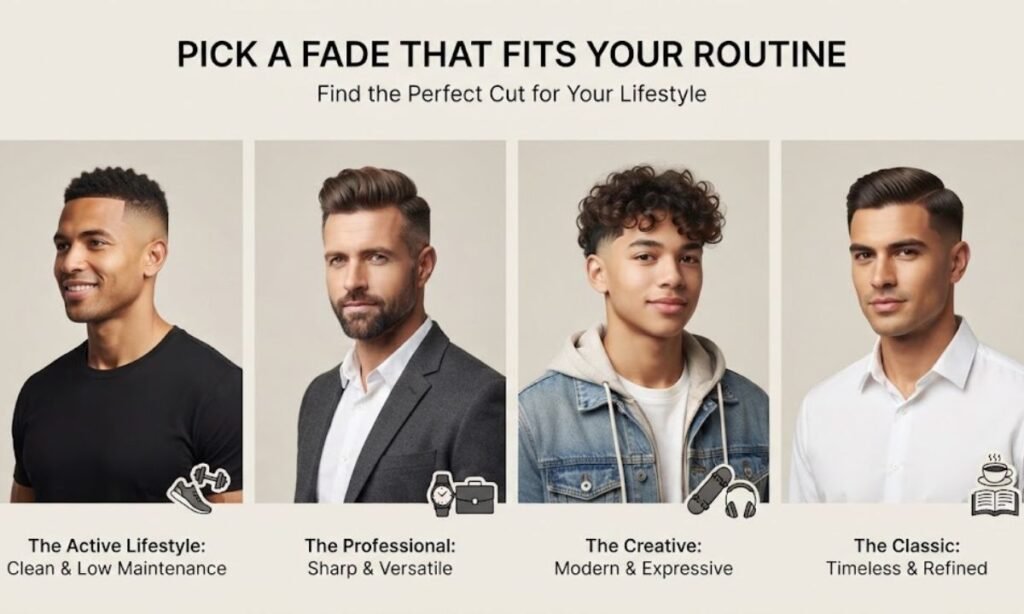
Your routine decides how much work you’re willing to put in. A low fade with a natural top is the easiest, and a high skin fade with a styled top takes the most effort.
Style Snapshot: Practical cut that fits your schedule and dress code.
Perfect Match: Working professionals, athletes, students and men with a set weekly routine.
What to Ask For: Ask for a low taper fade if you want a longer grow-out, or a mid fade with a number 1 guard for a sportier look.
Styling Level: Easy to Moderate, depending on the fade height you choose.
Care & Styling: Use a two-minute routine: towel dry, apply a pea-sized amount of cream and comb.
Best Tip: Be honest about how often you can visit the barber, and choose the fade height around that.
What to Tell Your Barber?
Give three details: the fade height, the shortest guard length and how much you want to keep on top. Mention if you want a taper, a skin fade or a blend to a longer length. Photos help a lot and save time in the chair.
Explain Your Preferred Fade Clearly
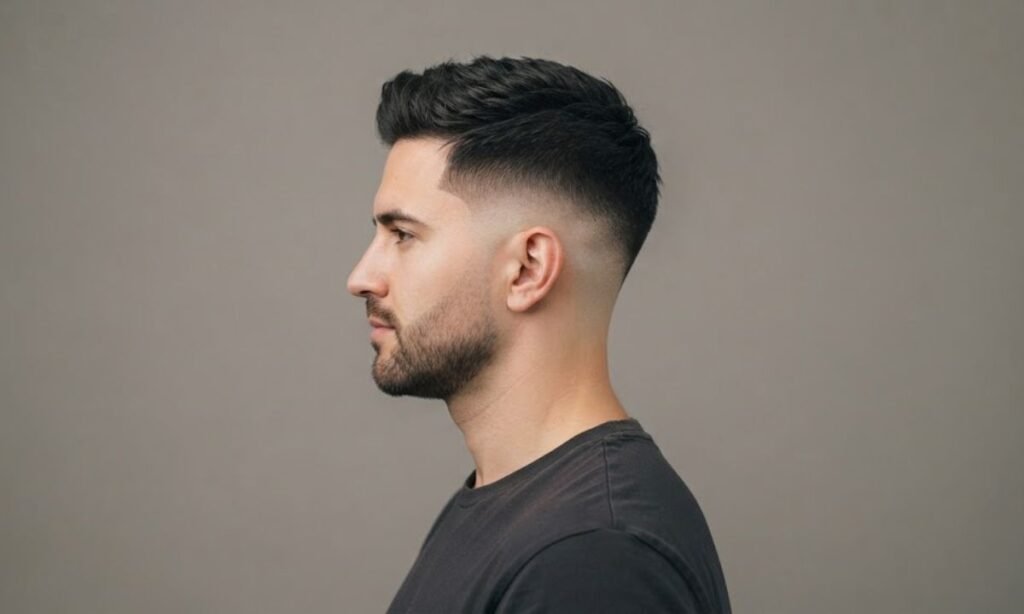
Clear words prevent surprises. Say where the fade starts, how short it goes and how it should look on top.
Style Snapshot: A haircut that looks exactly as you pictured it.
Perfect Match: First-time fade clients and anyone who has been disappointed by a haircut before.
What to Ask For: Say “mid fade, number 1 at the bottom, blend into a number 3, leave 3 inches on top.”
Styling Level: Easy, because a clear request means less fixing at home.
Care & Styling: Ask your barber which product they used and how much, and copy it at home.
Best Tip: Ask the barber to check the sides with a mirror before finishing, so you can correct the height early.
How Often Should You Get Each Fade?
A low fade usually holds for three to four weeks before it looks grown out. A mid fade needs a trim every two to three weeks, and a high fade looks best when refreshed every two weeks. Men with fast-growing or dark hair may need visits a little sooner.
Quick Decision Guide
Pick a low fade if you want a subtle, easy-to-keep cut that suits most jobs and longer tops. Choose a mid fade if you want a balanced look with clear shape and medium upkeep. Go for a high fade if you like bold contrast, a short top and don’t mind regular barber visits.
Frequently Asked Questions
Which fade grows out the best?
A low fade grows out the best because the shortest section is small and blends back gently. A high fade shows regrowth the fastest.
Can I get a fade with a beard?
Yes, a fade can blend into the beard for a smooth, connected look. Ask the barber to fade the sideburns into the beard line.
Does a fade make thin hair look worse?
Not necessarily. A low or mid fade keeps side density and can make thin hair look fuller, while a very high fade can expose thinning at the temples.
How much does a fade cost?
Prices depend on the barber and location, but a fade usually costs a bit more than a standard haircut. Ask for the price before you sit down.
What product should I use on a fade?
Use a matte paste or clay for short textured tops, and a light cream for longer ones. Choose based on the finish you want, not the fade height.
What is the difference between low, mid, and high fade?
The difference is where the shortest length begins. A low fade starts just above the ear, a mid fade starts around the temple, and a high fade starts near the crown, so the contrast grows with each step up.
Which fade lasts the longest?
The low fade lasts the longest. Its shortest section is small and close to the hairline, so regrowth blends in for about three to four weeks before it looks untidy.
Which fade is best for a round face?
A mid or high fade usually works best for a round face. Shorter sides with some height on top make the face look longer and more defined.
Which fade is most versatile?
The mid fade is the most versatile. It suits short, medium and textured tops, and it looks right in both casual and professional settings.
What is the difference between a low fade and a mid taper?
A low fade blends down to very short hair or skin, while a mid taper only trims the sides and neckline gradually and stops at a longer length. The taper looks softer and more conservative, and the low fade shows a clearer gradient.
What is the difference between a skin fade and a high fade?
A skin fade is about how short the hair gets, and a high fade is about where the fade begins. A skin fade goes down to bare skin at any height, while a high fade can stop at a short guard length instead.
Can curly hair get any of the three fades?
Yes, curly hair works with all three. Ask your barber for a longer blend, so the curls on top flow into the sides without a harsh line.
Which fade is best for straight hair?
A low or mid fade is the safest choice for straight hair. Straight hair shows every blend line, so a gentler height hides small imperfections better than a high fade does.
Conclusion
We covered low, mid and high fades and how each one changes your outline, contrast and daily effort. The low fade is the softest option, the mid fade sits in the middle, and the high fade gives the boldest look. Your hair type, face shape and top length should guide the choice, not just what’s popular. Curly, straight, thick and fine hair all have a height that suits them best.
Think about how much time you’re willing to spend on upkeep before you sit in the chair. Low heights forgive missed appointments, while high heights need frequent touch-ups to stay sharp. When you talk to your barber, share your preferred height, guard length and top length. With that clarity, Fade Haircuts become easier to choose, and the right Fade Haircuts will fit your routine as well as your face.























1 thought on “Low Fade vs Mid Fade vs High Fade Haircuts: Complete Guide for Men”