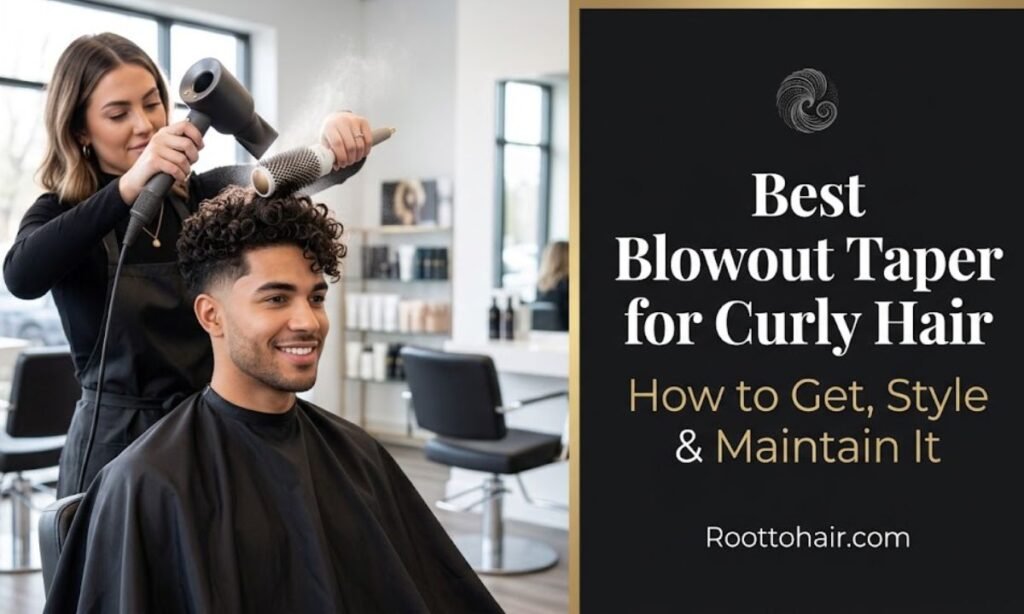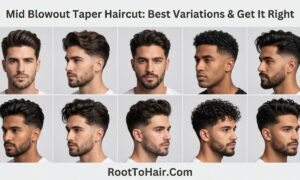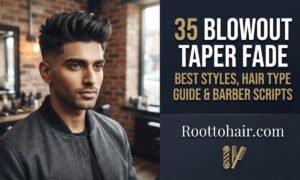
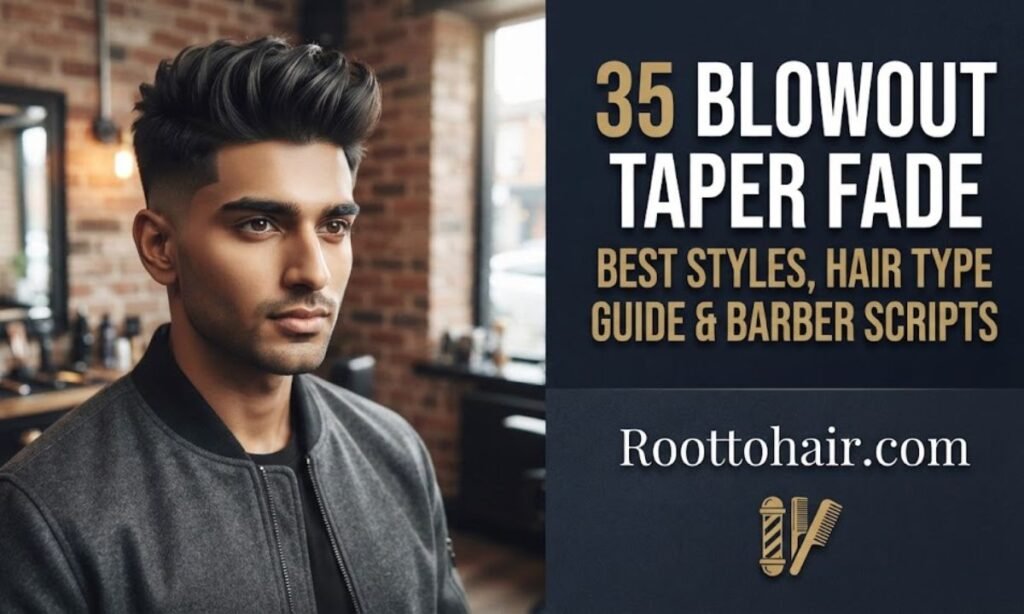
A Blowout Taper Fade is a men’s haircut that pairs a full, lifted top with sides and back that gradually get shorter toward the neckline and around the ears. The “blowout” is the volume on top. The “taper” is the clean, gradual shortening below it. Together they give you a shape that looks full above and neat below.
The main visual idea is contrast. The top stands up and moves, while the tapered sides stay close and tidy. Because the taper can start low, mid or high, and because the top can be straight, wavy, curly or coyly, the same basic idea looks very different from one man to the next. A low taper blowout looks relaxed. A high taper blowout looks sharper and bolder.
This guide explains how the haircut works, then walks through 35 blowout taper fade variations. You will also find advice on hair type, density, face shape and length, plus barber scripts you can say word for word, home styling steps, trim timing and answers to common questions.
What is a blowout taper fade?
“Blowout” describes a style where the top hair is dried and shaped with a blow dryer, brush or comb so it stands up and away from the scalp. It adds height and body instead of lying flat. On very curly or coily hair, the same fullness can come from picking, fluffing or shaping the natural texture.
“Taper fade” describes the sides and back. The hair is cut longer at the top of the sides and gets gradually shorter as it moves down toward the ears and neckline. The shortening is smooth, with no hard steps.
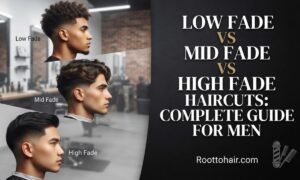
The taper usually shows up at the sideburns, around the ears and along the back of the neck. In a low taper it stays close to the hairline. In a mid taper it climbs to about ear level or slightly above. In a high taper it rises toward the temple area.
The barber clips and blends the sides and back, then leaves the top longer so it can be lifted. Volume comes from the length left on top, how it was cut, and how you dry and style it.
A traditional short fade usually keeps the whole head close, so the top sits low and the focus is the fade itself. A blowout taper puts the focus on the top. Your hair type and length change the result a lot. Straight hair tends to look smooth and swept. Curly and coyly hair look fuller and more textured. Short top hair gives a modest lift, while longer top hair gives more movement.
Key Points
- Taper placement: Low, mid or high. The height changes how bold the haircut looks.
- Top volume: Comes from length and drying or shaping, not from the taper.
- Hair length: The top needs enough length to lift, usually longer than a standard short fade.
- Styling: Expect a few minutes with a blow dryer and a light product most days.
- Maintenance: Lower tapers grow out more softly. Higher tapers show regrowth sooner.
- Hair-type flexibility: It can be adapted for straight, wavy, curly and Afro-textured hair.
- Barber communication: Name the taper height, top length, volume and neckline finish.
What Is a Blowout Taper Fade?
Think of the haircut in three zones. The top is the volume zone. The sides are the transition zone. The neckline and ears are the clean-up zone. A good Blowout Taper Fade makes all three work together, so the top looks full without the sides looking bulky.
The taper is what makes the style look intentional. Without it, a voluminous top can look heavy on the sides. With it, the head looks more balanced and the top stands out.
It is not a single fixed cut. A blowout fade haircut can be short and soft or tall and dramatic. What stays the same is the pairing of lifted hair on top with tapered sides.
It also differs from a high-contrast skin fade. A taper can keep some hair at the neckline and ears. That makes it a gentler choice for men who want a clean look without bare skin on the sides.
35 Blowout Taper Fade Variations
The 35 styles below are grouped by where the taper sits. Each one has its own top shape, hair-type fit and barber request. Pick the group that matches how bold you want the sides to look, then choose the top that matches your texture.
Here is a quick overview of the four groups:
| Group | Taper Height | Typical Top Style | Overall Look |
| Low Taper Blowouts | Low | Soft, natural or swept volume | Relaxed and easy |
| Mid Taper Blowouts | Mid | Textured, structured volume | Balanced and versatile |
| High Taper Blowouts | High | Tall, defined volume | Sharp and bold |
| Specialty Blowouts | Varies | Shapes with a twist | Distinctive and styled |
Low Taper Blowout Variations
Low taper blowouts keep the shortening close to the ears and neckline. They suit men who want volume without a strong contrast.
1. Classic Low Taper Blowout.
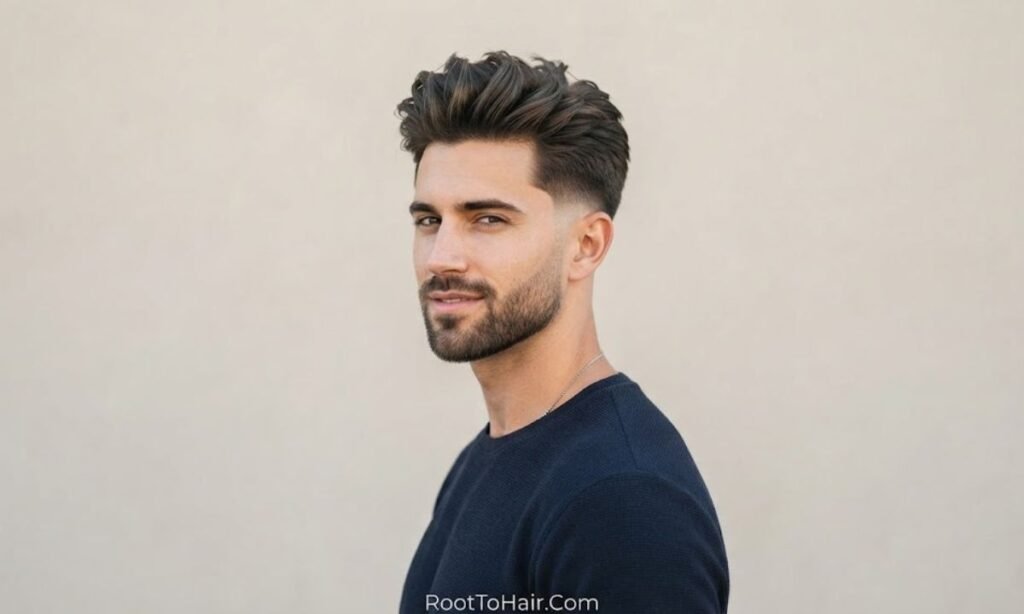
A medium-length top is lifted slightly and brushed back, with the taper hugging the sideburns and neckline. Works on straight and wavy hair. Barber: “Low taper, leave the top about three inches, and keep it soft and lifted.”
Tip: Blow-dry back and up from the roots.
2. Low Taper Textured Blowout.

The top is cut with texture so it looks airy and slightly rough. Good for medium-density straight or wavy hair. Barber: “Low taper with a textured top, not too sleek.”
Tip: Use a light paste on dry hair.
3. Low Taper Side-Swept Blowout.
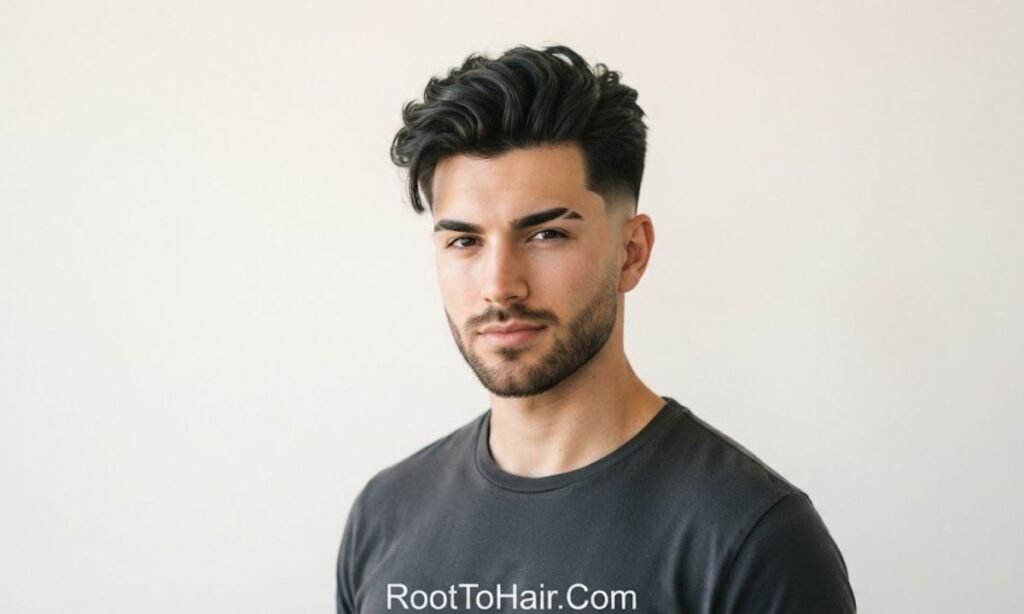
Volume at the front sweeps to one side, which gives a tidy, polished look. Suits straight hair. Barber: “Low taper, longer on top with a side sweep.”
Tip: Dry the front up first, then comb it across.
4. Low Taper Blowout With Natural Curls.
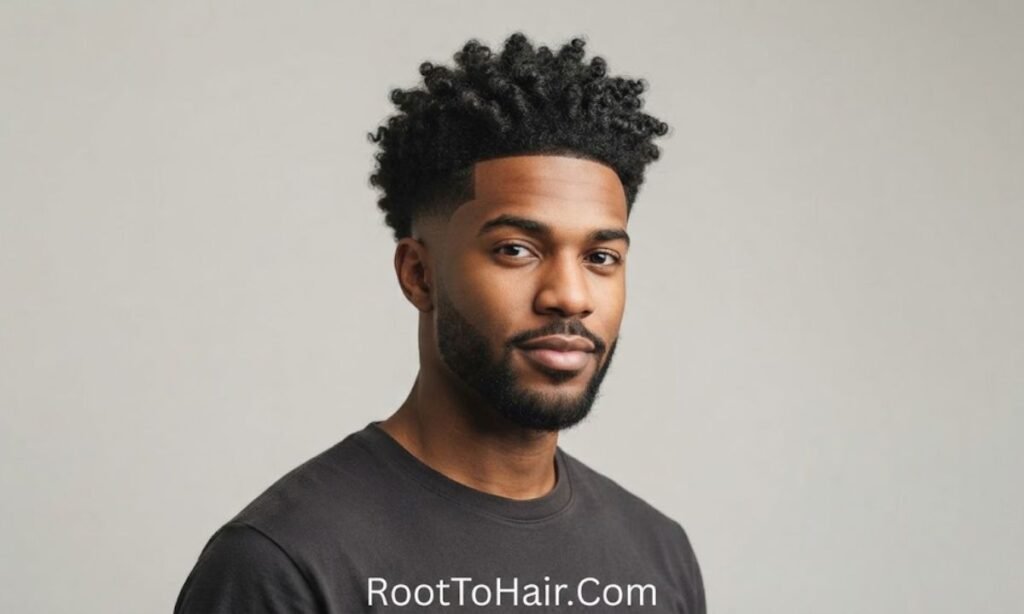
Curls are left full and the taper only cleans the edges. Made for curly hair. Barber: “Low taper, keep my curls full on top.”
Tip: Use a diffuser and avoid heavy brushing.
5. Low Taper Blowout With Soft Fringe.
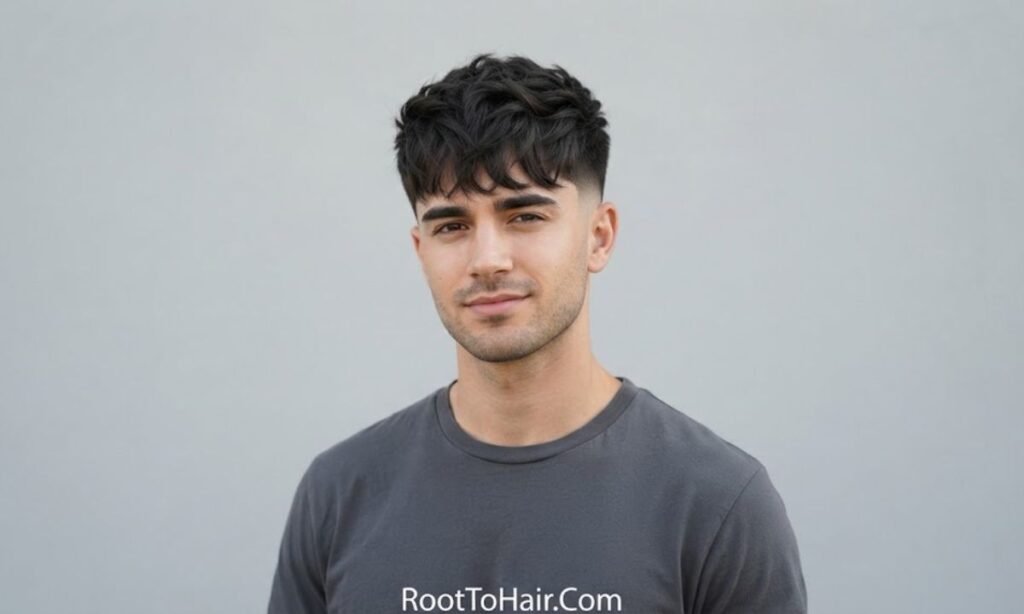
The top is lifted at the back but falls into a light fringe. Works on fine straight hair if the fringe is kept short. Barber: “Low taper, keep a light fringe, volume at the crown.”
Tip: Dry the fringe forward and the crown up.
6. Low Taper Wavy Flow Blowout.
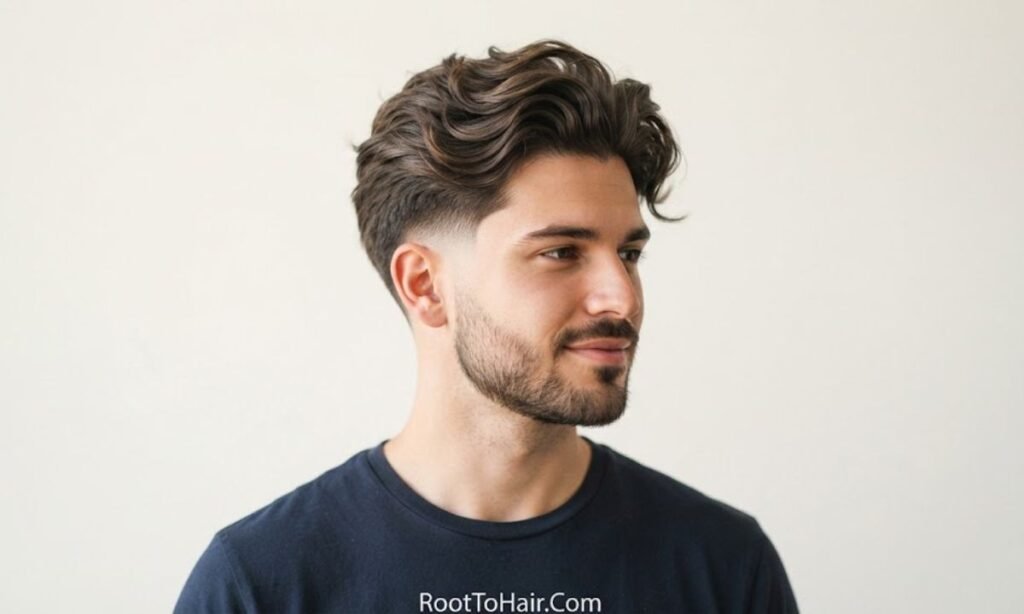
Natural waves are left longer and shaped with the dryer for movement. Suits wavy hair. Barber: “Low taper, let my waves have room on top.”
Tip: Scrunch slightly while drying.
7. Low Taper Blowout With Beard Blend.

The taper runs into a short beard for a connected look. Works for most hair types. Barber: “Low taper blended into my beard.” Tip: Keep the beard trimmed so it matches the sides.
8. Low Taper Short Afro Blowout.
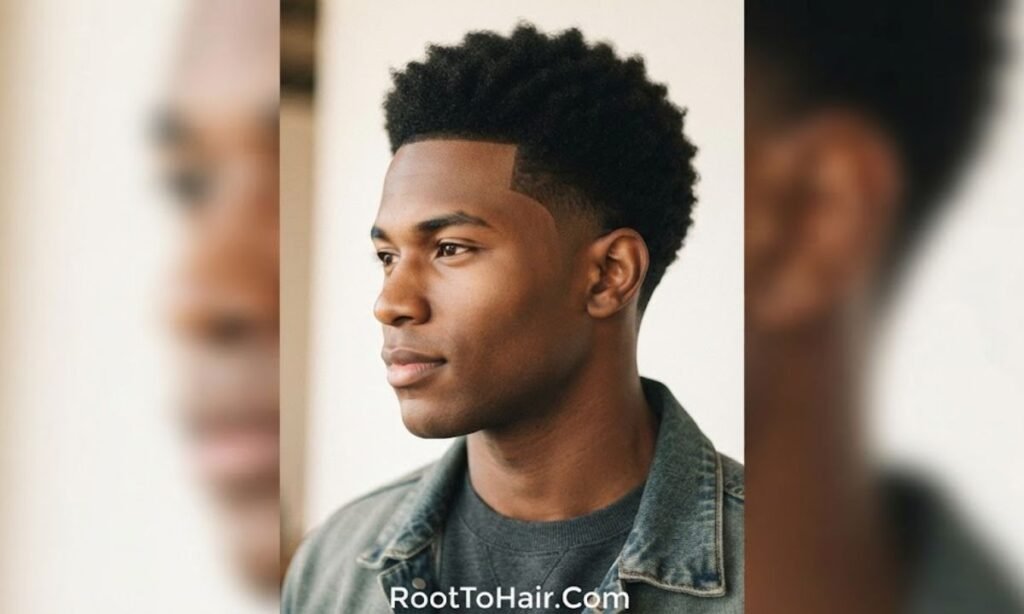
A short, rounded Afro top is shaped and fluffed with a soft taper at the edges. Made for Afro-textured hair. Barber: “Low taper, shaped round Afro on top.”
Tip: Pick gently to keep the shape even.
9. Low Taper Brushed-Back Blowout.
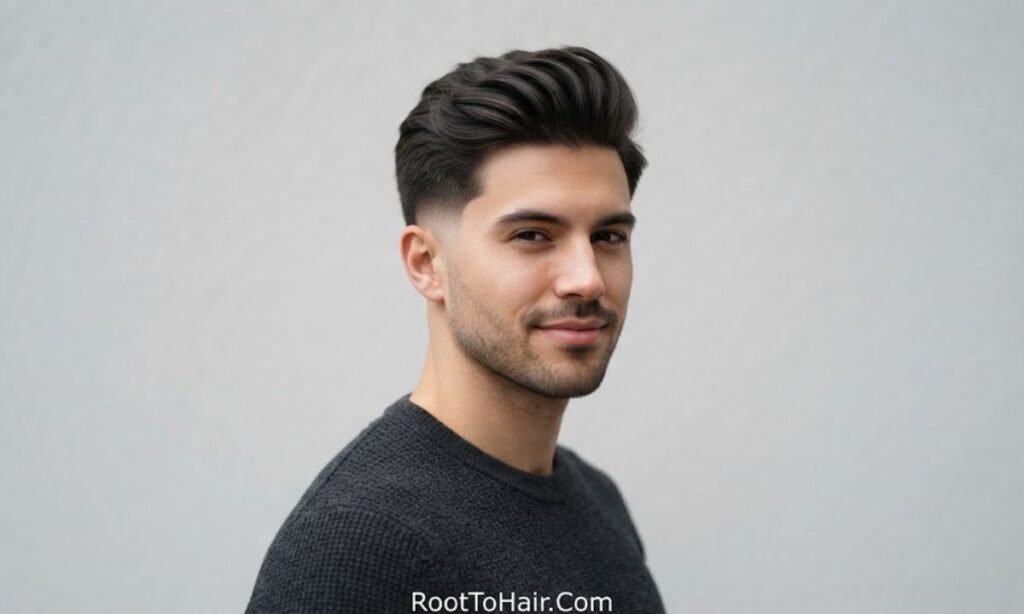
The top is combed back with lift at the front. It gives a classic, clean finish. Best on straight or slightly wavy hair. Barber: “Low taper, brushed back with some height.”
Tip: Use a round or vent brush while drying.
Mid Taper Blowout Variations
Mid taper blowouts start the shortening around ear level, which makes them the most balanced choice for many men.
10. Classic Mid Taper Blowout.
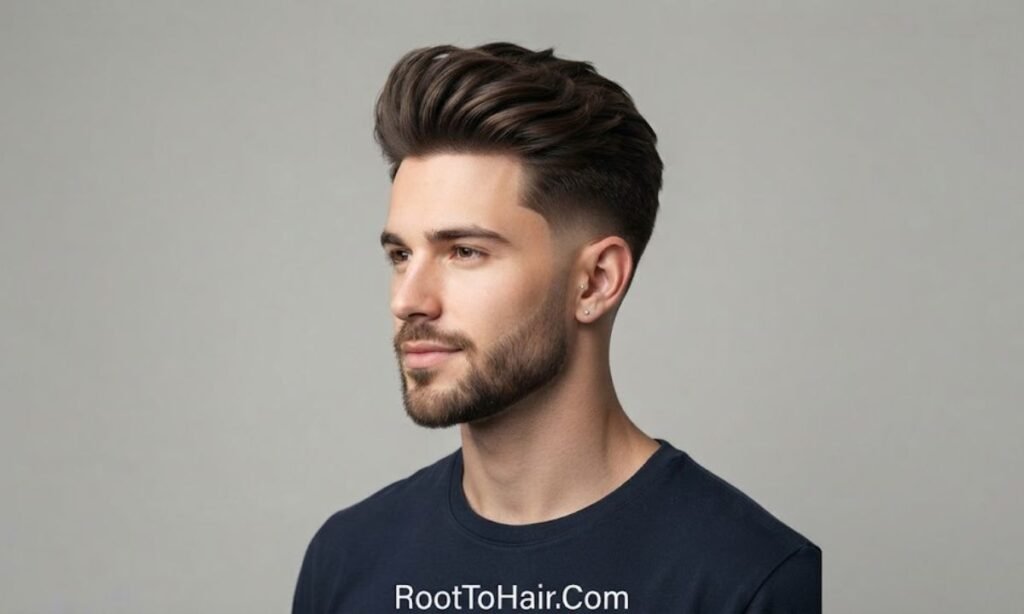
Even length on top with clear lift and neat, mid-height sides. Suits straight and wavy hair. Barber: “Mid taper, medium length on top, blown up and back.”
Tip: Dry in sections for even volume.
11. Mid Taper Textured Quiff Blowout.

The front is lifted higher than the back for a modern quiff shape. Good for medium to thick straight hair. Barber: “Mid taper with a textured quiff, lots of lift at the front.”
Tip: Add a little paste at the front only.
12. Mid Taper Curly Blowout.
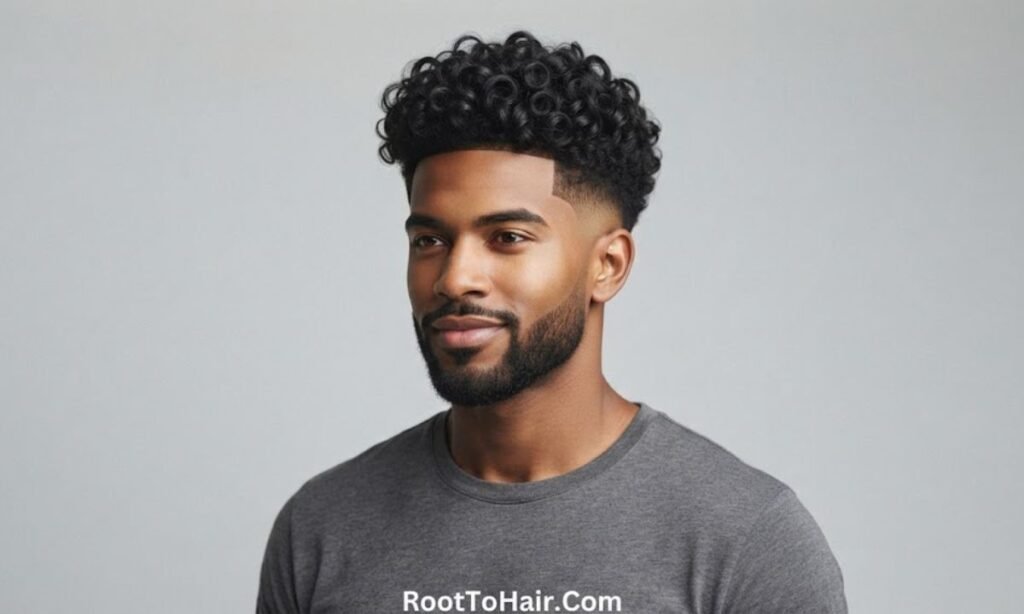
Curls sit on top as a full, defined cap over a clean taper. Made for curly hair. Barber: “Mid taper, leave the curls long enough to hold shape.”
Tip: Define curls with a styling cream.
13. Mid Taper Side Part Blowout.

A defined part with volume on the heavier side. It feels neat enough for work. Works on straight hair. Barber: “Mid taper with a side part and some volume.”
Tip: Part the hair while damp.
14. Mid Taper Messy Blowout.

The top is deliberately loose and tousled. Suits wavy and thick straight hair. Barber: “Mid taper, messy textured top, not neat.” Tip: Rough-dry with fingers.
15. Mid Taper Wavy Blowout.

Waves are lifted and dried to look fuller. Good for wavy hair of medium density. Barber: “Mid taper, I want my waves to stand up.”
Tip: Use a sea salt spray before drying.
16. Mid Taper Afro Blowout.
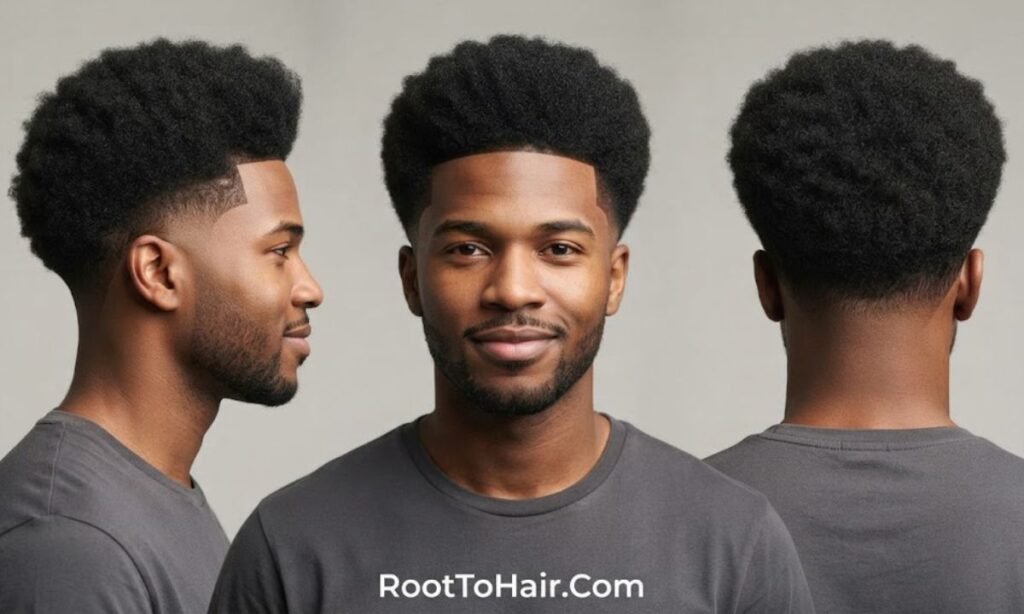
A fuller Afro shape over a clear mid taper. Made for Afro-textured and coily hair. Barber: “Mid taper, rounded Afro shape on top.”
Tip: Moisturize before shaping to avoid dryness.
17. Mid Taper Blowout With Line-Up.

A crisp front hairline frames the volume. Suits most hair types if the hairline is healthy. Barber: “Mid taper with a clean line-up at the front.”
Tip: Don’t over-trim the line between visits.
18. Mid Taper Pushed-Back Blowout.

Medium-length hair is pushed back with height. Works on straight or wavy hair. Barber: “Mid taper, longer on top, pushed back with volume.”
Tip: Finish with a light-hold product.
High Taper Blowout Variations
High taper blowouts raise the shortening toward the temples. They create the strongest contrast and make the top look even taller.
19. Classic High Taper Blowout.

A tall, neat top over a high, clean taper. Works on straight, wavy and thick hair. Barber: “High taper, keep length on top and give it lift.”
Tip: Expect more frequent trims.
20. High Taper Tall Textured Blowout.
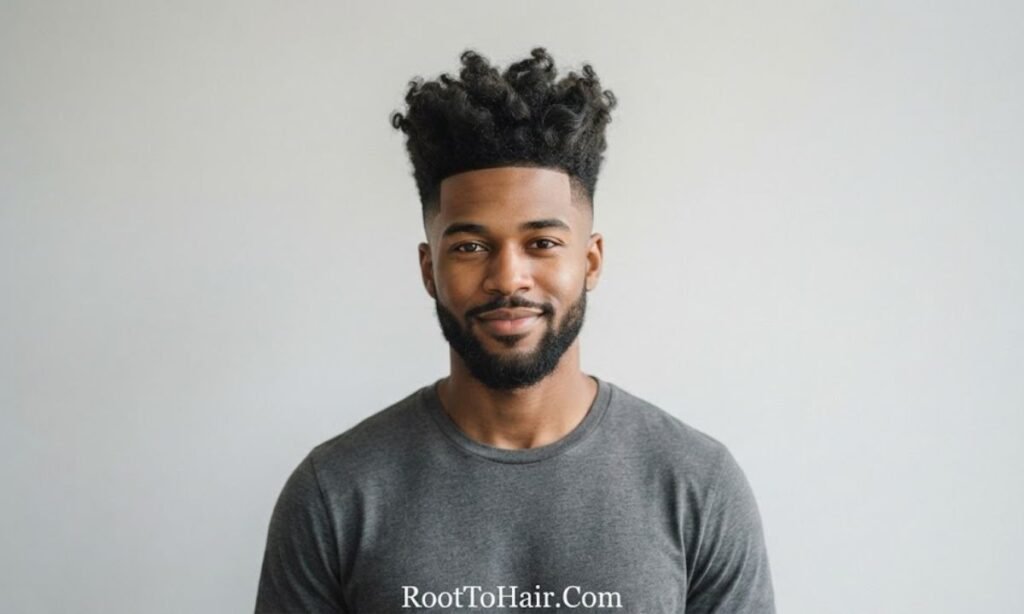
The top is cut with plenty of texture and height. Best for medium to high density. Barber: “High taper, tall textured top.”
Tip: Matte paste keeps it from looking shiny.
21. High Taper Curly Top.

Defined curls rise above a high taper, so the top looks even fuller. Made for curly hair. Barber: “High taper, curls long on top.” Tip: Don’t brush curls when dry.
22. High Taper Afro Blowout.
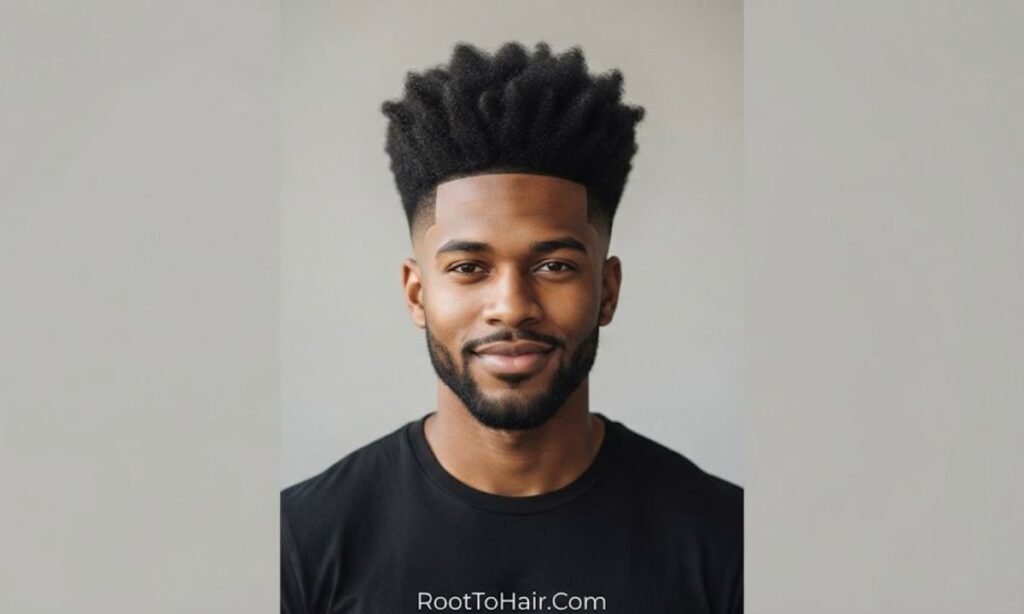
A strong, rounded Afro over a high taper. Made for coily, Afro-textured hair. Barber: “High taper, full rounded top.”
Tip: Shape after washing and moisturizing.
23. High Taper Swept-Back Blowout.

The top is blown back for a bold, clean silhouette. Suits straight hair. Barber: “High taper, brushed back with volume.”
Tip: Dry the front straight up first.
24. High Taper Fringe Blowout.

Volume sits at the back while a short fringe falls forward. Works on straight or wavy hair. Barber: “High taper, keep a short fringe and lift at the crown.”
Tip: Dry the fringe separately.
25. High Taper Wavy Blowout.
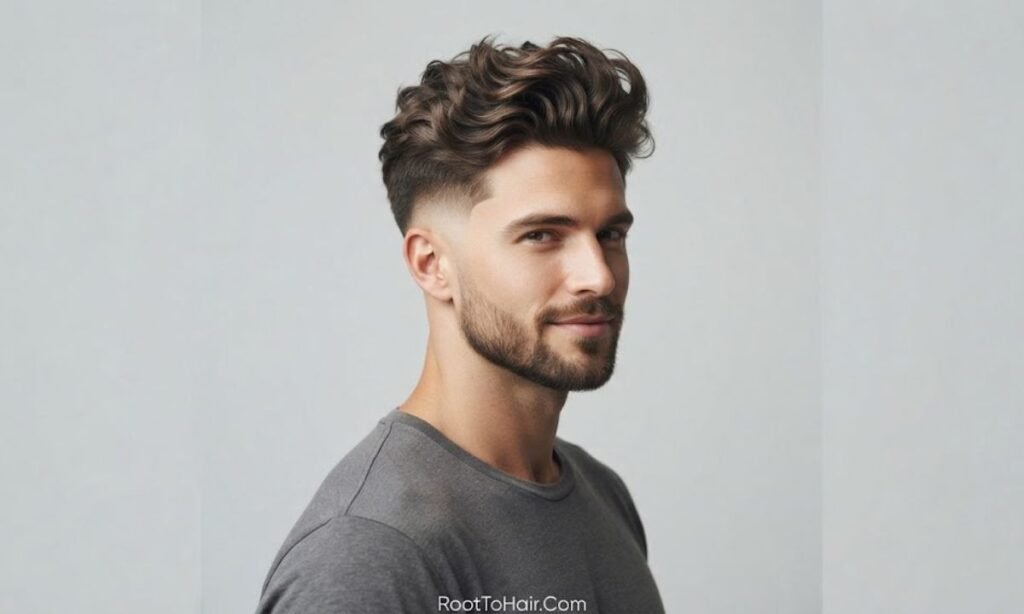
Waves are lifted high and left a little loose. Good for wavy hair of medium density. Barber: “High taper, wavy top with height.” Tip: Use mousse for soft hold.
26. High Taper With Hard Part.

A shaved or defined part cuts through the top for a sharper edge. Works for most textures. Barber: “High taper with a hard part on the left.”
Tip: Redo the part line often.
27. High Taper Blowout With Beard.
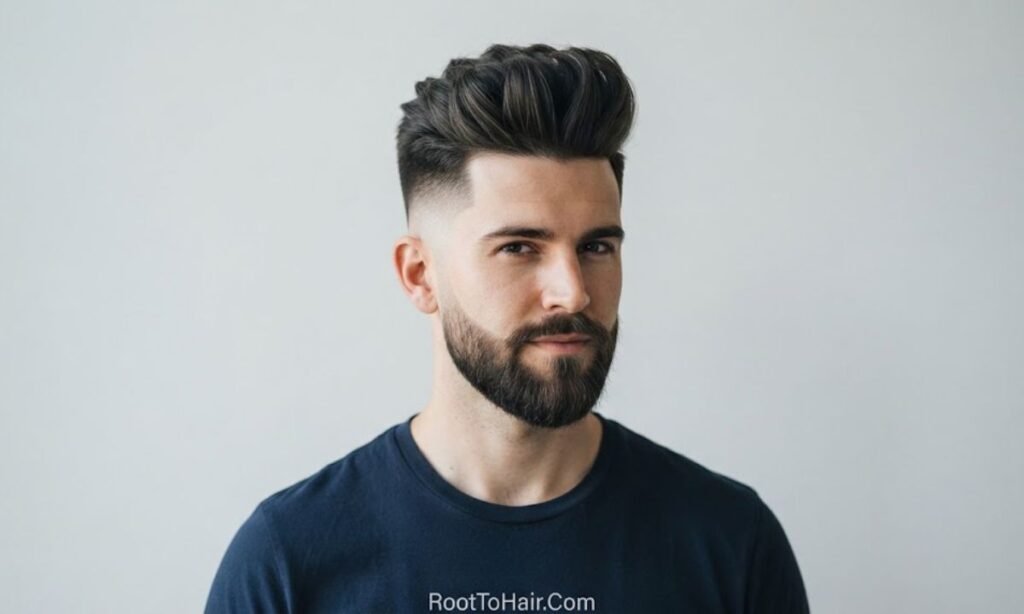
The high taper runs into the beard to frame the face. Suits full beards. Barber: “High taper, blend into my beard.”
Tip: Keep beard length balanced with the top.
Specialty Blowout Taper Variations
These styles use a different taper shape or a special top. They need clear instructions, so bring photos.
28. Drop Taper Blowout.
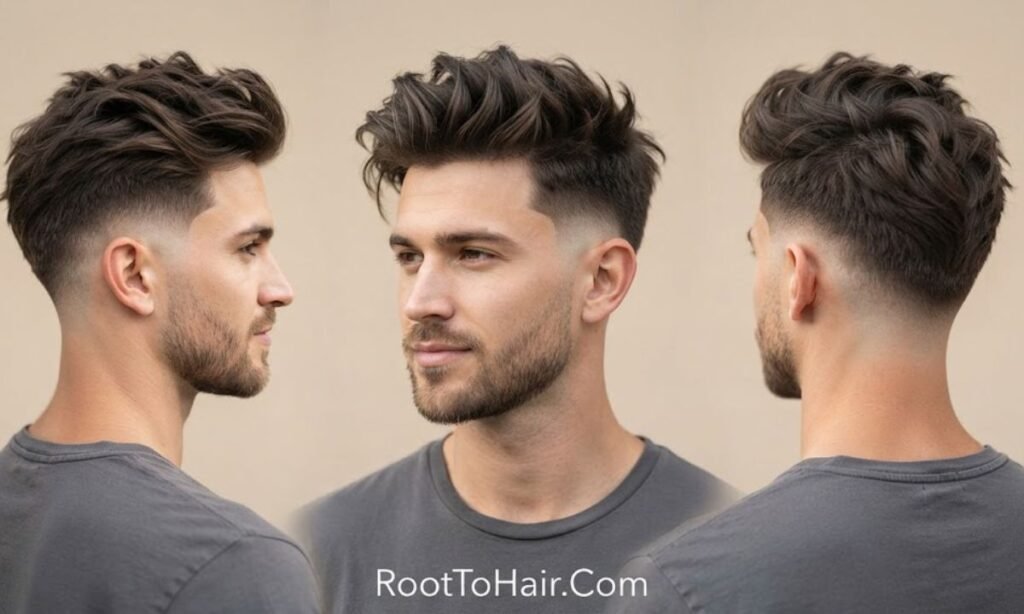
The taper curves down behind the ear instead of running straight. It adds a rounded edge to the sides. Works on most types. Barber: “Drop taper behind the ear, volume on top.”
Tip: Ask the barber to check the curve from behind.
29. Temple Taper Blowout.
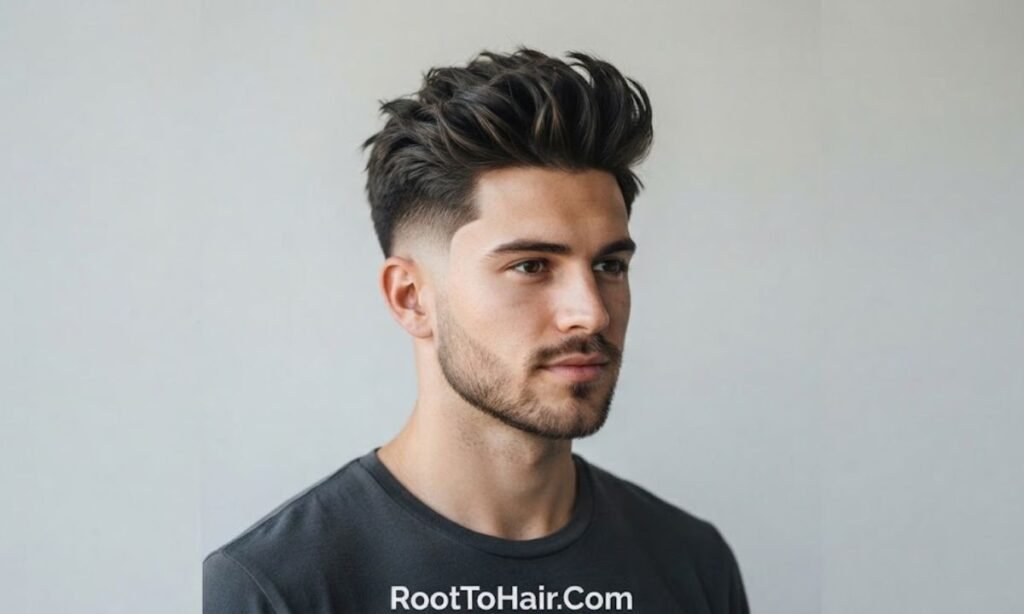
Only the sideburn and temple area are tapered while the rest stays fuller. A softer option for many hairlines. Barber: “Just a temple taper, keep the sides fuller.”
Tip: Great for low-effort styling.
30. Skin Taper Blowout.
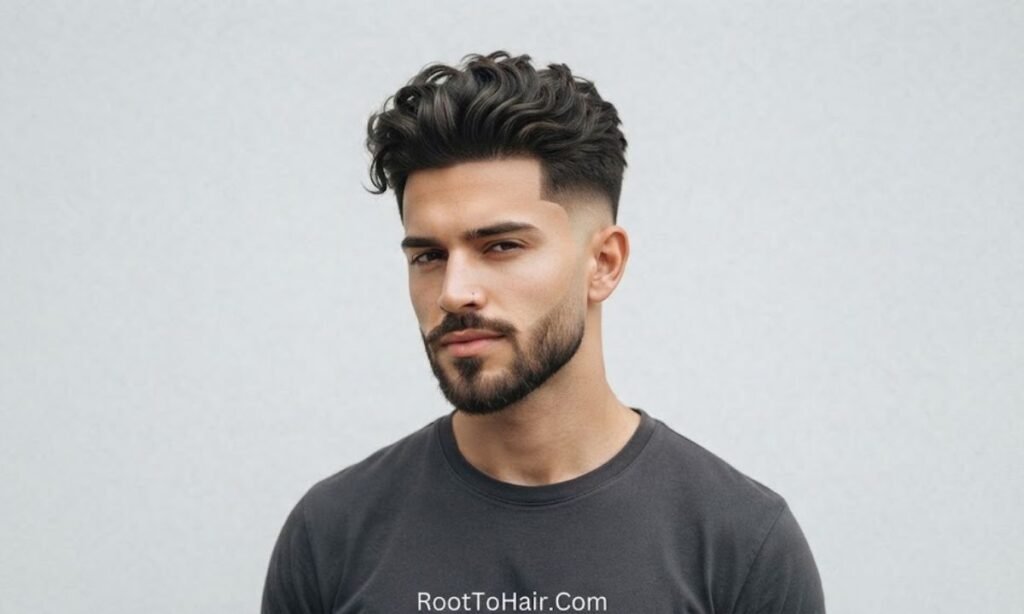
The taper goes down to bare skin at the lowest point. This creates the sharpest contrast. Suits most hair types. Barber: “Taper that goes to the skin at the bottom, full top.”
Tip: Plan for more frequent visits.
31. Blowout Taper With Shaved Part.

A thin shaved line marks the part, adding detail to the volume. Suits straight and wavy hair. Barber: “Taper with a shaved part, volume on top.”
Tip: Don’t ask for a line that is too deep.
32. Coil Top Taper Blowout.
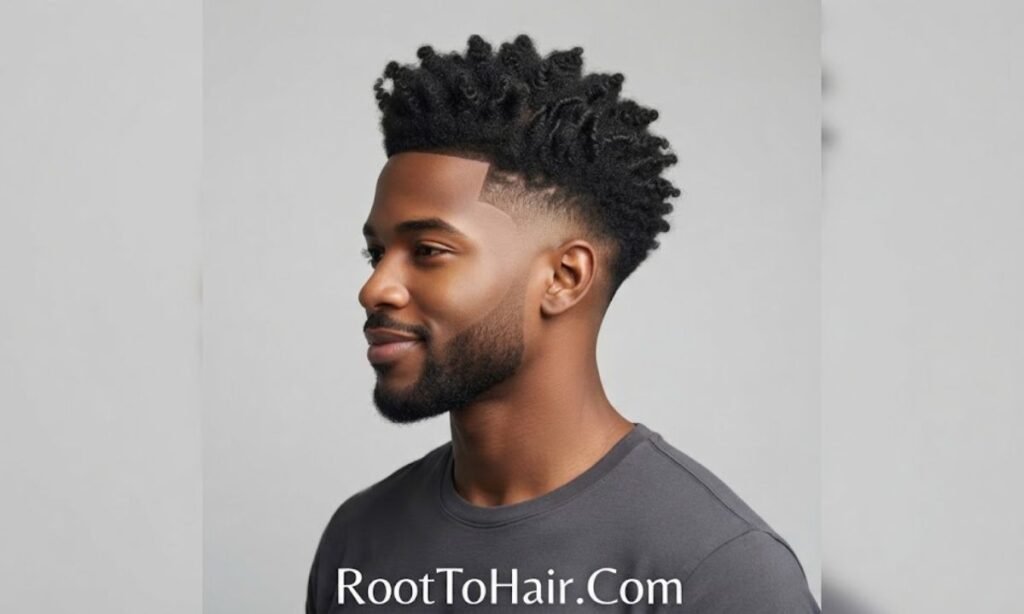
Short coils are shaped on top into a textured cap with tapered sides. Made for coily hair. Barber: “Taper with a coil top, nice and even.”
Tip: Shape with a soft brush.
33. Long Blowout Taper.
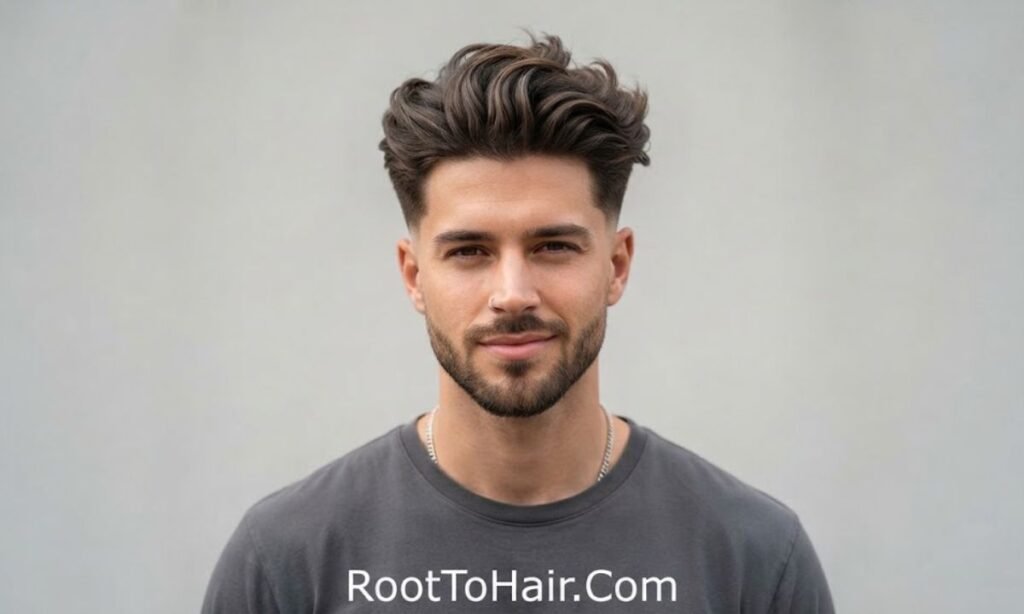
The top is grown out for movement while the sides are tapered. Works on straight or wavy hair. Barber: “Taper the sides, keep the top long for movement.”
Tip: Use a heat protectant often.
34. Blowout Taper With Design Line.

A light design line adds detail above the taper. Best for short sides. Barber: “Taper with a small design line.”
Tip: Keep it simple so it grows out cleanly.
35. Tapered Faux Hawk Blowout.
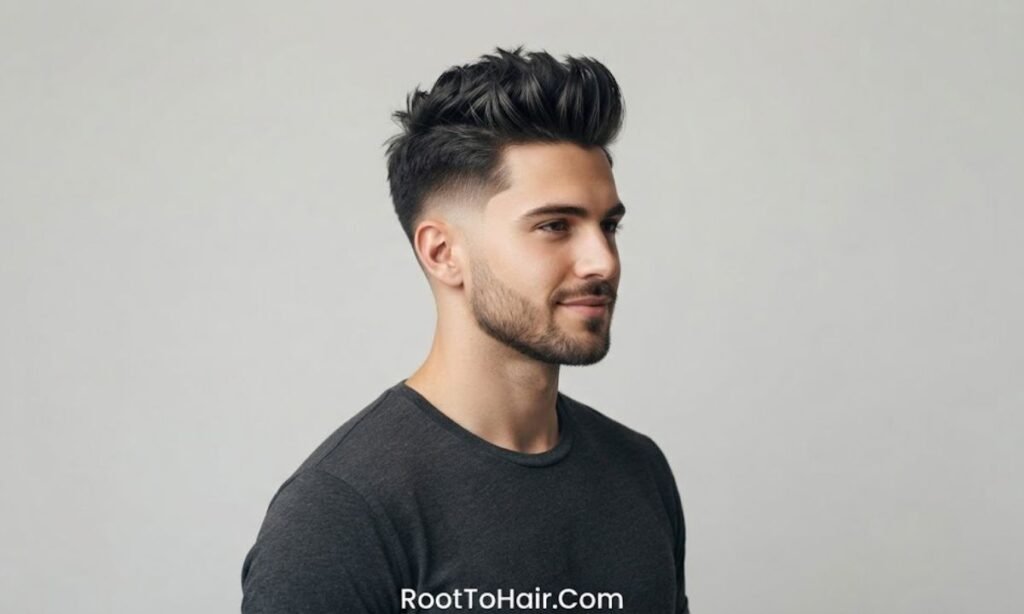
The center is raised and the sides are tapered close. It brings a bolder look. Works on thick straight, wavy or curly hair. Barber: “Taper the sides, raise the center into a faux hawk.”
Tip: Finish with a strong-hold product.
Which Blowout Taper Fade Suits Your Hair?
Hair type shapes everything about a Blowout Taper Fade, from how much lift you can get to how often you need to restyle. Use the table below as a general guide, then read the section for your texture. Your own density and growth pattern will adjust the results.
| Hair Type | Recommended Blowout Approach | Taper Height | Styling Consideration |
| Straight | Blow-dry up and back | Low to high | Needs product for hold |
| Curly | Define and diffuse | Low to mid | Avoid brushing dry curls |
| Wavy | Lift and loosely shape | Low to mid | Balance volume and frizz |
| Afro-textured / coily | Shape and fluff | Low to high | Keep hair moisturized |
| Fine / thin | Short, light volume | Low to mid | Avoid heavy products |
Use this as a starting point rather than a rule. A barber who can see your hair will fine-tune it.
Straight Hair
Straight hair gives a clean, smooth blowout, but it can fall flat quickly. A blow dryer plus a light styling product helps it hold lift. Realistic volume is moderate unless the top is cut long.
The taper should keep the sides tidy so the top doesn’t look limp. Tell your barber to leave enough length on top and to texture it so it doesn’t lie flat. Maintain it with a trim every few weeks and a fresh blow-dry each morning.
Curly Hair
Curly hair naturally has volume, so the blowout is more about shaping than lifting. A taper trims the sides so the curls do not spread too wide. A diffuser and a curl cream help keep definition.
Ask the barber not to cut curls too short on top, since they may spring up and lose shape. Avoid brushing dry curls. Keep them hydrated between trims.
Wavy Hair
Wavy hair sits between straight and curly. It can look full and relaxed with minimal effort. The taper stops waves from looking heavy at the sides.
Realistic volume is good, but waves can turn frizzy in humid weather. A little mousse or sea salt spray before drying helps. Watch the nape, where waves can flick out.
Afro-Textured or Coily Hair
Afro-textured hair can hold a lot of volume and shape. The taper creates clean edges, while the top can be rounded, flat, or textured with coils. Moisture is the biggest priority, because dry hair looks dull and breaks easily.
Ask your barber to check symmetry from every side. Shape the top with a pick or soft brush, and condition regularly.
Fine or Thin Hair
Fine hair can look fuller with the right cut. Keep the top short to medium, since very long fine hair collapses. A low or mid taper keeps the sides from looking too bare against thin hair.
Avoid heavy products, which weigh the hair down. A light mousse or texturizing spray and a quick blow-dry are usually enough.
Choosing by Hair Density
Density is how many hairs you have per area, not how thick each strand is. It affects how full your blowout looks and how much contrast the taper creates. Texture and length also matter, so treat this as a guide.
| Hair Density | Recommended Taper Height | Why It Works | Styling Consideration |
| Low | Low to mid | Keeps contrast soft | Use light products |
| Medium | Low to high | Handles most variations | Flexible styling |
| High | Mid to high | Helps control bulk | Blow-dry in sections |
With low density, softer tapers and shorter tops look natural. With high density, a mid or high taper stops the shape from looking too heavy, and blow-drying in sections gives control. Products can add body, but too much can make the hair look stiff.
Blowout Fade for Receding Hairlines
A blowout can work well with a receding hairline when it is planned properly. A taper that is not too high keeps the temples looking natural, since a very high taper may emphasize the hairline. Top volume can draw attention upward and forward.
Strong contrast may not suit every hairline, so a soft taper is often a safer start. Tell your barber what bothers you and what you’d like to keep. A haircut can change how the hairline looks, but it does not affect hair loss.
Blowout Fade With a Beard
The taper can run into the beard so the sides look connected. Short beards pair well with low or mid tapers, while fuller beards can handle a higher taper and a bigger top.
Pay attention to the line-up and neckline. The beard line and the haircut should look like one design, not two. Ask your barber to blend the sideburns into the beard and keep the neck clean.
Best Products for a Blowout Fade
Use as little as you need. These categories cover most routines:
| Product | When It Helps |
| Pre-styler | Adds body before blow-drying |
| Heat protectant | Reduces heat stress when using a dryer |
| Lightweight mousse | Adds soft volume to fine hair |
| Sea salt spray | Adds grip and texture to straight or wavy hair |
| Matte paste | Gives definition without shine |
| Styling cream | Defines curls and controls frizz |
| Light pomade | Adds slight shine and neat hold |
Start with one or two. Layering too many products can weigh hair down.
Blow-Drying a Blowout Fade
- Prepare the hair. Start with clean hair and apply heat protectant if you use high heat.
- Remove excess moisture. Towel dry until the hair is damp, not dripping.
- Apply product. Work a small amount of pre-styler or mousse through the top.
- Dry in the desired direction. Aim the dryer so the hair moves up and back, or to the side you prefer.
- Build volume. Lift the roots with your fingers or a brush as you dry.
- Finish and set the shape. Use a cooler setting to help hold the shape, then add a light paste or cream.
Office-Friendly Blowout Fade
For the office, keep volume controlled and the finish cleaner. A low or mid taper with a medium-length top usually reads neat. Brush the top back or to the side and use a light-hold product with a matte finish.
Avoid very tall volume or heavy texture. A neat neckline and tidy ears make the haircut look polished.
Blowout Fade for Teens
Teens usually want a haircut that is easy to style and works for school and social settings. A low or mid taper with a medium top gives lots of options. Check school rules on length and styles first.
Keep the routine short. A blow dry and a bit of paste is enough. Learning to style it alone matters more than having a complex cut.
Blowout Fade vs Burst Fade
Both haircuts use tapered sides, but the shape is different. A burst fade curves around the ear and fades out at the back, while a blowout taper fade focuses on the top volume.
| Feature | Blowout Taper Fade | Burst Fade |
| Main Focus | Top volume | Curved fade around the ear |
| Back Shape | Tapered neckline | Longer hair at the back |
| Styling | Blow-dry and shape | Often paired with a mohawk or textured top |
| Overall Look | Balanced and full | Distinct, edgy |
Choose a blowout taper if you want a clean, balanced shape. Choose a burst fade if you want the curved look.
Blowout Fade Cost at the Barber
There is no universal price. Cost depends on the country, city, the barber’s experience and the type of shop. Hair length, how complex the cut is, and any beard or design work can raise the price.
Call ahead or check the shop’s menu. Ask whether styling and beard work are included. Prices for the same haircut vary by location and time, so use local quotes as your guide.
DIY Blowout Fade at Home
A DIY blowout taper is possible but harder than it looks. The taper takes practice, and mistakes are visible. Sharp tools also need care.
Tools: clippers with guards, a comb, a mirror (or two), trimmers and a blow dryer.
Tapering: Start with longer guards and work down slowly. Blend in small steps. You can always cut more, but you cannot put your hair back.
Creating the blowout: Leave the top longer and dry it up and back.
Common mistakes: Cutting too short, uneven sides and rushing the neckline.
If you are unsure, see a barber for the taper and style the top yourself.
Clipper Guards for a Blowout Fade
There is no single guard sequence that works for everyone. Barbers choose guards based on your hair, the look you want and their own technique.
Longer guards leave more hair and keep the taper soft. Shorter guards cut closer and create more contrast. Blending smooths the steps between lengths. Tapering is the gradual shortening from top to bottom. Detail work, usually with trimmers, cleans the neckline and ears. Ask your barber to explain their approach rather than asking for specific numbers.
Blowout Fade With a Cowlick
A cowlick is a patch where hair grows in a different direction. It can make a blowout lift in the wrong place. Work with it instead of fighting it.
Cutting against the growth pattern can make the cowlick stand up or split. Ask your barber to leave enough length to weigh it down. When blow-drying, direct the hair with the dryer while it is wet, then lock it in with cool air. A bit of product helps keep it in place.
Low-Maintenance Blowout Fade
You can reduce daily work with a few choices. Keep the top at a controlled length, since very long tops need more styling. Choose a softer taper, which grows out gently. Work with your natural texture instead of fighting it. Aim for less dramatic volume. Stick to one or two products.
Overnight Care for a Blowout Fade
You cannot keep a perfect shape overnight, but you can make mornings easier. Sleep on a silk or satin pillowcase to reduce friction. A loose sleep cap or bonnet can help keep curls and coils in place. Avoid going to bed with wet hair.
In the morning, a quick spritz of water and a short blow-dry can restore most of the shape.
Blowout Fade for Active Lifestyles
If you sweat a lot, choose a shorter top and a softer taper that looks fine even when messy. Light, water-washable products work best. Wash and rinse after workouts if needed.
Fast-drying hair makes a big difference. A towel dry and a quick blow-dry can reset the style. Avoid heavy gels, which can feel sticky when you sweat.
Blowout Fade Reference Photos
Photos are the fastest way to explain what you want. Choose images that show:
- Front view: the hairline and fringe.
- Side view: the taper height.
- Back view: the neckline.
- Top length: how long the hair appears.
- Taper height: where the shortening starts.
- Hair texture: closest to your own.
- Volume level: how full the top looks.
- Neckline: rounded, squared or natural.
Try to pick a photo of someone with hair like yours. A straight-hair photo may not translate to coily hair.
What Face Shape Suits This Cut?
Face shape is a guide, not a rule. The blowout’s volume and the taper height both change how the face looks. Top volume can add height, while the taper can add or reduce width at the sides.
| Face Shape | Recommended Taper Height | Why | Avoid |
| Oval | Any | Often suits many variations | Nothing specific |
| Round | Mid to high | Height may help lengthen the face | Very wide, flat tops |
| Square | Low to mid | Softer taper can balance a strong jaw | Very harsh, boxy tops |
| Heart | Low to mid | Fullness on top may balance a narrower chin | Very tall tops with tight sides |
| Diamond | Low to mid | Moderate volume can soften wide cheekbones | Extreme volume at the sides |
| Oblong | Low | Keeps the face from looking longer | Very tall tops |
| Triangle | Mid to high | Volume on top can balance a wider jaw | Tight tops with bulky sides |
Round faces often suit height and defined sides. Oblong faces often do better with moderate height. Treat these as general suggestions and adjust based on your features.
How Long Does Your Hair Need to Be?
The top needs enough length to lift. Here is general guidance, since hair type changes what works:
| Hair Length | Suitable Blowout Style | Volume Potential | Styling Effort |
| Short | Light lift, textured crop | Low to moderate | Low |
| Medium | Classic blowout, quiff | Moderate to high | Medium |
| Medium-long | Swept-back or fringe styles | High | Medium to high |
| Long | Flowing, movement-heavy styles | High | High |
Short hair gives a modest lift and is easy to dry. Medium hair is the sweet spot for most men. Medium-long hair offers more shape options but needs more drying time. Long hair gives lots of movement and requires the most effort. Curly and coily hair look shorter than they are, so they need less length for a similar effect.
How Do You Ask Your Barber?
Clear communication matters more than photos alone. Use specific words for each part of the haircut.
The 4-Part Barber Script
- Taper height: “I’d like a low, mid or high taper.”
- Top length and shape: “Keep about three inches on top, textured.”
- Volume and blowout direction: “I want it lifted and blown up and back.”
- Neckline and finish: “A natural neckline, nothing too sharp.”
| Feature | What to Tell Your Barber |
| Taper Height | “Mid taper, starting about ear level.” |
| Top Length | “Leave enough length to lift and style.” |
| Volume | “I want noticeable volume, not flat.” |
| Neckline | “Tapered, not blocked.” |
| Finish | “Soft and natural, not too sharp.” |
Scripts for Each Variation
- Low taper blowout: “Low taper, soft blend, keep volume on top.”
- Mid taper blowout: “Mid taper, textured top, lifted back.”
- High taper blowout: “High taper, tall top, clean sides.”
- Curly blowout: “Taper the sides, keep my curls long enough to hold shape.”
- Wavy blowout: “Taper the sides, leave my waves free to lift.”
- Straight-hair blowout: “Taper the sides, texture the top so it holds volume.”
- Afro/coily blowout: “Taper the edges, shape the top round and even.”
Common Client Mistakes to Avoid
- Showing one unclear photo. Bring several angles.
- Not specifying taper height. “Taper” alone could mean anything.
- Skipping top length. The top matters as much as the sides.
- Saying “make it like this” without details. Explain what you like about it.
- Asking for too much volume without enough length. Short hair can’t stand tall.
- Ignoring growth direction. Cowlicks and crowns affect the result.
How Do You Style It at Home?
A simple routine works for most men:
- Wash and prepare. Shampoo and condition as needed.
- Towel dry. Gently remove extra water.
- Apply product. Use a small amount of mousse or pre-styler.
- Blow-dry with direction. Dry up and back, or the way your cut is styled.
- Create volume. Lift the roots with your fingers or a brush.
- Finish. Use a bit of paste or cream and set with cool air.
- Maintain. Re-style quickly in the morning with water and a short dry.
The routine takes about 10 minutes once you get used to it.
| Styling Goal | Technique | Product Type | Suitable Hair |
| Volume | Blow-dry roots upward | Mousse | Fine, straight |
| Texture | Rough-dry with fingers | Sea salt spray | Straight, wavy |
| Hold | Set with cool air | Matte paste | Thick hair |
| Natural Finish | Air-dry then lightly dry | Styling cream | Curly, coily |
How Often Do You Need a Trim?
These are general ranges. Hair growth speed, how sharp you like the taper and personal preference all change the timing.
| Taper Type | General Trim Range | Why |
| Low Taper | 3 to 5 weeks | Grows out softly |
| Mid Taper | 2 to 4 weeks | Contrast fades sooner |
| High Taper | 2 to 3 weeks | Shows regrowth quickly |
Higher tapers show grow-out faster because the contrast is stronger. To keep the shape fresh, book regular tidy-ups and ask your barber to leave a bit more length on top.
What Does Grow-Out Look Like?
As the hair grows, the taper gets less defined and the sides begin to look fuller. The neckline loses its crisp edge, and hair around the ears looks fuzzier. On top, the shape gets heavier and the volume may droop.
A barber visit is a good idea when the sides start to look bulky or you can no longer shape the top. Many men schedule a tidy-up before this point.
How Is It Different From a Taper Fade?
A standard taper fade focuses on the sides and back. A Blowout Taper Fade adds a styled, voluminous top.
| Feature | Blowout Taper Fade | Standard Taper Fade |
| Top Volume | High, styled | Low to moderate |
| Side Shape | Tapered | Tapered |
| Overall Silhouette | Full on top | Closer overall |
| Styling | Blow-dry and shape | Quick styling |
| Maintenance | Higher | Moderate |
| Typical Finish | Textured, lifted | Clean, neat |
If you want a quick, clean cut, a standard taper fade is easier. If you enjoy styling and want height, the blowout version gives you more.
Is It Still Trending in 2026-2027?
Interest in textured, volume-based men’s hairstyles has stayed strong, and the blowout is part of that. There are no reliable numbers to say it is the top trend, so it is safer to describe it as a popular and versatile option.
Modern styling has made the blowout less stiff than older versions. Today’s versions often look softer and more natural. Low, mid and high tapers each give a different feel, so the style can be adjusted as tastes change. Social-media trends move fast, and a haircut that is popular today may look dated soon. Choose a version that fits your hair and lifestyle rather than chasing a trend.
Frequently Asked Questions
What is a blowout taper fade?
A blowout taper fade is a men’s haircut with voluminous, styled hair on top and sides that gradually get shorter toward the neck and ears. The “blowout” refers to the lifted top, and the taper cleans up the sides. It can be adapted to different hair types and lengths.
How long does hair need to be for a blowout?
Hair usually needs to be long enough to lift and hold shape, often a few inches on top. The exact amount depends on your hair type, because curly and coily hair look shorter than they are. Your barber can tell you whether your hair is ready.
Is a blowout taper good for straight hair?
Yes, it can work well for straight hair, as long as the top has enough length and texture. Straight hair can fall flat, so a blow dryer and a light styling product help maintain volume. A mid or low taper often keeps the look balanced.
Can curly hair get a blowout taper?
Yes, curly hair suits a blowout taper because curls already have natural volume. The taper keeps the sides neat while the top stays full. Ask your barber to leave enough length on top, and avoid brushing dry curls.
What taper height should I choose?
Choose based on how bold you want the contrast to look. Low tapers are subtle, mid tapers are balanced and high tapers are bold. Face shape, hairline and how often you want to visit the barber also matter, so discuss them with your barber.
How often should a blowout taper be trimmed?
Most men trim a blowout taper every two to five weeks, depending on the taper height and how sharp they want it. Higher tapers show grow-out faster. Hair growth speed and personal preference also affect the schedule.
Is a blowout taper different from a regular taper fade?
Yes. A regular taper fade focuses on the sides and back and usually keeps the top low. A blowout taper adds a lifted, styled top. It needs more styling but gives more height and shape.
How do you maintain a blowout taper?
Maintain it by trimming regularly, using light styling products and shaping the top with a blow dryer. Keep your hair clean and moisturized, especially if it is curly or coily. A tidy-up between full cuts can keep the neckline fresh.
Can you do a blowout fade at home?
You can style the top at home, but the taper is harder to do yourself. Uneven sides and a messy neckline are common mistakes. Many men visit a barber for the taper and handle the blow-dry and shaping at home.
Is a blowout taper suitable for thin hair?
It can be, especially with a short to medium top and a low or mid taper. Light products help avoid weighing the hair down. Very long, fine hair may collapse, so ask your barber to keep the top at a manageable length.
What should I tell my barber?
Tell your barber the taper height, top length, how much volume you want and how you’d like the neckline. Bring photos from different angles and mention your daily styling routine. Clear details prevent surprises.
Conclusion
The Blowout Taper Fade appeals because it combines a full, styled top with clean, tapered sides. It can be soft or bold, short or long, and it adapts to straight, wavy, curly and coily hair.
The best version depends on your hair type, density, face shape, desired volume and how much maintenance you’re willing to do. Bring reference photos, explain the taper height and top length, and talk through your routine with your barber. That is the surest way to get a Blowout Taper Fade you will enjoy wearing.