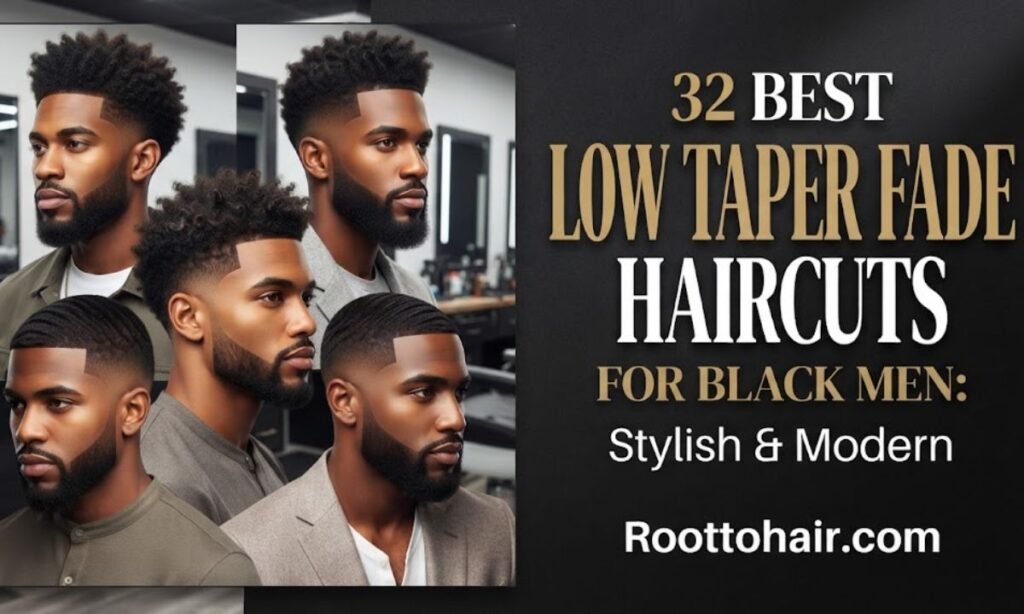
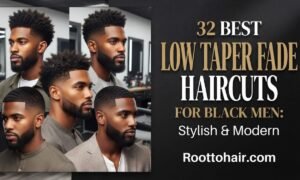
Low taper fades are one of the most requested cuts for Black men, and for good reason. The fade starts low around the ears and neckline, keeping the sides clean and sharp while leaving plenty of length on top. This guide covers 32 stylish, modern takes on the look.
Whether you wear waves, twists, curls, or a textured crop, there’s a low taper fade to match your hair type and personal style. Each option shows how the cut frames your face and sits well with natural texture. You’ll find ideas for every length, from short and low-maintenance to bold and voluminous.
Beyond the style ideas, you’ll get tips to help you communicate exactly what you want to your barber. We also share simple maintenance advice to keep your fade looking fresh between visits. Use these looks as inspiration for your next haircut.
What Is a Low Taper Fade for Black Men and Why Does It Work So Well?
A low taper fade works well because it adds shape and cleanliness where a haircut usually looks messiest first: the edges. It keeps most of your length and texture, frames the face and grows out gracefully. That flexibility is a big reason it appears across Black men’s hairstyles, from close crops to Afros and locs.
What Is a Low Taper Fade for Black Men?
A low taper fade is a haircut in which the hair around the sideburns, the temples and the back of the neck is shortened gradually, starting from a low point near the ear and hairline. Above that point, the sides keep more length and blend into the top. Barbers usually describe this as “tapering” the edges.
Placement matters. The taper begins around the sideburn area, curves behind the ear and finishes at the neckline. At the temples, the hair is cut a little closer than the sides, which is what gives the face a defined frame. The neckline can be left natural, cleaned up or shaped, depending on what you ask for.
The top can be anything: a buzz, waves, a rounded Afro, twists or locs. The taper only handles the outer edge, which is why the style is so adaptable. Some barbers also add a line-up (also called a shape-up or edge-up), which is a crisp outline along the forehead and temples.
Why Does This Cut Work So Well on Black Hair?
The low taper fade works so well because it follows the natural density and curl pattern of Black hair. The gradual blend from short sides to longer top creates clean, defined lines that hold their shape all day.
It also adds contrast and structure, which makes textured styles like waves, coils, and twists stand out. Because the fade stays low and subtle, it frames the face neatly and looks polished without being hard to maintain.
Low Taper Fade vs. Other Fades: What Every Black Man Needs to Know
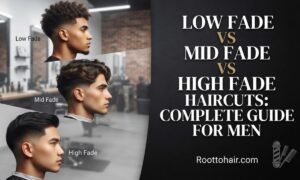
The main differences between fades are where they start and how much skin shows. A low taper begins near the ear and neckline and leaves most of the sides in place, while higher fades climb toward the temple or crown. The table below compares the styles you are most likely to hear about at the barbershop.
| Style | Where It Tapers/Fades | Overall Look | Maintenance | Best For |
| Low Taper Fade | Sideburns and neckline only | Soft, clean, understated | Lower | Everyday and professional looks |
| Low Fade | Starts low but drops to skin or very short | Sharper contrast, more visible blend | Moderate | Short tops, waves, beards |
| Mid Taper Fade | Around the temple level | Balanced, noticeable shaping | Moderate | Medium tops, defined sides |
| High Taper Fade | High on the sides, near the crown | Bold, high contrast | Higher | Short or voluminous tops |
Frequencies and results vary with hair growth, so use the maintenance column as a rough comparison rather than a rule.
Low Taper Fade vs. Low Fade
A low fade usually goes shorter, often down to skin, and the blend is more dramatic. A low taper keeps more length at the edges, so the effect is subtler. If you like a clear skin blend, ask for a low fade. If you want a tidy, natural frame, the taper is the safer choice.
Low Taper Fade vs. Mid Taper Fade
A mid taper starts higher on the head, around the temple, which makes the sides look shorter overall. It changes the shape of the head more than a low taper does. People with fuller tops sometimes like the extra contrast, while others prefer the softer low version.
Low Taper Fade vs. High Taper Fade
A high taper begins near the upper sides and creates a strong, graphic look. It tends to emphasize the top, especially a high top, flat top or a tall Afro. The low taper keeps the silhouette rounder and quieter. Higher tapers usually need touch-ups sooner because the shortest zone is more visible.
Taper vs. Fade: What Is Actually the Difference?
A taper shortens the hair gradually, but the shortest part often stays at a visible length, so you still see hair at the edge. A fade usually goes down to the skin or very close to it, creating a more dramatic gradient. Many barbers use “taper fade” for a cut that combines both ideas, which is why the terms overlap in everyday conversation.
32 Best Low Taper Fade Black Male Styles
If you want to browse quickly, this summary groups the 32 styles by category before the full descriptions. Details are in each entry below.
| Category | Styles | Typical Top | Overall Look |
| Short & Classic | 1–5 | Short, close-cut | Neat and low effort |
| Waves & Curls | 6–9 | Defined waves, curls, coils | Textured and defined |
| Afro | 10–13 | Short to tall volume | Rounded, full shape |
| Protective & Long | 14–19 | Twists, braids, locs, coils | Structured length |
| Beard Combos | 20–22 | Short to medium | Balanced face frame |
| Bold & Creative | 23–25 | Varies | Sharp, expressive |
| Boys & Teens | 26–27 | Short to medium | Practical, age-friendly |
| More Styles | 28–32 | Mixed | Distinct variations |
Short & Classic Styles
These styles keep the top short and the shape clean. They suit people who want a quick routine and a sharp edge without much styling.
1. Low Taper Fade Black Male Short Hair

Look: Short hair on top, about an inch or less, with the taper hugging the sideburns and neckline. It reads as tidy and simple, with the texture visible but not dominant.
Best match: Works across most textures, especially medium to high density, where the short top keeps a full, even shape. It suits anyone who wants a straightforward look for work or everyday life.
Barber request: “Low taper on the sides and back, keep the top short but with a little texture, natural neckline.”
Styling & care: A light moisturizer is usually enough. Brush if you wear waves or want a smoother finish, or finger-comb for a textured look.
Best tip: Ask your barber to leave the same length on the sides above the taper so the shape stays even as it grows.
2. Low Taper Fade Buzz Cut

Look: A uniform clipper-cut top, usually one guard length, with a taper at the edges. It is the cleanest and most minimal version of the cut.
Best match: Good for dense or thinner hair alike, and for people who want almost no styling. Faces with strong bone structure often show off the buzz well.
Barber request: “I want a buzz on top at a number two, with a low taper around the ears and neck.”
Styling & care: Wash, moisturize the scalp lightly, and you are done. Short hair still dries out, so a little oil or lotion helps.
Best tip: Because a buzz shows everything, check your scalp for dryness and use sunscreen on exposed areas outdoors.
3. Low Taper Fade Caesar Cut

Look: A short, even top with a slightly forward fringe, paired with a low taper. The fringe sits across the forehead for a classic, structured look.
Best match: Suits tighter coils and waves that can hold a forward direction, and anyone with a receding temple who prefers a softer hairline. Straighter or looser curls may need more product.
Barber request: “Caesar cut with a short fringe, low taper on the sides and neck, and keep the fringe even.”
Styling & care: Brush the hair forward with a soft brush or comb while it is slightly damp. A light pomade can hold the fringe if needed.
Best tip: Ask for a fringe length you can maintain, since a longer fringe can lift or curl with humidity.
4. Low Taper Fade Crew Cut

Look: Short on the sides and slightly longer on top, with the front sometimes a bit higher. The taper sits low and keeps the sides neat without looking severe.
Best match: Works well for people who want something athletic and low maintenance. It suits medium density and short to medium curl patterns.
Barber request: “Crew cut with a low taper, a little longer in the front, short everywhere else.”
Styling & care: Brush or pick the top upward slightly, then use a small amount of cream to reduce dryness.
Best tip: Ask for the front to be only a little longer than the rest, since a big difference can look heavy on thinner hair.
5. Low Taper Fade Textured Crop
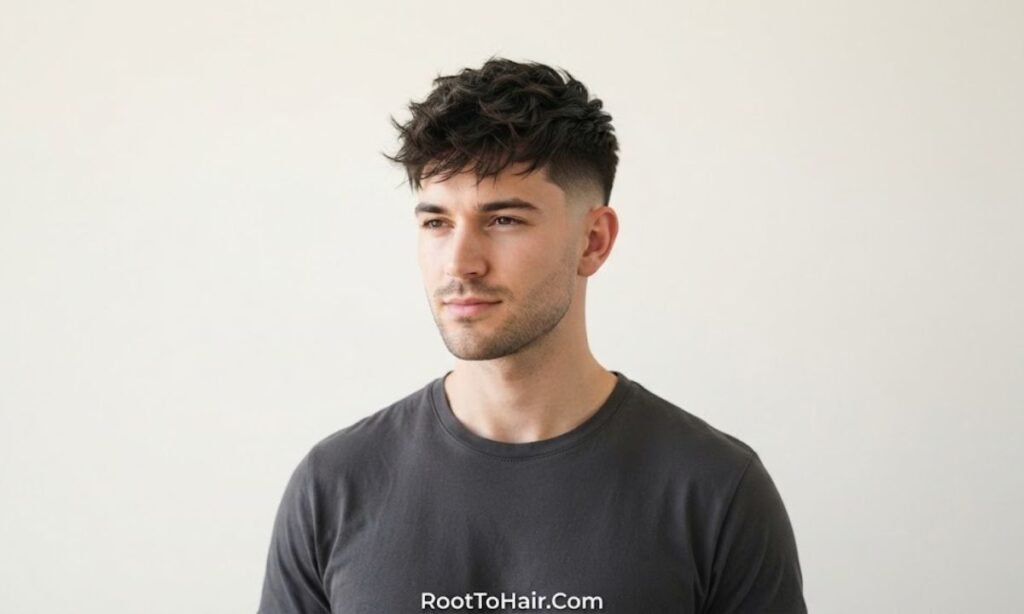
Look: A short top with visible texture and a slightly choppy finish, framed by a low taper. It looks casual and lived-in, not slicked down.
Best match: Good for hair that curls or coils naturally, from Type 3C through 4C. The cropped length keeps definition easy to manage.
Barber request: “Textured crop on top with a low taper, keep it a bit messy and not too sharp.”
Styling & care: Apply a curl cream or light styling product to damp hair and finger-define. Avoid heavy gel that flattens the texture.
Best tip: Ask the barber to point-cut or add texture on top, rather than cutting it flat, so the crop keeps movement.
Waves & Curl Styles
These styles lean on texture. Hydration matters more here than in a buzz, because definition depends on moisture and technique.
6. Low Taper Fade with 360 Waves
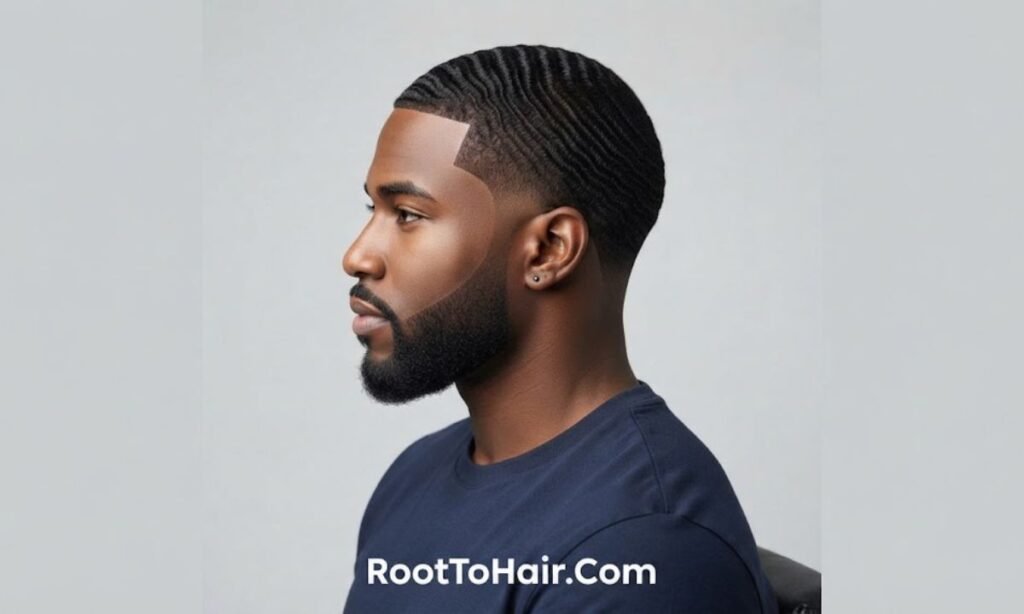
Look: Waves spiral around the head in a continuous pattern, with the taper cleaning the edges. The contrast between the tapered edge and the wave pattern makes the ripple stand out.
Best match: Best on hair that is cut short and responds to brushing and compression. It suits people who enjoy a consistent wave routine and have patience for the early stages.
Barber request: “Low taper with a clean neckline, keep the top short enough to wave, and don’t cut into the wave pattern.”
Styling & care: Brush regularly, moisturize, and wear a rag or wave cap at night if you want to support the pattern. Be gentle around the taper.
Best tip: Get your waves cut at a consistent length so the pattern develops evenly, and avoid cutting too short between visits.
7. Low Taper Fade Curly Hair
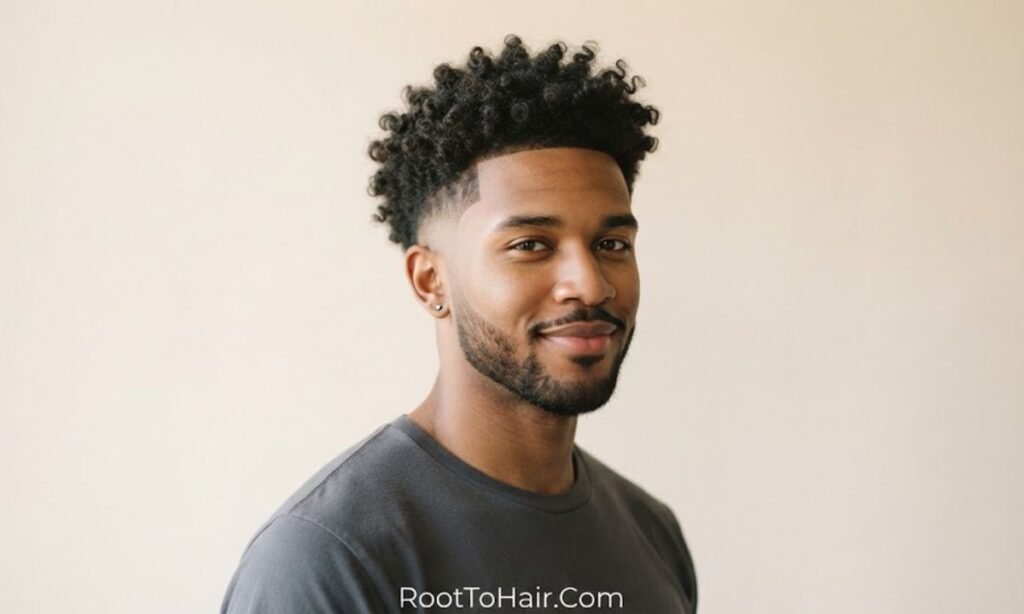
Look: Defined curls on top with a tidy low taper around the edges. The curls sit on a soft, rounded shape that frames the face.
Best match: Suits Type 3C and some 4A hair, especially with medium density. It works for anyone who wants curl definition without a lot of length.
Barber request: “Leave the curls on top with some length, and give me a low taper around the sides and neck.”
Styling & care: Wash gently, apply a leave-in conditioner, and scrunch a curl cream through damp hair. Air dry or diffuse on low heat.
Best tip: Ask your barber to cut curls dry or lightly dampened so they can see the actual shape, since wet curls stretch.
8. Low Taper Fade with Natural Coils
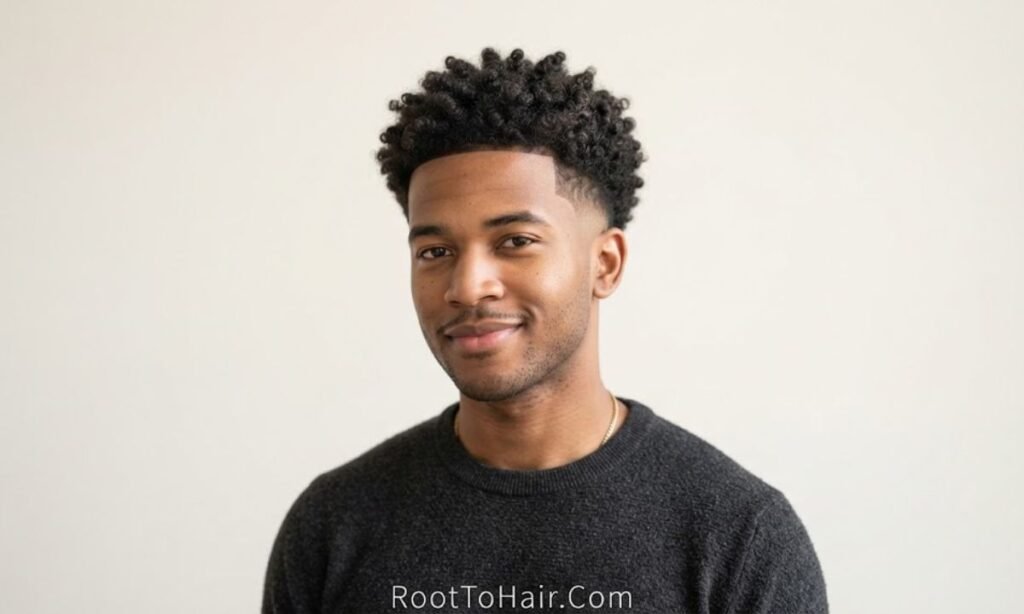
Look: Tight, springy coils left natural on top, framed by a low taper. The look is organic and shows off the hair’s own pattern.
Best match: Ideal for Type 4A through 4C hair that you want to keep defined and hydrated. It works for people who prefer wash-and-go styling.
Barber request: “I’d like to keep my natural coils on top, with a low taper and a soft, rounded shape.”
Styling & care: Keep coils moisturized with a water-based product and a light sealant. Detangle gently when damp.
Best tip: Coils shrink as they dry, so ask your barber to account for that when judging top length.
9. Low Taper Fade with Sponge Curls
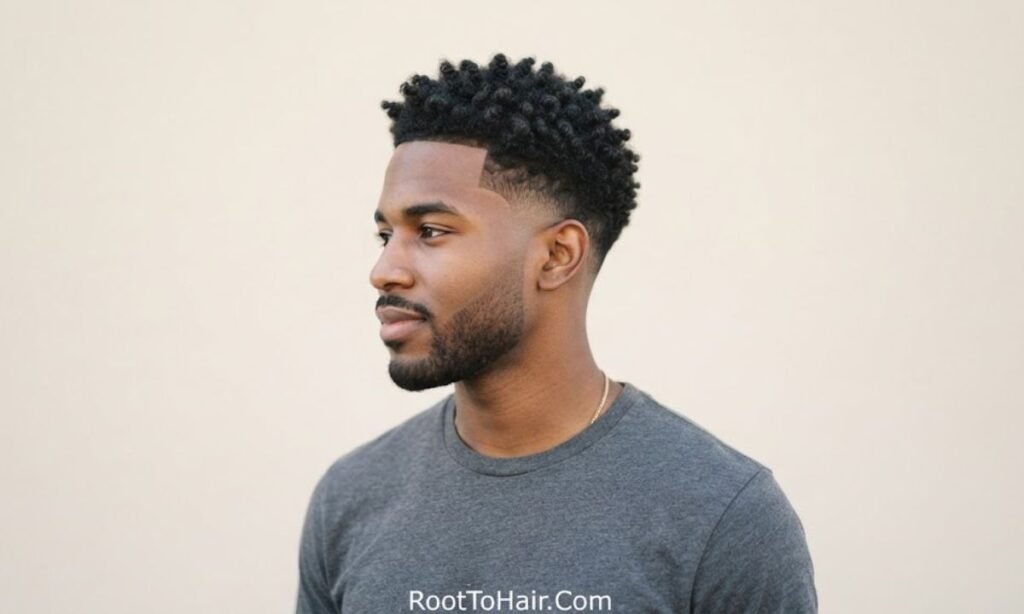
Look: Small, defined curls on top created by twisting with a sponge, paired with a low taper. The result is a textured, patterned top with a clean edge.
Best match: Best for short to medium hair with enough coil to hold the twist. It works for people who like a quick styling routine and a visible texture pattern.
Barber request: “I want sponge curls on top with a low taper and a sharp line-up.”
Styling & care: Use a curl sponge on damp, moisturized hair in small circular motions. Reapply a bit of product as needed.
Best tip: Start with a clean, moisturized base, because dry hair does not form tight curls well.
Afro Styles
Afro-based styles aim to keep volume while the taper frames the shape. The goal is to avoid cutting away the fullness you want on top.
10. Low Taper Fade Afro (Short)

Look: A compact, rounded Afro about an inch or two long, with a low taper around the ears and neck. It looks neat and natural.
Best match: Suits people who want a small Afro without much upkeep. It fits most facial shapes and works across coily textures.
Barber request: “Short Afro on top, rounded shape, low taper on the sides and neck.”
Styling & care: Pick out the hair gently, mist with water or leave-in, and shape with a pick. Avoid over-picking, which can cause breakage.
Best tip: Ask your barber to round the Afro with scissors or a clipper-over-comb, rather than leaving it flat on top.
11. Low Taper Fade Afro (Medium to Full)
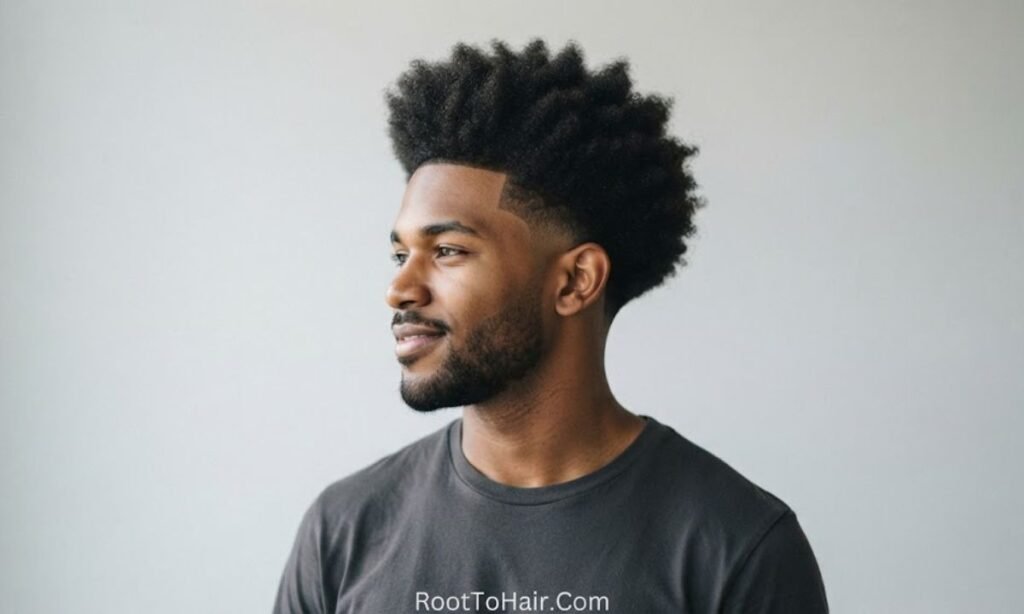
Look: A larger, fuller Afro with a low taper cleaning the edges. The contrast between the neat edge and the voluminous top is the main feature.
Best match: Works best for dense hair that holds volume, and for faces that can balance a fuller shape. People with thinner density can still wear it with the right shaping.
Barber’s request: “I want a full Afro, shaped round, with a low taper that doesn’t take away from the volume.”
Styling & care: Moisturize regularly and detangle in sections. A satin pillowcase or bonnet can help reduce friction overnight.
Best tip: Have the barber trim the Afro shape in sections so it stays balanced from every angle.
12. Low Taper Fade High Top

Look: Hair on top stands up in a flat or slightly rounded platform, with the taper framing the sides. The silhouette is tall and structured.
Best match: Suits tighter coils with enough density to stand upright, and people who want a bold, retro-leaning shape. It needs a fair amount of hair on top.
Barber request: “High top with a flat top, low taper on the sides and neck, and keep the shape squared.”
Styling & care: Pick upward, then use a small amount of light product to hold the shape. Keep the hair moisturized to prevent dryness.
Best tip: Ask for the top to be lightly blended into the sides so the transition does not look abrupt.
13. Low Taper Fade Frohawk

Look: A strip of longer hair along the center of the head with a low taper on the sides. It creates a narrow, upright shape.
Best match: Good for coyly hair that stands up well, and for people who want something more distinctive than a standard Afro. It fits oval and longer face shapes nicely.
Barber request: “Frohawk with a medium-width center, low taper on the sides, and a neat neckline.”
Styling & care: Pick upward and shape with a pick. A touch of cream can keep the sides from drying out.
Best tip: Decide the width of the strip with your barber first, since a narrow strip changes the face’s proportions more than a wide one.
Protective & Long Styles
Longer styles need more care. A low taper keeps the edges tidy while the length does the work, but scalp and hair care become more important.
14. Low Taper Fade with Two-Strand Twists

Look: Rope-like twists on top, made by twisting two strands together, paired with a low taper. The twists contrast with the clean edges.
Best match: Suits hair that is at least a few inches long, with Type 4A to 4C coils holding twists well. It is a good option for people who want a defined, low-manipulation look.
Barber request: “Low taper on the sides and neck so my two-strand twists look neat on top.”
Styling & care: Moisturize and seal the twists regularly, and keep your scalp clean. Avoid twisting too tightly, which can stress the hairline.
Best tip: Time your taper refresh to just before you retwist, so the edge looks sharp when the twists are new.
15. Low Taper Fade with Sponge Twists
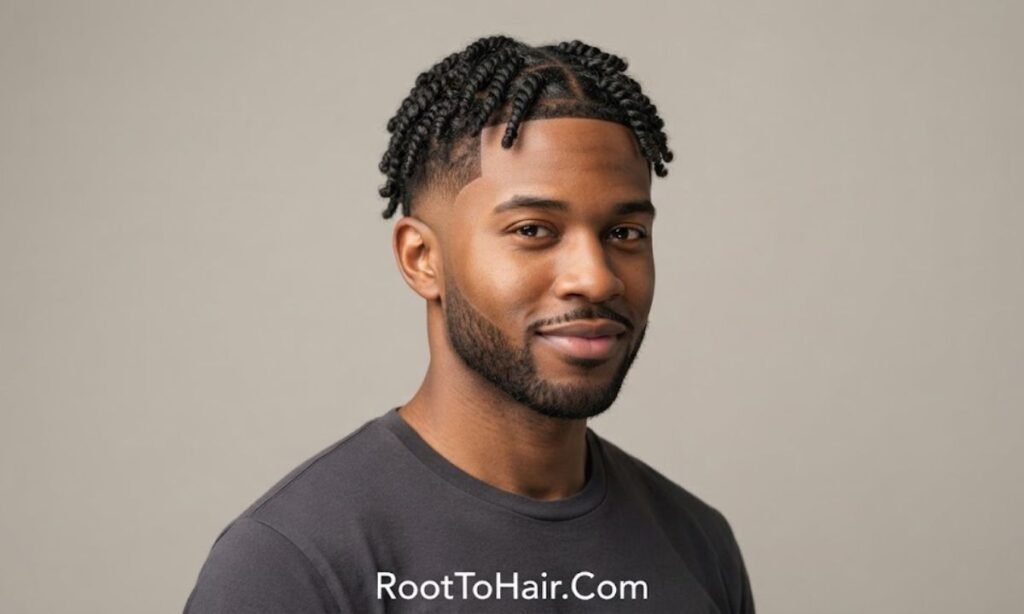
Look: Short, bumpy twists created with a sponge, combined with a low taper. The surface looks patterned and textured.
Best match: Best for short to medium hair that coils tightly. It suits anyone who wants texture without a long styling routine.
Barber request: “Sponge twists on top with a low taper and a clean line-up.”
Styling & care: Use a sponge on damp, moisturized hair, then let it set. Reapply a light product as needed.
Best tip: Keep the sponge motion consistent so the twists look even across the whole top.
16. Low Taper Fade with Box Braids

Look: Square-parted braids on top with a low taper at the sides and back. The braids sit above a tidy edge.
Best match: Requires enough length to braid, usually a few inches. It suits people who want a long-lasting style and do not mind the time investment.
Barber request: “Low taper on the sides and neckline, with box braids on top, parted cleanly.”
Styling & care: Keep the scalp clean and moisturized, and avoid tension at the roots. Check braids for frizz and refresh as needed.
Best tip: Taper before the braids go in, then freshen the edge once the braids have settled, so the lines stay sharp.
17. Low Taper Fade with Cornrows

Look: Straight or patterned braids close to the scalp, paired with a low taper. The edge frames the braided lines neatly.
Best match: Works for hair of braidable length and a range of textures. It suits people who want a neat, low-profile style.
Barber request: “Low taper with cornrows on top, straight back, clean parting.”
Styling & care: Moisturize the scalp lightly and avoid heavy product buildup. Protect the braids at night with a scarf or bonnet.
Best tip: Do not pull cornrows too tight, since tension can irritate the scalp and hairline.
18. Low Taper Fade with Locus (Dreadlocks)

Look: Locs on top of the head with a low taper around the sides and neck. The edges stay clean while the locs provide length and texture.
Best match: Suits people who have committed to locs or plan to. The taper helps keep the style looking intentional at different loc lengths.
Barber request: “Low taper around the sides and back, leave my locs full on top, and keep the neckline natural.”
Styling & care: Wash regularly to avoid buildup, retwist as needed, and keep the scalp moisturized. Choose residue-free products.
Best tip: Ask for the taper to start low enough that the roots of your locs are not cut away.
19. Low Taper Fade with Finger Coils

Look: Small, defined coils created by twirling the hair around a finger, with a low taper on the sides. The result is neat and patterned.
Best match: Best for shorter, coily hair that holds a twirl. It suits people who like defined texture and have time for a longer styling session.
Barber request: “I’m doing finger coils on top, so a low taper and a neat edge-up, please.”
Styling & care: Apply a curl cream or gel to damp hair and twirl small sections. Let them set before touching.
Best tip: Work in small sections so the coils stay even and last longer.
Beard Combination Styles
When you add a beard, the taper has to work with it. The goal is a smooth flow from sideburn to jawline.
20. Low Taper Fade with Full Beard
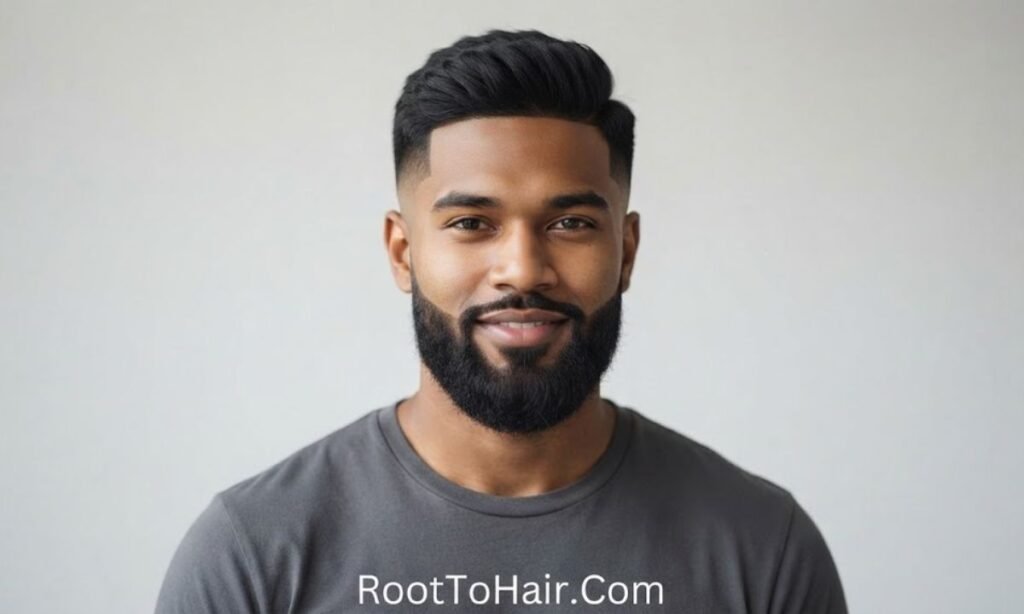
Look: A full beard that flows into the sideburn area, framed by a low taper. The haircut and beard read as one connected shape.
Best match: Suits people with enough facial hair density to fill in the jaw and chin. It works particularly well on round or square faces that benefit from structure.
Barber request: “Blend my low taper into my full beard at the sideburn and keep the beard shaped along the cheek line.”
Styling & care: Wash and condition the beard, and use a beard oil or balm. Brush or comb it to keep it neat.
Best tip: Ask the barber to define the cheek line, since a clean line makes a full beard look more intentional.
21. Low Taper Fade with Short Trimmed Beard
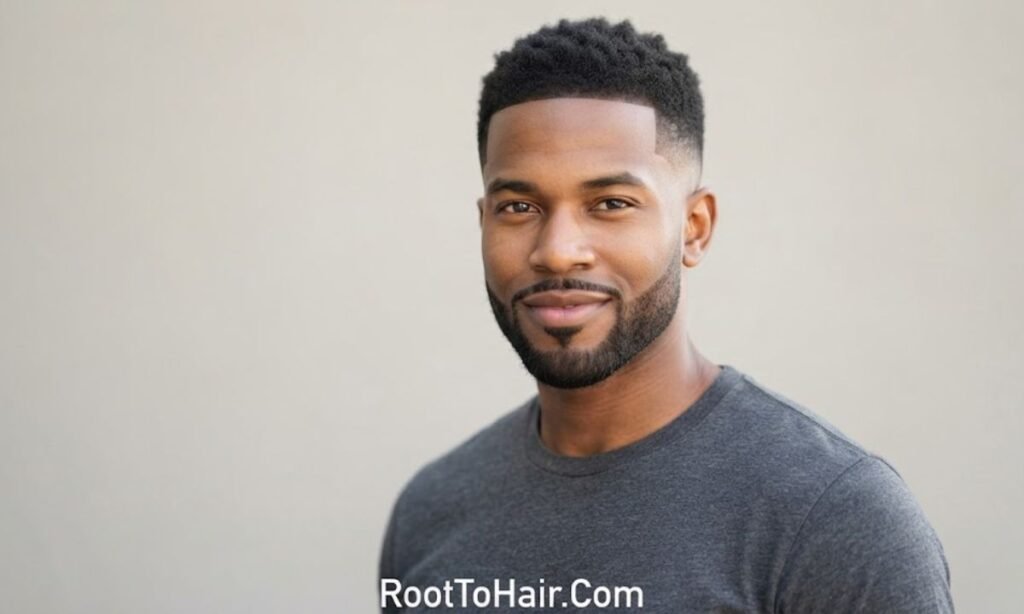
Look: A closely trimmed beard paired with a low taper. The look is neat and understated.
Best match: Good for people who prefer a tidy, professional appearance. It suits lighter beards and works across many face shapes.
Barber request: “Low taper with a short, trimmed beard, blended smoothly at the sideburns.”
Styling & care: Trim regularly and moisturize the skin underneath. Use a light oil to keep the beard soft.
Best tip: Keep the neckline of the beard consistent with your haircut neckline so the overall look stays cohesive.
22. Low Taper Fade with Goatee
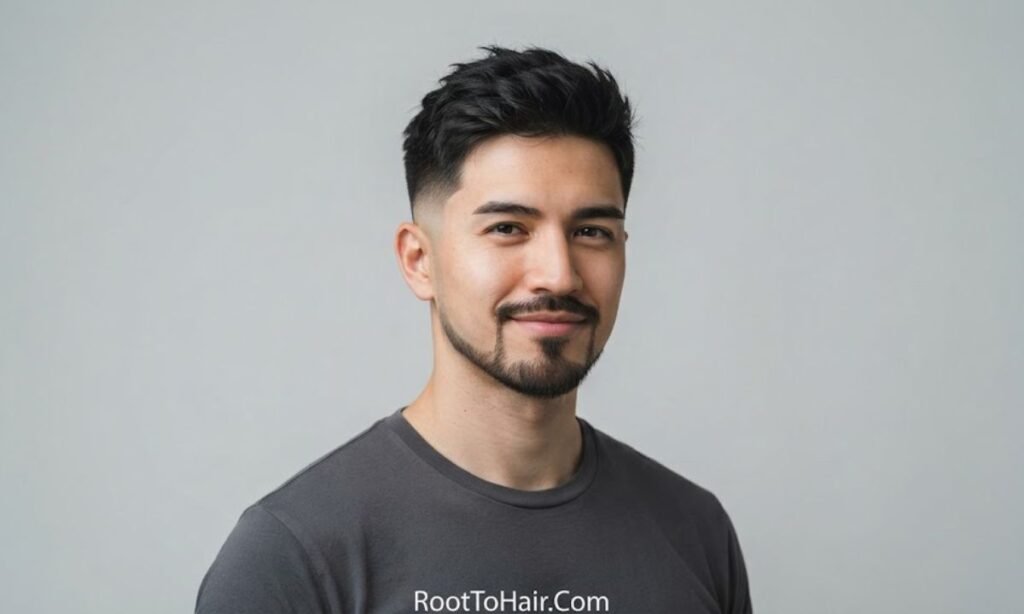
Look: A goatee on the chin, with a low taper above. The facial hair is limited to the chin area, which gives a focused accent.
Best match: Suits people who want a small amount of facial hair and a clean jawline. It can balance a rounder face.
Barber request: “Low taper with a shaped goatee and a clean jawline.”
Styling & care: Trim the edges regularly and keep the goatee conditioned. Reshape as it grows out.
Best tip: Ask for the goatee width to match your mouth line so it stays in proportion.
Bold & Creative Styles
These styles add personality. Precision matters most, so communicate clearly with your barber.
23. Low Taper Fade with Hair Design
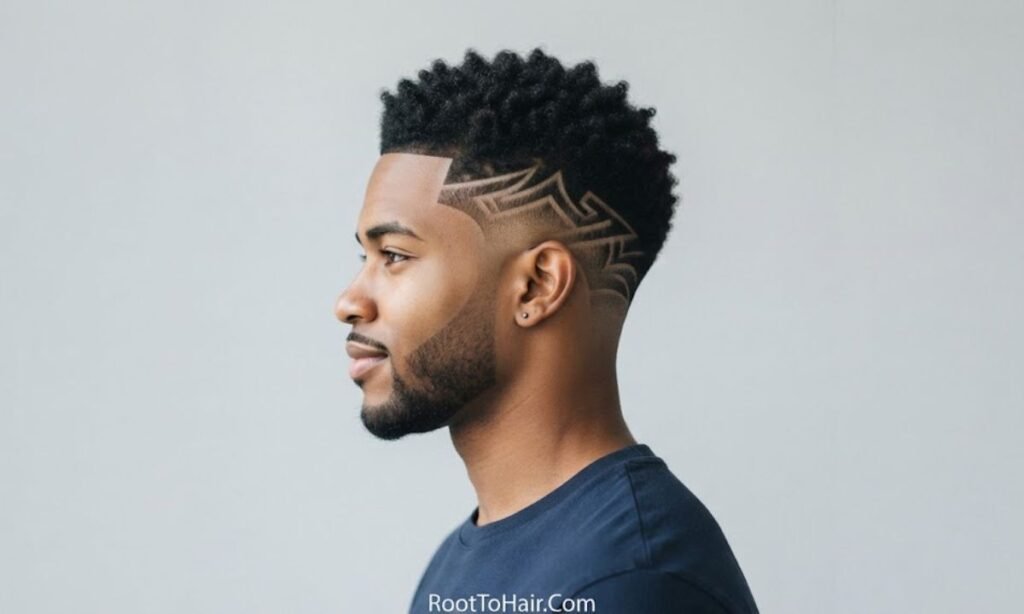
Look: A taper with a shaved or etched design, such as lines, shapes or patterns, usually placed on the side or back. The design draws attention to the fade area.
Best match: Suits people who want a personal accent and have a barber skilled in designs. Hair needs to be short enough in the design zone.
Barber request: “Low taper with a small design above the ear, something simple and clean.”
Styling & care: Touch up the design as it grows out, and keep the rest of the hair moisturized. Designs fade quickly as hair regrows.
Best tip: Bring a reference image and ask the barber to sketch the design placement before cutting.
24. Low Taper Fade with Line-Up (Shape-Up / Edge-Up)

Look: A sharp outline along the forehead and temples, combined with a low taper. The crisp edges make the haircut look polished.
Best match: Works for anyone who likes a clean frame. It is especially popular for those who want a sharp finish with short or medium hair.
Barber request: “Low taper with a clean line-up, a natural-looking hairline, and don’t cut it too far back.”
Styling & care: Keep the line-up fresh with regular visits, and avoid shaving it yourself without guidance. Moisturize the area to reduce irritation.
Best tip: Ask the barber to follow your natural hairline rather than pushing it back, which can look harsh over time.
25. Low Taper Fade Blowout
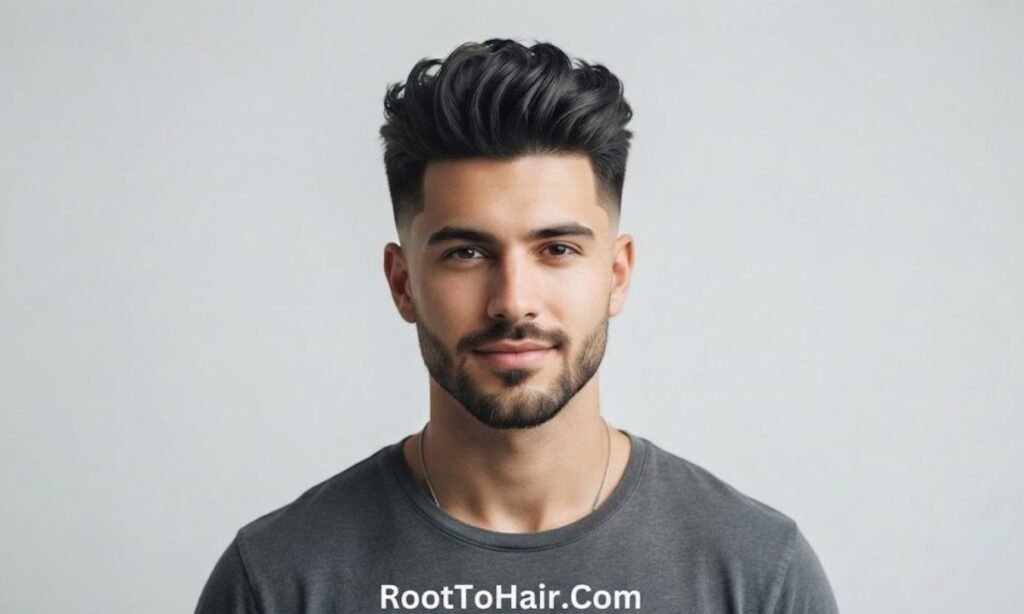
Look: Hair on top is blow-dried upward or outward for extra volume, framed by a low taper. It gives a full, soft texture with a neat edge.
Best match: Suits medium-length curls and coils that you want to stretch and style. It works for people who enjoy styling.
Barber request: “Low taper with a blowout on top, a bit of height, and a clean neckline.”
Styling & care: Use a heat protectant and blow-dry on a low or medium setting. Moisturize afterward to counter dryness.
Best tip: Limit heat use so you do not dry out your hair, and always use a protectant.
Styles for Black Boys and Teens
Boys and teens often want something neat, easy and school-appropriate. Hair varies, so check what works for the child’s texture and routine.
26. Low Taper Fade for Black Boys (Ages 8–12)
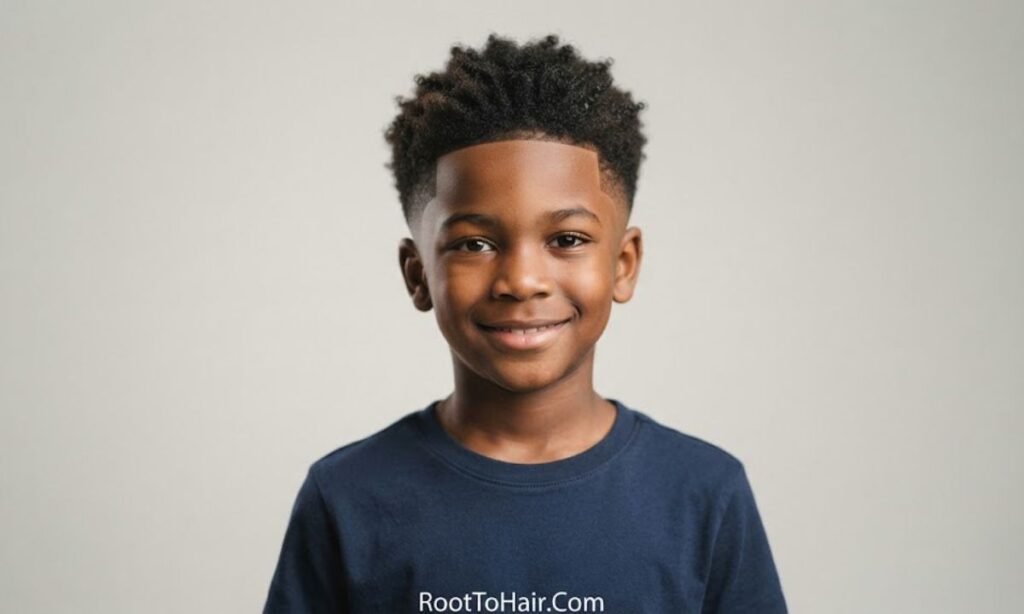
Look: Short, tidy hair with a soft taper at the edges. The look is neat, clean and easy to maintain.
Best match: Suits active kids who need a low-fuss cut for school and sports. The top can be short or slightly longer depending on preference.
Barber request: “Low taper with a short top, natural neckline, and keep it easy for him to take care of.”
Styling & care: Keep the scalp moisturized and avoid heavy products. A soft brush works for most boys.
Best tip: Let your child say what they like. Being comfortable with the cut makes it easier to keep up.
27. Low Taper Fade for Black Teens (Ages 13–17)
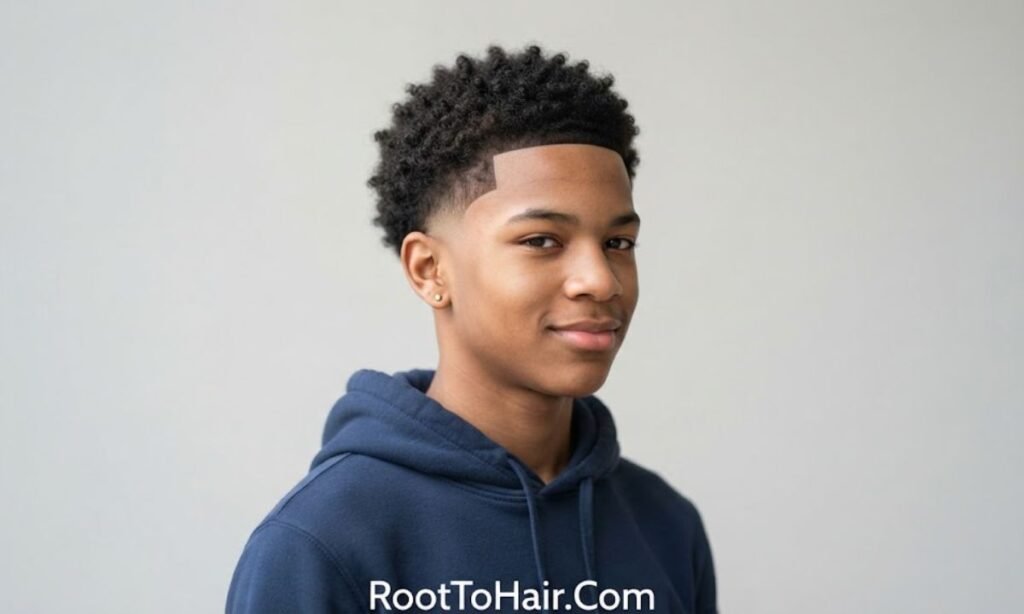
Look: A taper with a top length that fits the teen’s style, from short and clean to textured or curly. Teens often like to add small details.
Best match: Works for teens who want a polished look without constant upkeep. It adapts to school dress codes and social settings.
Barber request: “Low taper with a medium top, a little texture, and a clean line-up that’s not too sharp.”
Styling & care: Use a light cream or oil and brush or finger-style. Keep up with regular barber visits.
Best tip: Check your school’s guidelines before choosing designs or bold colors.
More Styles to Try
These variations stand out in specific ways, whether through structure, color or simplicity.
28. Low Taper Fade with Flat Twist
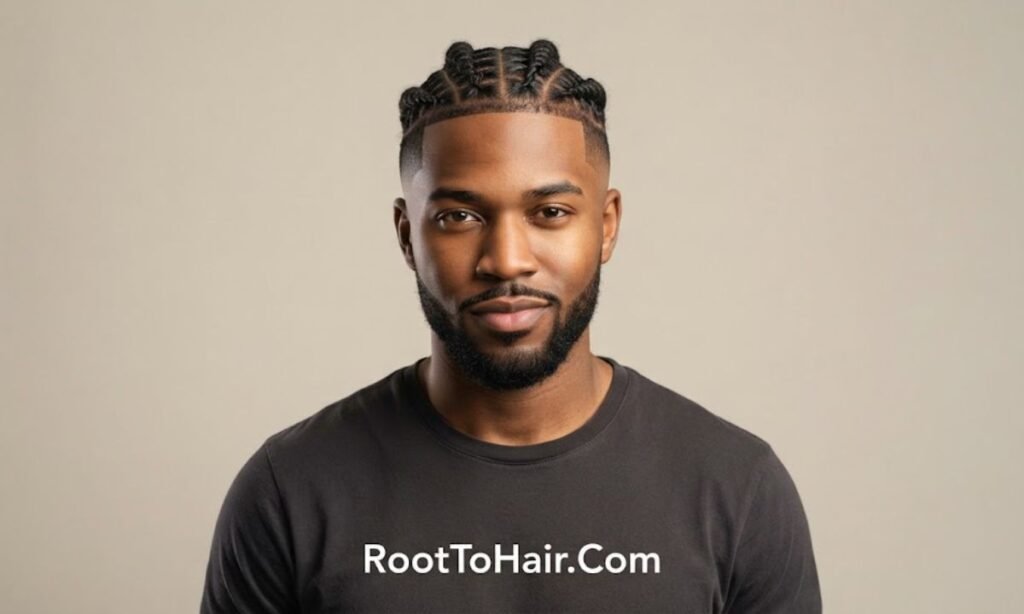
Look: Twists that lie flat against the scalp, usually on top, with a low taper at the sides. The flat pattern creates a neat, sculpted surface.
Best match: Suits medium-length coily hair that can twist flat. It works for anyone who wants texture without volume.
Barber request: “Low taper with flat twists on top, simple pattern, neat parts.”
Styling & care: Keep the scalp moisturized and avoid heavy product buildup. Protect the twists at night.
Best tip: Choose a pattern that fits your head shape, since flat twists emphasize the scalp lines.
29. Low Taper Fade with Curly Fringe

Look: Curls fall forward over the forehead, with a low taper on the sides. The fringe adds a soft, casual feel.
Best match: Suits Type 3C to 4A curls with enough length to fall forward. It works well for longer or oval faces.
Barber request: “Curly fringe in front, low taper around the sides and neck.”
Styling & care: Use a curl cream and diffuse or air dry. Shape the fringe with your fingers.
Best tip: Ask for a fringe length that clears your eyebrows so it does not get in your face.
30. Low Taper Fade with Colored Tips
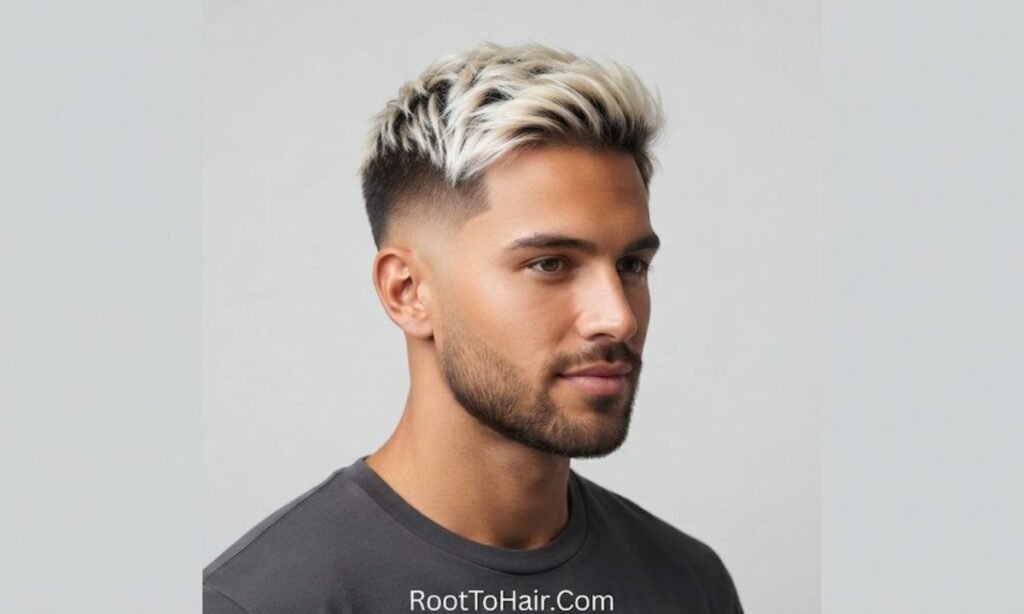
Look: Dyed tips on top with a low taper on the sides. The color adds contrast against natural dark hair.
Best match: Suits people who like experimenting and have hair length to color. It works best on healthy, moisturized hair.
Barber request: “Low taper with colored tips on top, something subtle, and a clean edge.”
Styling & care: Use color-safe shampoo and condition regularly. Lightening can dry hair, so extra moisture helps.
Best tip: Consult a colorist about hair health before bleaching, especially on already dry or fragile hair.
31. Classic Low Taper Fade (Natural Length, No Top Style)
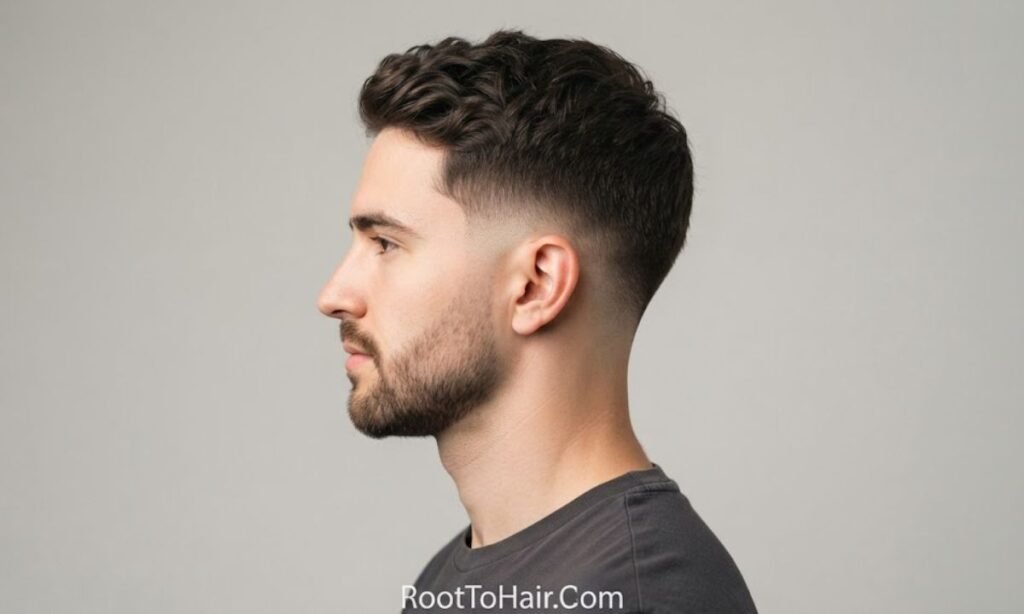
Look: The simplest version: a low taper with your natural hair length on top, no styling or shaping. It looks relaxed and natural.
Best match: Suits anyone who wants minimal fuss. It works across textures and densities.
Barber request: “Just a low taper on the sides and neck, leave the top at its natural length.”
Styling & care: Moisturize and brush or comb as you like. Minimal product is needed.
Best tip: Use this as a baseline to test the taper before adding extras like designs or color.
32. Low Taper Fade with Hard Part Line
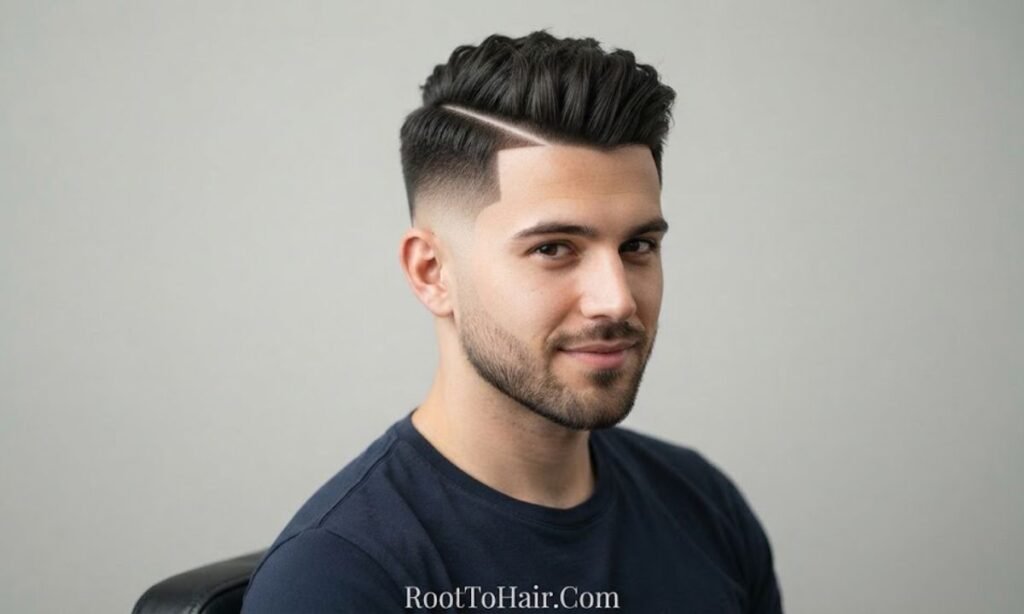
Look: A shaved or razored part line on the side of the head, combined with a low taper. The line creates a defined divide between the top and side hair.
Best match: Works well for short to medium tops, and for people who like a classic, structured look. It suits waves and brushed styles.
Barber request: “Low taper with a hard part on the left, thin and straight, with a clean finish.”
Styling & care: Brush the top away from the part, and touch up the line as it grows in. Moisturize the skin to avoid irritation.
Best tip: Choose the side that matches your natural hair direction to make styling easier.
Best Low Taper Fade Style for Your Face Shape
Face shape is only one factor. The top hairstyle, volume and proportions matter just as much, and a taper can be adjusted to suit them. The table below gives general starting points, not rules.
| Face Shape | Recommended Taper Approach | Why It Can Work | Styling Consideration |
| Oval | Standard low taper | Keeps natural balance | Most tops can work |
| Round | Low taper with height on top | May help lengthen the face | Avoid very wide sides |
| Square | Softer, slightly rounded taper | Can soften strong angles | Keep top textured |
| Diamond | Low taper with fuller sides | May balance wide cheekbones | Add volume at forehead |
| Heart/Triangle | Low taper with fuller top | Can balance a narrow chin | Pair with a beard if desired |
| Oblong/Long | Low taper with less height | May reduce length | Avoid tall tops |
Oval Face
Oval faces have balanced proportions, so most tapers and tops can work well. A low taper keeps that balance without adding bulk at the sides. You can try anything from a short crop to a medium Afro.
Tip: Because many styles suit this shape, choose based on your texture and routine rather than trying to fix proportions.
Round Face
Round faces are about as wide as they are long, with softer angles. A low taper with some height or texture on top may help lengthen the look of the face. Keep the sides tidy so they do not add extra width.
Tip: Ask your barber for a bit of volume on top and a clean temple taper.
Square Face
Square faces have a strong jaw and a broad forehead. A low taper with a softer, slightly rounded shape can balance those angles. Texture on top, like curls or coils, also tends to soften the overall look.
Tip: Avoid very sharp, boxy line-ups if you want to soften the angles.
Diamond Face
Diamond faces are widest at the cheekbones, with a narrower forehead and chin. Fuller sides and a little volume near the forehead may help balance that width. A low taper keeps the cheekbone area from looking too thin.
Tip: Try a textured fringe or forward-swept top to add width at the forehead.
Heart/Triangle Face
Heart-shaped faces have a wider forehead and a narrower chin. A fuller top can balance a narrow chin, while a low taper keeps the sides slim. A beard can also help fill out the lower face.
Tip: Avoid cutting the sides too close if you want to keep proportion.
Oblong/Long Face
Long faces are longer than they are wide. A low taper with less height on top, plus some width at the sides, may help reduce the look of length. Fringes and forward styles can also help.
Tip: Skip tall tops like a high top if you want to keep the face from appearing longer.
How Black Hair Textures Work with the Low Taper Fade
Curl typing, such as Type 3C or 4C, is one way to describe hair, but it does not tell the full story. Two people with the same type can have different density, strand thickness, moisture needs and growth patterns. Use the table as a reference, not a label.
| Hair Type | Texture Characteristics | Taper Consideration | Styling Consideration |
| Type 3C | Tight, springy curls | Taper shows well | Curl creams, definition |
| Type 4A | Defined small coils | Clear contrast at edge | Moisture, light holds |
| Type 4B | Z-shaped, less defined | Taper frames shape | Stretch, shrinkage care |
| Type 4C | Very tight coils, high shrinkage | Edge looks crisp | Moisture-heavy routine |
Type 3C Hair with Low Taper Fade
Type 3C hair has tight curls that spring back and often show definition when moisturized. A low taper frames the curls and keeps the sides neat. It suits curly tops, fringes and short crops.
Because curls can look different wet and dry, ask your barber to check the shape in both states. Light curl products can help definition without weighing the hair down.
Type 4A Hair with Low Taper Fade
Type 4A hair has small, defined coils that often form an S-shape. A low taper makes those coils look neat at the edges. This type often suits sponge curls, finger coils and short Afros.
Moisture matters, since coils can dry out. A leave-in conditioner and a light cream often help maintain definition.
Type 4B Hair with Low Taper Fade
Type 4B hair has a zigzag pattern and tends to look less defined. A low taper gives structure and frames the shape. It works for Afros, twists and short crops.
Shrinkage can make the hair look shorter than it is, so discuss true length with your barber. Stretching techniques, like twist-outs or blowouts, can add length.
Type 4C Hair with Low Taper Fade
Type 4C hair is very tightly coiled and experiences high shrinkage. A low taper creates a crisp edge that contrasts with the dense texture. It suits short Afros, high tops and twists.
This texture often needs consistent moisture and gentle handling. Plan your styling so the hair is not over-manipulated.
How to Ask Your Barber for a Low Taper Fade
Clear communication prevents most haircut disappointments. Combine a photo with a few specific details about height, top length and neckline. The table below shows how to phrase common requests.
| Feature | What to Tell Your Barber |
| Taper Height | “Start the taper low, around the ear.” |
| Top Length | “Leave about two inches on top.” |
| Temple Area | “Keep the temples clean but not too short.” |
| Neckline | “Natural neckline, please.” |
| Line-Up | “Light line-up, follow my hairline.” |
| Design | “No design today, just a clean cut.” |
Step 1: Bring a Reference Photo
A good reference photo shows the haircut from the front, side and back. Choose someone with similar hair texture, top length and taper height, since the same cut looks different on different hair. If you can, bring more than one angle.
If the photo shows a different texture, tell your barber what you like about it, such as the shape or the neckline. That helps them adapt it to your hair.
Step 2: Use the Right Barber Language
Knowing a few terms helps. A low taper means the taper begins near the ear and neckline. A temple taper is the shortening around the temple area, and a neck taper is the shortening at the back.
A line-up, shape-up or edge-up is a crisp outline along the hairline. A natural neckline follows your hair’s own shape. A hard part is a razored line, and a design is any shaved pattern.
Step 3: Specify Your Neckline Shape
The neckline is the line at the back of your neck. A natural neckline follows your hair’s growth, while a clean neckline removes stray hairs. A rounded neckline curves softly, and a blocked or squared one has straight edges.
No option is universally better. Natural necklines often grow out more gradually, while squared ones can look sharper but may need more frequent upkeep.
Step 4: Describe Your Add-Ons
Add-ons are the extras: a line-up, beard blend, hair design, hard part, color or texture styling. Mention them early so the barber can plan time and technique.
Say what you want and how bold. For example, “light line-up” or “subtle design.” If you want color or texture styling, confirm the barber is comfortable with those services.
Common Mistakes to Avoid at the Barbershop
- Showing an unclear reference: a blurry or distant photo makes it hard to read the details.
- Not specifying taper height: “low” can mean different things to different barbers.
- Not discussing top length: the top changes the whole look.
- Assuming “low taper” explains everything: it covers the edges, not the rest.
- Forgetting neckline preferences: the back is easy to overlook.
- Not saying what you do not want: mention things you want to avoid, like a high line-up or a very short neckline.
How to Maintain Your Low Taper Fade
A low taper looks best when the edges stay clean and the top stays moisturized. Maintenance has two parts: the haircut itself and your regular hair care. Both depend on your texture, growth rate and style.
Maintenance Schedule
| Maintenance Area | General Frequency | Why It Matters |
| Taper Cleanup | Every 2–3 weeks | Keeps edges neat |
| Line-Up | Every 1–2 weeks | Maintains sharp outline |
| Full Haircut | Every 3–5 weeks | Resets shape |
| Moisture Routine | Several times weekly | Prevents dryness |
These are general guides. Faster growth or a sharper look may call for shorter intervals.
Taper freshness fades first, since the shortest zones grow in quickly. Line-ups are the next to blur. Top hair care depends on style: waves need brushing, while twists or locs need periodic retwisting.
Wash according to your hair and scalp needs. Many people with coily hair wash less often than those with other textures, but your scalp comfort should guide you.
Barbershop Visit Schedule
How often you visit depends on hair growth, desired sharpness, taper height, style and personal preference. Someone who wants a razor-sharp look may go every two weeks, while someone with a natural look may stretch it to five or six.
Low tapers are generally more forgiving than higher fades, so you may be able to wait longer between visits. Pay attention to when the style begins to feel off and adjust from there.
Daily Hair Care Routine for Black Hair with a Taper
Keep it simple. Start by gently detangling, then moisturize with a leave-in or water-based product. Seal with a light oil or cream if your hair is dry.
Style gently, using fingers, a pick or a brush depending on your look. Avoid pulling or over-manipulating. At night, a satin or silk bonnet or pillowcase can help reduce friction, if you find it comfortable.
Care for your scalp as well. Keep it clean and moisturized, and notice any irritation or dryness.
Products Every Black Man Needs for His Low Taper Fade
You do not need every product. Choose categories that suit your hair type and style. The table below explains the main ones.
| Product Type | Main Purpose | Best For | How to Use |
| Leave-In Conditioner | Adds moisture | Dry or coily hair | Apply to damp hair |
| Styling Cream | Softens, defines | Curls and coils | Work through hair |
| Curl/Coil Product | Boosts definition | Twists, sponge styles | Apply to damp hair |
| Light Hold Product | Controls shape | Fades, waves, fringes | Use small amount |
Start with one or two products and add only what you need. Specific brands are less important than finding what works with your texture.
The Cultural Significance of the Low Taper Fade for Black Men
The low taper fade has deep roots in Black barbershop culture, where the barber’s chair is a place for craftsmanship, conversation, and community. For generations, a sharp fade has symbolized pride, care, and attention to personal presentation.
Today it carries that legacy into every setting, from the office to the club, while still honoring the artistry of Black barbers. The cut reflects identity and confidence, and it continues to influence men’s hairstyles around the world.
Low Taper Fade Black Male Trends
These are current styling directions, not rankings or predictions of popularity. They reflect what barbers and clients are experimenting with. Trends change quickly, so choose what fits your hair and lifestyle.
Hybrid Texture Combinations
Hybrid looks combine different textures or techniques in one style. For example, you might wear twists on top with a smooth taper at the sides, or pair waves with a curly fringe. The contrast is the point.
These styles work best when each part is done carefully. Talk with your barber about how to blend the sections so the transition looks natural.
Micro-Designs in the Fade Zone
Micro-designs are small, controlled patterns placed in or near the tapered area. They might be a short line, a tiny shape or a subtle break in the fade. Because they are small, they change the look without dominating it.
Placement and precision matter. Hair grows in fast, so expect designs to need frequent touch-ups.
Low Taper Fade with Color
Color can be applied to the tips, as highlights or in subtle patches. It adds contrast against natural dark hair. Lightening hair can dry it out, so plan for extra moisture and conditioning.
Use color-safe shampoo and avoid excessive heat. Discuss hair health with a professional colorist before bleaching.
The “Black Ninja” Low Taper
“Black Ninja” is an informal, social-media term rather than a standard barbering name, and it is not universally recognized. People tend to use it for a very clean, sharply defined low taper with a crisp line-up and a dark, tight finish. Because the meaning varies, do not rely on the name alone.
If you want this look, bring a reference photo and describe the details: taper height, line-up sharpness and top length. That avoids misunderstandings.
Virtual Try-On Tools
Virtual try-on tools let you preview a general style on a photo. They can help you decide between, say, a short crop and an Afro. They are useful for narrowing options.
Digital previews cannot fully predict the result. Hair texture, density, length and growth pattern all affect the real cut. Treat the preview as inspiration and confirm details with your barber.
Frequently Asked Questions
What is a low taper fade for Black men?
A low taper fade is a haircut that gradually shortens the hair around the sideburns and neckline, starting low near the ear. The sides and top keep more length. For Black men, it frames Afro-textured hair neatly and works with waves, curls, twists, locs and beards without removing too much hair.
Is a low taper fade good for 4C hair?
Yes, a low taper fade can work well on 4C hair. The tight coils hold shape and create a crisp contrast at the edges. Keep in mind shrinkage and moisture needs, and talk with your barber about top length so the hair doesn’t end up shorter than expected.
What is the difference between a low taper and a low fade?
A low taper leaves more length at the edges, so the transition looks subtle. A low fade usually goes shorter, often to skin, and creates a more dramatic blend. If you want a soft, natural frame, choose the taper. For stronger contrast, ask for the fade.
How often should a Black man get a low taper fade?
Most people refresh a low taper every two to four weeks, but it depends on hair growth and how sharp you want it to look. Line-ups may need attention sooner. Use the schedule as general guidance and adjust to what feels right for your hair.
Does a low taper fade work with 360 waves?
Yes, a low taper fade works well with 360 waves. The taper keeps the edges clean while the waves stand out on top. You need short, consistent hair on top and a regular brushing routine, along with moisture and night protection to maintain the pattern.
Can you get a low taper fade with an Afro?
Yes, you can pair a low taper fade with an Afro. The taper frames the shape while keeping the volume on top. Ask your barber to shape the Afro round and keep the taper low so it does not remove the fullness you want.
What should I tell my barber for a low taper?
Tell your barber the taper height, top length, neckline type and whether you want a line-up. Bring a reference photo, and mention anything you do not want. A simple script is: “Low taper, natural neckline, leave about two inches on top, light line-up.”
Is a low taper fade good with a beard?
Yes, a low taper fade pairs well with beards. The taper can blend into the sideburns and connect with the facial hair. Ask your barber to define the cheek line and keep the beard and neckline consistent so the overall shape looks balanced.
What face shape suits a low taper fade?
A low taper fade can suit most face shapes. Oval faces have the most flexibility. Round faces may benefit from height on top, square faces from softer edges, and long faces from less height. The top style and proportions matter as much as the taper.
How do you maintain a low taper fade?
Visit your barber for cleanups every few weeks, keep your hair moisturized and handle it gently. Use products suited to your texture, protect your hair at night if you find it helpful, and care for your scalp. Adjust the schedule to your hair growth.
Conclusion
The low taper fade is flexible enough to suit many Black hair textures and styles. Whether you choose a short crop, waves, an Afro, twists, locs or a beard combination, the Low Taper Fade Black Male look gives you a clean frame while keeping your natural length and texture where you want them.
The right choice depends on your hair texture, density, face shape, preferred top style and how much maintenance you want. Bring a reference photo, be specific about taper height, top length and neckline, and talk through anything you want to avoid. A clear conversation makes it much easier to get a low taper fade Black male cut you will enjoy wearing.




















hirdgjslhpohkigzjtkogxltpsynuf