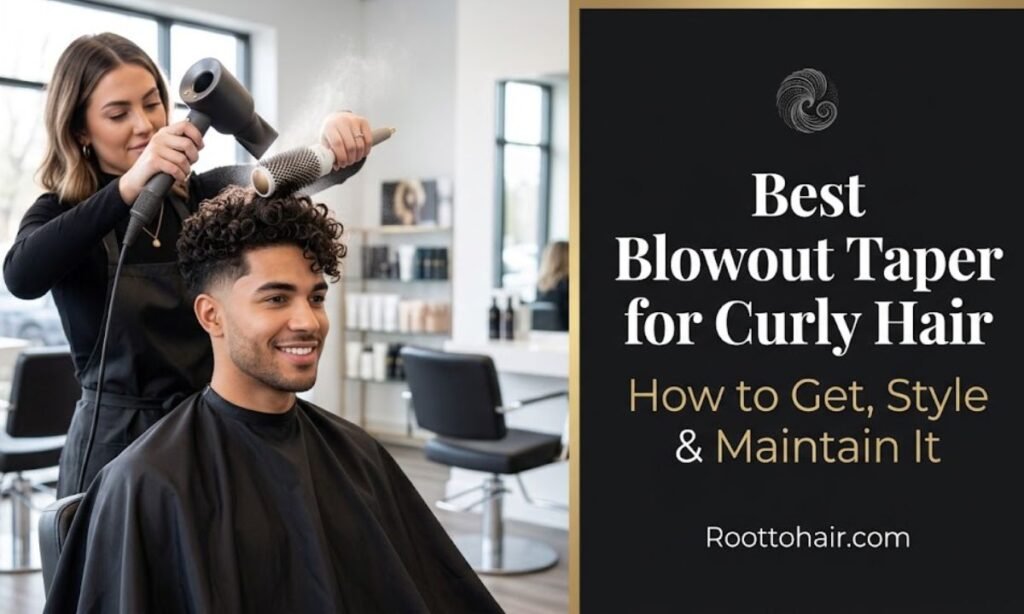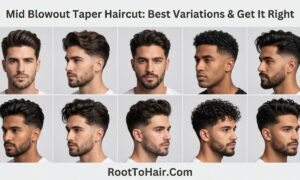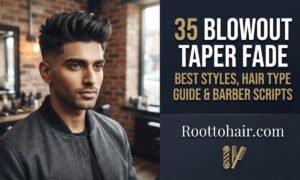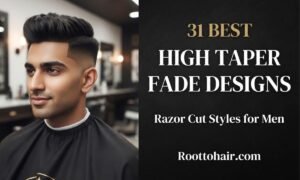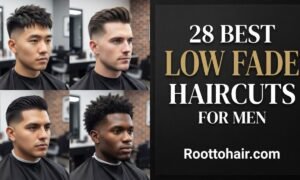
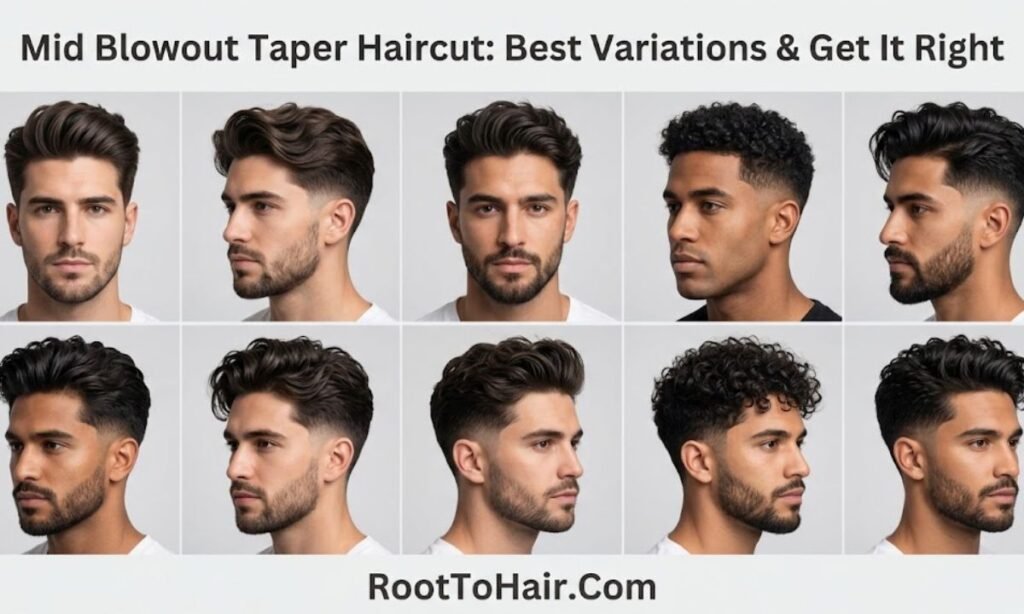
A mid blowout taper haircut keeps the hair on top long and full while the sides and back shorten gradually, starting around the middle of the head. The top is dried upward and back with a blow dryer, so it sits tall and textured. The result looks sharp and modern without needing a lot of product.
This cut works because it balances two things men usually want: volume on top and clean, tidy sides. Unlike a high taper, it does not cut in too close to the crown. Unlike a low taper, it gives a clearer contrast. That middle position is why so many barbers recommend it as a starting point.
In this guide you will learn where the taper starts, the best variations, how to ask your barber, which hair types it suits, how to style it at home and how it compares with low and high tapers. You will also find a few common mistakes to avoid, so you leave the chair happy.
What Is a Mid Blowout Taper?
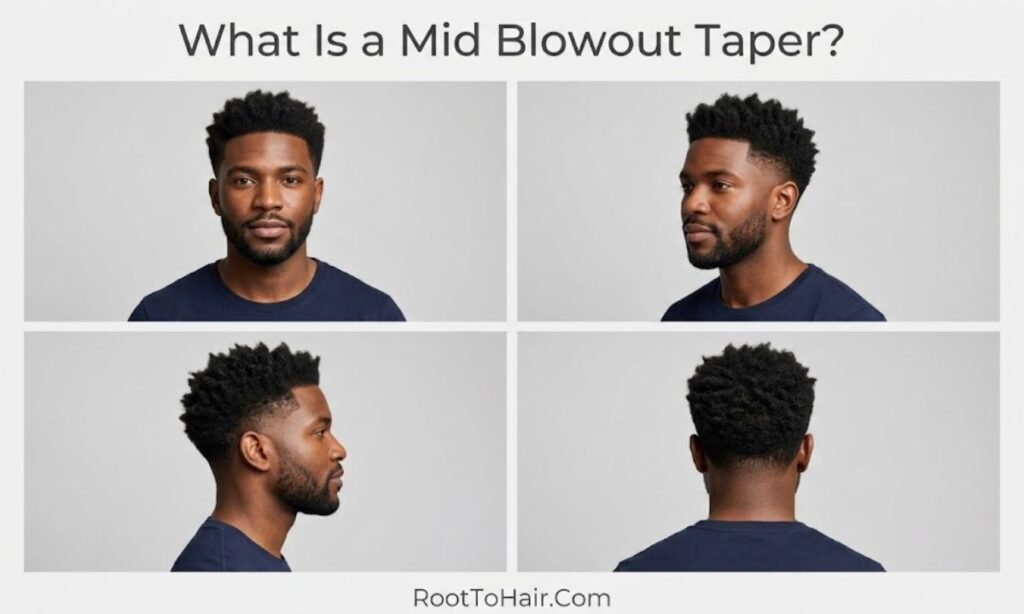
A mid blowout taper is a haircut where the sides and back shorten gradually from the middle of the head down to the neckline, while the top stays long enough to be blow-dried into height and texture. The taper is the blend. The blowout is the way the top is styled.
It is not a skin fade. A taper usually leaves a little length at the edges, so the cut looks softer and grows out more gently. If you want a skin-close finish, tell your barber, because that changes the look.
| Part of the Cut | What Happens | Why It Matters |
| Top | Left long, then blow-dried up and back | Creates volume and shape |
| Sides | Shorten gradually toward the ears | Keeps the outline neat |
| Back | Blends down to the neckline | Gives a clean finish |
| Edges | Natural or sharpened with an edge-up | Sets how crisp it looks |
Where Does the Taper Actually Start?
The taper starts around the middle of the sides, roughly in line with the temple or just above the ear. From there the hair gets shorter as it moves down toward the sideburns and the nape. That is what “mid” means.
Heads and hairlines differ, so the exact point moves a little from person to person. A good barber will adjust it to your head shape. Point to the spot with your finger when you ask, so there is no guessing.
What Does a Mid Blowout Taper Look Like?
From the front, you see a full, lifted top that looks slightly swept back or up. From the side, the hair thins out smoothly toward the ear, with no hard line. From the back, the neckline looks clean and the blend looks even.
The top is usually around two to four inches long, but it depends on your hair type and the style you want. Longer tops show more movement. Shorter tops look neater and are easier to style.
Style tip: The key to the look is contrast. Full on top, tidy on the sides. If the top looks flat, the haircut usually needs a bit more length or a better blow-dry.
What Are the Mid Blowout Taper Variations?
You can change the top, the part or the edges to get a very different result. The taper stays in the same place. Here are four popular versions.
| Variation | Top Style | Best For | Styling Level |
| Textured Fringe | Forward, broken-up front | Casual, relaxed look | Low |
| Middle Part | Center split, falling to both sides | Medium to long tops | Medium |
| Slicked-Back | Combed back, smooth finish | Neat, formal look | Medium |
| Burst Taper | Curved fade around the ear | Bold, modern edge | Medium |
Adding a Textured Fringe
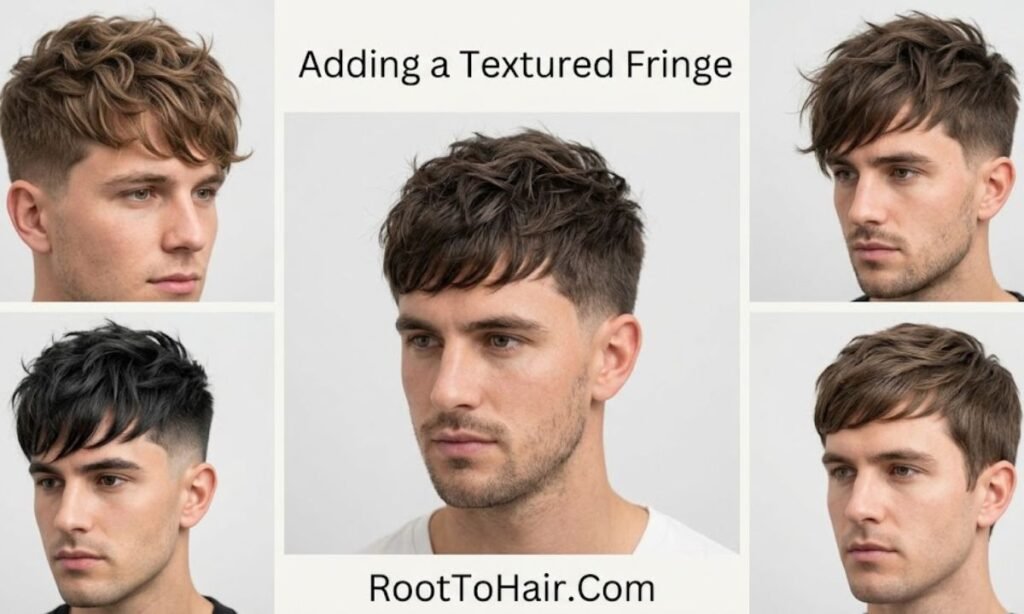
A textured fringe brings the front hair forward and breaks it up, so it looks lived-in instead of polished. The mid taper keeps the sides neat, so the fringe looks intentional. It suits hair that already has some body, like wavy or thick straight hair.
Tip: Ask your barber to point-cut the fringe for texture. Style it with a light paste and let a few pieces fall naturally.
Adding a Middle Part
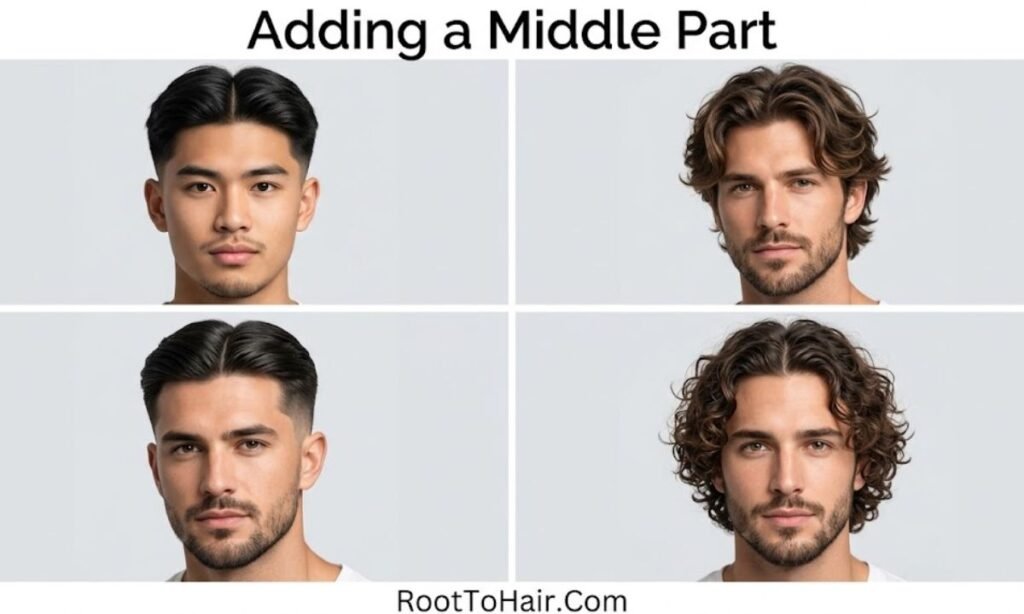
A middle part splits the top down the center, and the hair falls toward each side. With a mid taper, the sides stay clean while the top frames the face. It needs enough length to fall properly, usually at least three inches.
Care: Part the hair while damp, then dry it in place with the blow dryer so the split stays put.
The Slicked-Back Version
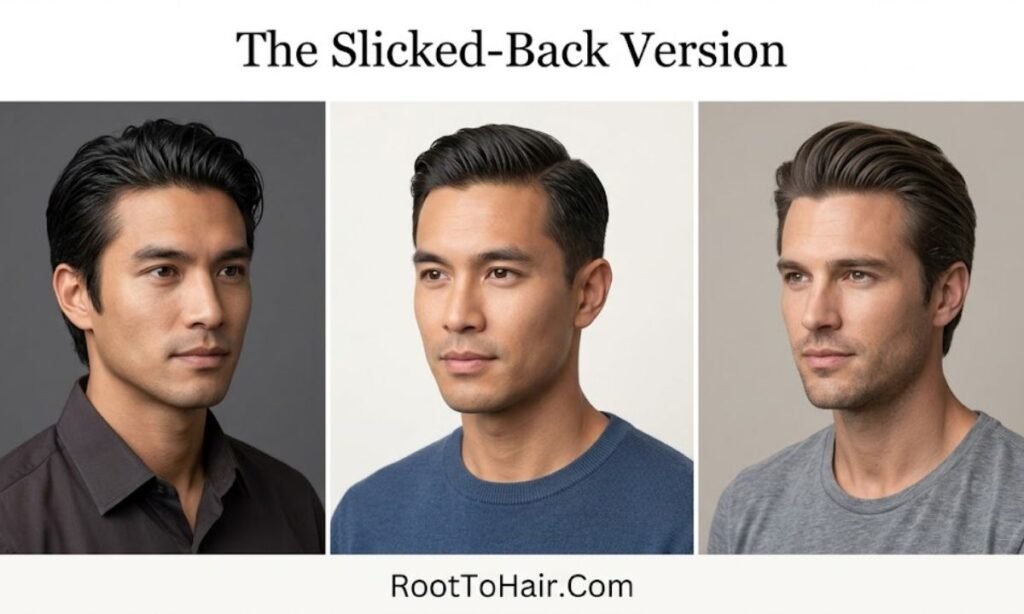
For this version, the top is combed back and held with a product. The blowout adds a little lift at the front, so it does not look flat. It is a good option for office settings and events.
Style tip: Use a medium-hold cream or pomade. Blow-dry the front up and back first, then comb it into place.
The Burst Taper Variation
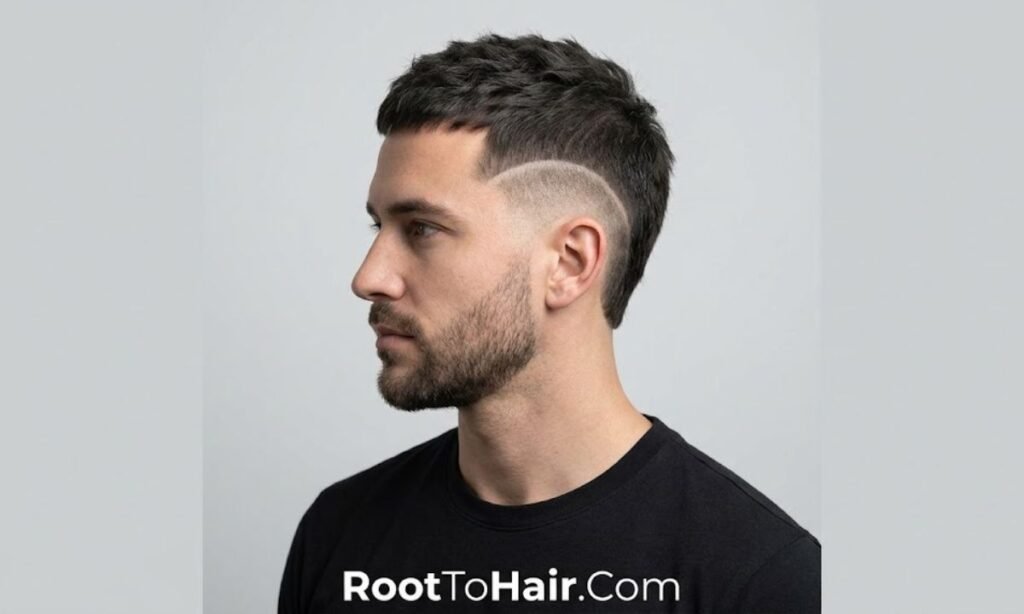
A burst taper curves around the ear instead of following a straight line. It leaves more length at the back and creates a half-circle shape. Paired with a blowout, it gives a bold, modern outline.
Care: The curve is the main feature, so it needs fresh touch-ups. Book your next visit a little earlier than usual.
How Do You Ask Your Barber for This Cut?
Describe what you want, point to where the taper should start and bring a photo. A simple version sounds like this:
“I would like a mid taper with a blowout on top. Start the taper around my temples, keep about three inches on top, and leave the edges natural.”
Words like “mid taper” can mean slightly different things to different barbers, so a photo helps. Say how you plan to style it too, since that affects how the top is cut.
| What to Say | Why It Helps |
| “Start the taper mid-head” | Sets the taper position |
| “Keep the length on top” | Protects the blowout volume |
| “Keep the edges natural” or “Add an edge-up” | Sets the finish |
| “I plan to blow-dry it” | Helps the barber cut for styling |
Natural Edge or Sharp Edge-Up?
A natural edge follows your hairline as it grows. It looks softer and needs less upkeep. A sharp edge-up cleans the line around the forehead, temples and neck. It looks crisper but grows out more visibly.
Choose natural if you want low maintenance. Choose sharp if you like a polished look and do not mind more frequent visits.
Consultation or Walk-In?
A short consultation is worth it if it is your first mid blowout taper, or if you have a tricky hairline, cowlick or thin patch. It gives the barber time to check your hair and plan the cut.
A walk-in works if you already have a barber who knows your hair, or if you are just repeating a cut you like. In both cases, a clear request and a photo save time.
Does This Haircut Work With Your Hair Type?
It can work with most hair types, but the top length and the styling method change. Use the table as a starting point, then adjust with your barber.
| Hair Type | What to Expect | Top Length Idea | Main Tip |
| Straight | Smooth, needs help for lift | 3–4 inches | Blow-dry with a volumizing product |
| Wavy | Natural texture and movement | 3–4 inches | Use a light cream or sea-salt spray |
| Curly | Full, bouncy top | 3–5 inches | Define curls, then diffuse |
| Coily | Dense, rounded shape | Varies with shrinkage | Moisturise, stretch if you want height |
| Fine or Thin | Can look flat | 2–3 inches | Use mousse and a light texture product |
Straight Hair

Straight hair holds a clean taper well, but it can fall flat on top. Blow-drying while lifting the roots helps. A matte texture product adds grip, so the style stays in place longer.
Wavy Hair

Wavy hair already has movement, so the blowout often feels easier. The taper keeps the sides from looking bulky. Avoid heavy gels, which can flatten the waves.
Curly Hair

Curly hair gives natural volume and works well with a mid taper. Keep enough length for the curls to form, because they spring up as they dry. A diffuser helps the curls keep their shape during the blowout.
Coily Hair
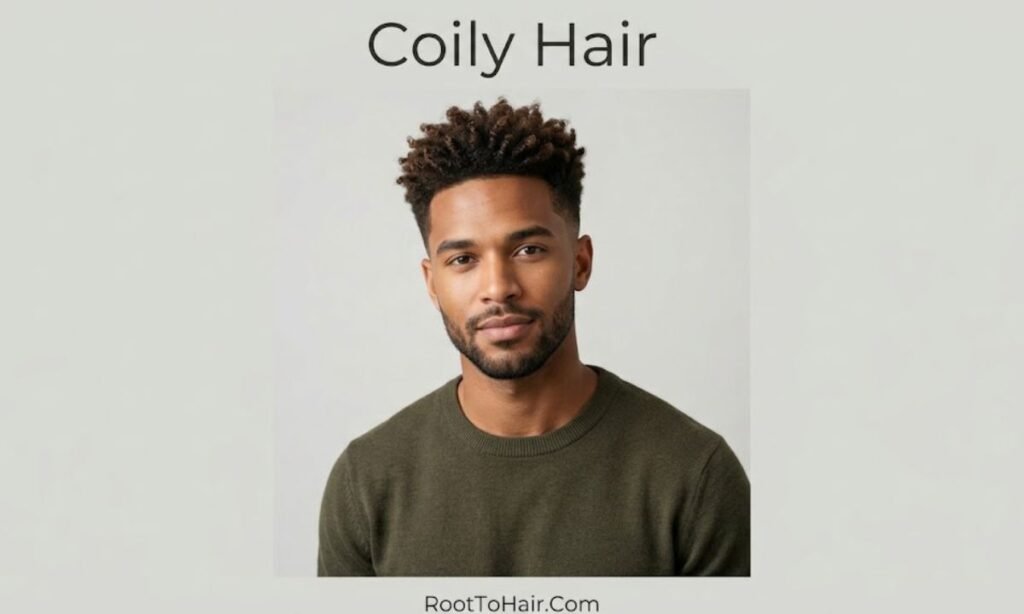
Coily hair can shrink a lot, so the top may look shorter than it is. Tell your barber how you plan to wear it, whether natural or stretched. A moisturiser and a light styler help keep the texture soft and defined.
Fine or Thin Hair
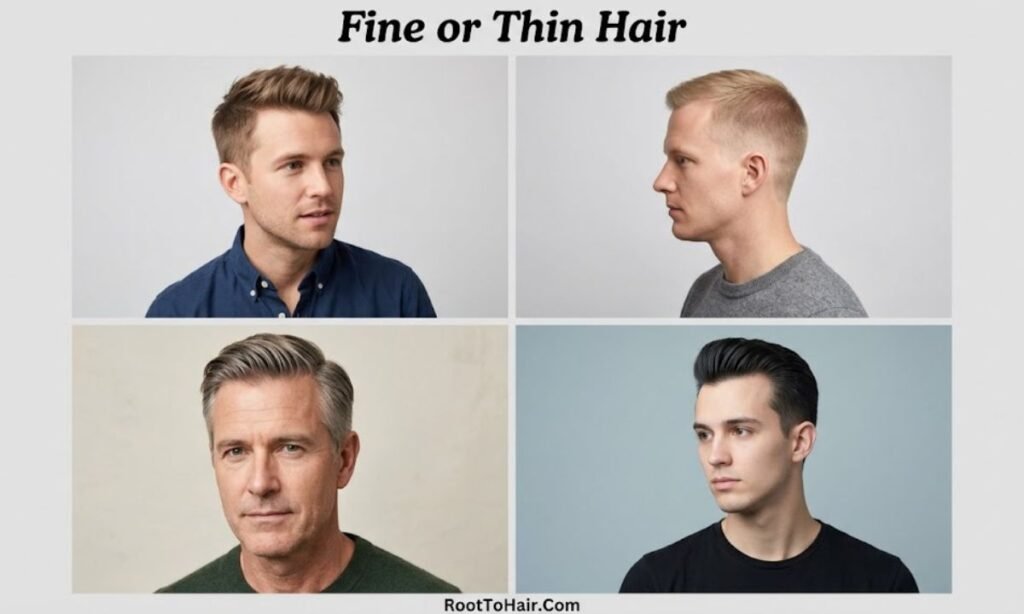
Fine hair can look flat or see-through if the top is too long. A slightly shorter top, a mousse and a quick blow-dry give lift without weight. The taper helps by making the top look fuller by contrast.
How to make a blowout taper look good?
Choose the right length and taper height for your face, dry the top with some lift, and keep the taper fresh with regular visits. The cut does most of the work, but the styling finishes it.
Choose the Right Length and Fade Height for Your Face Shape
Taper height and top length change how your face looks. Use these as general guides, not strict rules.
| Face Shape | Suggested Approach | Why It Can Work |
| Oval | Most versions work | Balanced proportions |
| Round | A little more height on top | Adds length to the face |
| Square | Softer texture on top | Softens strong angles |
| Oblong | Shorter, fuller top | Avoids adding extra length |
| Heart | Moderate length, natural edges | Balances a narrower chin |
Style the Top With Blow Dryer and Texture Product
- Start with towel-dried, slightly damp hair.
- Apply a small amount of mousse or sea-salt spray at the roots.
- Dry the front up and back, using your fingers or a brush to lift.
- Use medium heat and keep the dryer moving.
- Finish with a pea-sized amount of paste, clay or cream, and shape it.
Use a heat protectant if you blow-dry often, and finish with cooler air to help the shape set.
Keep the Taper Sharp With Regular Barber Visits
Tapers soften as hair grows. Most men refresh the cut every two to four weeks, but it depends on how fast your hair grows and how crisp you like the edges. Short visits just for the sides and neckline are common.
What is the 3:2:1 rule for haircuts?
The 3:2:1 rule is a popular barber guideline for balancing length across the head, with the top longest, the sides shorter, and the back and neckline shortest. Definitions vary between barbers, so treat it as a proportion guide, not a strict formula.
A common way to explain it: the top keeps about three parts of length, the sides about two, and the back about one. The idea is a smooth, natural step-down that looks balanced from every angle.
Breaking Down the 3:2:1 Ratio Step by Step

| Area | Relative Length | Result |
| Top | 3 | Full, styleable length |
| Sides | 2 | Gradual step-down |
| Back and Neckline | 1 | Clean, tidy finish |
- The barber decides how much length to keep on top.
- The sides are cut to about two-thirds of that, in a smooth blend.
- The back and neckline are shortened further for a clean finish.
The exact lengths depend on your hair type, head shape and the look you want.
Which Hairstyles Work Best With the 3:2:1 Rule
It suits styles with a clear top-to-side contrast, such as the mid blowout taper, quiffs, pompadours, textured crops and side parts. It is less useful for very uniform cuts, like a buzz cut, where all the hair is almost the same length.
How to Ask Your Barber for a 3:2:1 Cut
Because the rule is not standardised, describe the result instead: “Keep the top long, step the sides down gradually, and keep the back and neckline short and clean.” Then confirm the taper start point and top length.
Why does Gen Z like middle parts?
Gen Z likes middle parts because they feel retro, work on many face shapes and became popular on social media. The style is easy to wear, easy to copy and easy to change with a short trim.
The Return of 90s Fashion and Nostalgia
The 90s are back in fashion, and the middle part is a big piece of that look. Younger men see it as a throwback with a modern twist. Paired with a mid taper, it feels fresh instead of old-fashioned.
Middle Parts Flatter a Wide Range of Face Shapes
A middle part can frame the face evenly and soften a strong jaw. It often looks good on oval, square and heart-shaped faces. Very round faces may prefer a bit more height on top. Hairline, hair density and cowlicks also play a role.
How Social Media Made the Middle Part a Trend
Short videos and photo feeds made it easy to see and copy hairstyles. Creators posted before-and-after clips and styling tutorials, so the middle part spread quickly. Seeing the style in action made it feel achievable.
How Do You Style This Cut at Home?
Wash, towel-dry, add a light product, blow-dry the top for lift and finish with a small amount of styler. The whole routine takes about five to ten minutes once you get used to it.
- Wash and condition as usual.
- Towel-dry until the hair is damp.
- Apply mousse or sea-salt spray.
- Blow-dry the top up and back.
- Add a pea-sized amount of paste, clay or cream.
- Shape with your fingers, then finish with cool air if you like.
Match Your Product to Your Hair Type
| Hair Type | Product Idea | Why |
| Straight | Matte clay or paste | Adds grip and texture |
| Wavy | Light cream or sea-salt spray | Keeps movement without weight |
| Curly | Curl cream plus light gel | Defines curls and controls frizz |
| Coily | Moisturiser plus light styler | Keeps hair soft and defined |
| Fine or Thin | Mousse plus light texture powder | Adds lift without heaviness |
Start with a small amount. You can always add more, but it is harder to remove.
How Long Between Touch-Ups?
Many men visit every two to four weeks, and some wait up to six if they like a softer, grown-out look. The sides, neckline and edges tend to show growth first. A sharper or burst taper usually needs more frequent visits.
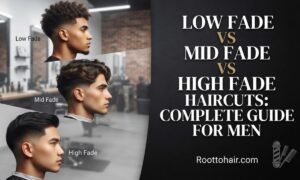
Mid vs. Low vs. High Taper: Which Wins?
No taper “wins” for everyone. The best option depends on how much contrast you want, your face shape and how much upkeep you accept.
| Feature | Low Taper | Mid Taper | High Taper |
| Starting Point | Near ears and neckline | Around the temples | High on the sides |
| Contrast | Soft | Balanced | Strong |
| Look | Subtle, classic | Clean, modern | Bold, sharp |
| Blowout Pairing | Good for relaxed styles | Great all-rounder | Dramatic shape |
| Upkeep | Lower | Medium | Higher |
A mid taper is often the safest choice if you are unsure. It gives noticeable contrast without being extreme. Choose low for a softer look, or high for a bolder, more defined one.
Common Mid Blowout Taper Mistakes to Avoid
- Cutting the top too short: A blowout needs length to lift. Without it, there is little to style.
- Starting the taper too high: It can turn into a high taper and change the look.
- Skipping the consultation: A quick chat avoids surprises, especially with cowlicks or thin spots.
- Using too much product: Heavy product weighs the top down and kills the volume.
- Blow-drying bone-dry with high heat: It can leave hair rough. Use a heat protectant and moderate heat.
- Ignoring your hair type: A method that suits straight hair may not suit coily hair.
- Waiting too long between visits: The taper softens and the shape loses its sharpness.
Frequently Asked Questions
What is a mid blowout taper?
A mid blowout taper is a haircut with a gradual taper starting around the middle of the head and a longer top that is blow-dried for volume. The sides stay neat, while the top has lift and texture. It sits between a low and a high taper in contrast.
How long should my hair be for a mid blowout taper?
Most men need at least two to three inches on top for the blowout to work. Three to four inches gives more movement. Curly and coily hair shrinks as it dries, so you may need a little extra length. Your barber can judge from your hair type.
Is a mid blowout taper good for thin hair?
It can work, since the taper makes the top look fuller by contrast. Keep the top a bit shorter, around two to three inches, and use a light mousse or texture powder. Avoid heavy products, which can flatten fine hair and make it look thinner.
How often should I get a touch-up?
Many men go every two to four weeks to keep the taper crisp. If you prefer a softer, grown-out look, you can wait longer. The sides and neckline usually show growth first, and sharper edges or a burst taper may need more frequent visits.
Can I get this haircut with curly or coily hair?
Yes. Curly and coily hair often gives great natural volume for this cut. Tell your barber how you plan to wear it, whether natural, defined or stretched. Keep enough length on top, because curls and coils shrink as they dry.
What product is best for styling a blowout taper?
It depends on your hair type. Straight hair often likes matte clay or paste, wavy hair works well with a light cream, and curly or coily hair usually needs a curl cream or moisturiser. Fine hair does better with mousse. Start with a small amount.
Is a blowout taper professional enough for work?
Yes, in most workplaces. The tidy sides and controlled top look polished, especially in a slicked-back or side-swept version. If your office is more formal, choose a neater finish and keep the edges natural or lightly sharpened.
What is the difference between a mid taper and a mid fade?
A taper usually keeps some length at the edges, so it looks softer. A fade often goes shorter, sometimes to the skin, which gives more contrast. Both can start at mid-height, so tell your barber how short you want the edges.
Conclusions
The mid blowout taper haircut is popular because it balances volume and neatness. The taper starts around the temples, the top stays long enough to style, and a few small choices, like the part, the fringe or a burst edge, change the whole look. It can work with straight, wavy, curly, coily and fine hair when the length and products match your texture.
To get it right, be clear with your barber about where the taper starts, how much length to keep and how you plan to style it. Then blow-dry the top for lift, use a light product and refresh the edges every few weeks. With those habits, your mid blowout taper haircut will look sharp and stay easy to manage.