
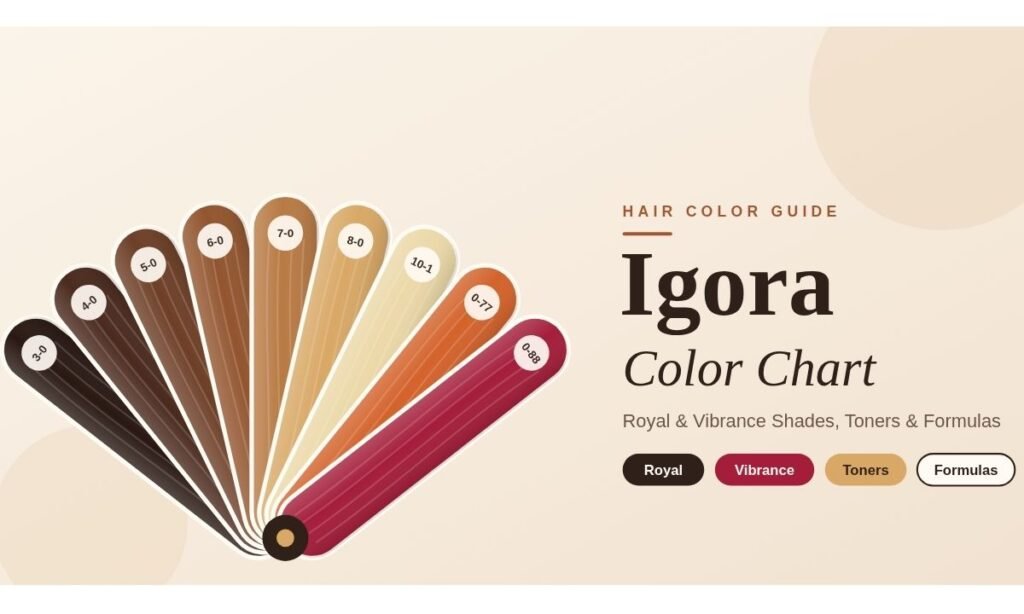
The Igora color chart shows every Schwarzkopf Professional shade in one place.
It covers Royal, Vibrance, and BlondMe, so you can compare permanent, demi-permanent, and lightening options.
Start here to find the right line before you pick a shade.
Each code on the Igora color chart gives you a level and a tone direction.
The level tells you how light or dark the shade is, and the tone shows its color.
Once you can read these codes, choosing a shade gets much easier.
This guide also covers Igora toners and simple formula ideas for blonde, brunette, and warm-toned hair.
Use the Igora color chart as your starting point, then match it to your real hair level.
Always do a strand test first, because your past color changes the final result.
Choose the line to see its full chart
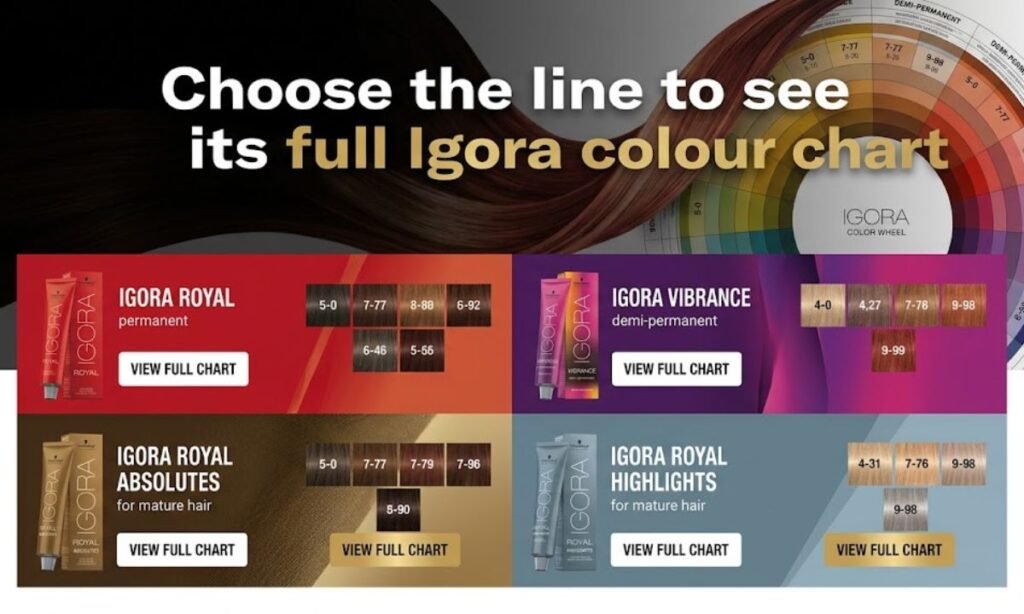
Each Igora line has its own Igora color chart, so start by picking the right line. Royal is permanent, Vibrance is demi-permanent, and BlondMe is for lightening and toning.
The line you choose decides how much lift, coverage, and shine you get. Pick your goal first, then open that line’s chart.
This saves time and stops you from comparing shades that behave differently.
Igora Royal Permanent Color Chart
The Igora color chart for Royal lists permanent shades from very dark to very light. It also includes natural, ash, beige, gold, chocolate, copper, and red tones.
| Chart Section | What It Shows | Best For |
| Natural and -00 series | Neutral shades with strong coverage | Gray coverage |
| Fashion tones | Copper, red, violet, and gold directions | Bold color changes |
| Mixtones (0- shades) | Concentrated tone boosters | Adjusting a formula |
Pro Tip: Find your shade by level first, then check the tone number. Skipping the level is the most common way to end up too dark.
Igora Vibrance Demi-Permanent Chart
Vibrance is a gentler option, and its section of the Igora color chart focuses on tone and shine. It deposits color without lifting natural hair.
| Feature | Vibrance Detail | Why It Matters |
| Lift | None, deposit only | Cannot lighten hair |
| Result | Soft, glossy tone | Refreshes faded color |
| Commitment | Fades gradually | Easy to change later |
Pro Tip: Use Vibrance when you want a trial run. Because it fades, it is a low-risk way to test a shade from the Igora color chart.
Igora BlondMe and Lightening Shades
BlondMe sits beside the main Igora color chart as the blonding line. It includes lighteners and toning options for reaching and refining blonde.
| Product Type | Purpose | Typical Use |
| Lightener | Lifts pigment | Highlights and full blonde |
| Toning shades | Neutralizes unwanted warmth | After lightening |
| Pastel shades | Soft, sheer tints | Very light blonde bases |
Pro Tip: Lighten first, then tone on hair that is even in color. Toner cannot fix patchy, uneven lift.
Found the shade on this chart? The app turns it into a formula.
Once you spot a shade on the Igora color chart, the next step is a formula. A formula tells you how much color and developer to mix.
The app takes the shade code and works out the mix for you. That removes guesswork and keeps results consistent.
You still need to check your hair level and past color before you apply.
How the Igora Formula Is Built
An Igora color chart shade becomes a formula when you pair it with a developer in the right ratio. Standard Royal shades are usually mixed one part color to one part developer.
| Formula Part | Role | Note |
| Color shade | Sets level and tone | Taken from the chart |
| Developer | Activates the color | Strength changes lift |
| Mixing ratio | Controls consistency | Follow the product guide |
Pro Tip: Weigh your product on a scale instead of estimating. Even small differences in grams can shift the final tone.
Shade Selection and Developer Choice
Choosing from the Igora color chart is only half the job, because developer strength changes the outcome. Lower volumes deposit more, while higher volumes lift more.
| Developer Goal | Strength Direction | Result |
| Deposit or tone | Lower strength | Less lift, more color |
| Gray coverage | Low to medium | Steady coverage |
| Lightening a level or more | Higher strength | More lift, more risk |
Pro Tip: Pick the lowest developer that still reaches your target. That keeps hair stronger and protects the tone you chose from the Igora color chart.
Turning a Color Chart Shade Into a Salon Formula
To turn an Igora color chart shade into a salon formula, match the shade level to your goal level. Then add a tone shade or mix tone only if the base needs correcting.
| Starting Situation | Formula Adjustment | Reason |
| Even natural base | Use the chart shade alone | Simple and predictable |
| Warm or brassy base | Add an ash or violet direction | Balances residual warmth |
| Gray hair present | Blend in a natural series shade | Improves coverage |
Pro Tip: Write down every formula you mix. A saved record lets you repeat or tweak the exact shade next time.
Igora numbering system
The Igora numbering system is the key to reading any Igora color chart. Each shade uses a level number, then a dash, then one or more tone numbers.
The level says how light or dark the shade is. The tone numbers show its color direction.
Learn this once and every shade code will make sense.
What the First Number Means
On the Igora color chart, the first number is the level. It runs from dark to light, so a low number is deep and a high number is very blonde.
| Level Range | General Look | Example Use |
| 1–3 | Black to dark brown | Deep, rich color |
| 4–6 | Medium brown to dark blonde | Everyday brunette and bronde |
| 7–10 | Medium blonde to lightest blonde | Blonde and pastel results |
Pro Tip: Level your hair honestly in natural light. Judging it under warm bulbs can make you pick a shade that is too light.
Understanding Tone Numbers and Color Direction
The numbers after the dash on the Igora color chart show the tone. Common directions include cendré (ash), beige, gold, chocolate, copper, and red.
| Tone Number | Color Direction | Effect |
| 1 | Cendré (ash) | Cools warmth |
| 4 | Beige | Soft, neutral blonde |
| 5 | Gold | Warm and glowing |
| 6 | Chocolate | Rich brown depth |
| 7 | Copper | Orange-red warmth |
| 8 | Red | Strong red tones |
Pro Tip: Choose the tone based on the warmth already in your hair. Ash tones work best against yellow or orange, not against a cool base.
How Igora Shade Codes Work Together
Reading a full code on the Igora color chart means combining the level with each tone number in order. The first tone is dominant, and the second is supporting.
| Code Part | Meaning | Example Reading |
| First number | Level | 6 means dark blonde |
| First tone | Main tone | Sets the primary color |
| Second tone | Supporting tone | Adds nuance |
| Doubled tone | Stronger intensity | More vivid result |
Pro Tip: When a code has two tone numbers, look at how strong each is. Doubled digits usually mean a more intense tone than a single one.
Need this shade in another brand?
Sometimes you love a shade on the Igora color chart but use a different brand. You can convert it by matching level and tone instead of the name.
Most brands use similar systems, but their numbers do not always match. Treat any conversion as a close guide, not a copy.
A strand test will confirm the result.
How to Find a Similar Shade in Another Brand
To translate an Igora color chart shade, first note its level and main tone. Then look for the same level and tone family in the other brand’s chart.
| Step | What to Check | Why |
| Identify the level | Depth from dark to light | Prevents a wrong depth |
| Identify the tone | Ash, beige, gold, and so on | Keeps the color direction |
| Compare swatches | Look at the finished swatch | Names can be misleading |
Pro Tip: Compare swatches under the same lighting. Photos on screens can shift a shade from the Igora color chart toward warm or cool.
Comparing Igora Shades by Level and Tone
Lining up the Igora color chart with another chart works best when you compare level and tone together. A matching number alone does not guarantee a matching color.
| Comparison Point | Igora Approach | What to Watch |
| Level | Numeric scale | Other brands may run slightly lighter |
| Tone | Numbers after the dash | Some brands use letters |
| Intensity | Doubled digits | May be labeled “extra” elsewhere |
Pro Tip: Keep the level fixed and adjust only the tone if the match looks off. Changing both at once makes the difference hard to spot.
Why Exact Brand-to-Brand Color Matches Can Differ
Even a close pick from the Igora color chart can look different in another brand. Pigment blends, base tones, and developer choices all vary by manufacturer.
| Common Mistake | Consequence | Solution |
| Matching by name only | Unexpected warmth or coolness | Match level and tone |
| Ignoring the developer | Different lift and depth | Use a similar strength |
| Skipping a test | Surprise final shade | Do a strand test |
Pro Tip: Save a photo of a completed strand test. It becomes your reference when you switch brands and need to compare results.
Igora Color Chart
The full Igora color chart groups shades into families by tone. Knowing the family helps you pick faster than reading every code.
Royal and Vibrance both follow this logic, though their results differ. Warm, cool, and neutral families give you a simple way to narrow choices.
Use the families to shortlist, then check the exact code.
Igora Royal Shade Families Explained
Royal shades on the Igora color chart fall into families such as natural, ash, beige, gold, chocolate, copper, and red. Each family suits a different look and level of warmth.
| Family | Look | Best Match |
| Natural | True-to-base brown or blonde | Gray coverage |
| Ash and cendré | Cool, smoky | Brassy hair |
| Beige | Soft neutral | Balanced blondes |
| Copper and red | Bold, warm | Statement color |
Pro Tip: If you are between two families, pick the more neutral one. You can always add warmth later, but removing it is harder.
Igora Vibrance Shade Families Explained
Vibrance on the Igora color chart uses similar families, but the finish is softer and glossier. It suits refreshing tone rather than making a big change.
| Family | Finish | Best Use |
| Natural and neutral | Subtle depth | Enhancing base color |
| Ash and beige | Smooth, cool-neutral | Toning lighter hair |
| Warm and red | Glossy warmth | Adding richness |
Pro Tip: Choose Vibrance in a tone close to your current color. Its deposit-only formula shows best when the change is small.
Warm, Cool, and Neutral Igora Shades
Sorting the Igora color chart by temperature is a quick shortcut. Warm shades add gold, copper, or red, while cool shades lean ash or violet.
| Temperature | Tone Directions | Undertone It Flatters |
| Warm | Gold, copper, red | Warm skin undertones |
| Cool | Ash, cendré, violet | Cool skin undertones |
| Neutral | Beige, natural | Neutral undertones |
Pro Tip: Check the veins on your wrist in daylight. Greenish leans warm, bluish leans cool, and a mix suggests neutral.
How to Read the Igora Color Chart Like a Professional

Stylists read the Igora color chart by starting with the hair, not the swatch. They check level, then tone, then match the shade to that base.
This order prevents most color mistakes. Follow the same three steps at home.
It keeps your choice realistic.
Start With the Hair Level
Reading the Igora color chart begins with your current hair level. Compare your roots and lengths to a level guide in natural light.
| Hair Area | What to Check | Why |
| Roots | Natural level | Sets your true starting point |
| Mid-lengths | Previous color depth | May be darker than roots |
| Ends | Porosity and fading | Affects how color absorbs |
Pro Tip: Judge each section separately. Roots, lengths, and ends often sit at different levels and need different handling.
Identify the Dominant Tone
After level, look at the underlying tone before using the Igora color chart. Hair often shows yellow, orange, or red warmth that will affect your result.
| Visible Tone | How to Identify | What It Means |
| Yellow | Pale, buttery look | Light blonde base |
| Orange | Copper glow in sunlight | Mid-level warmth |
| Red | Deep rust cast | Darker base warmth |
Pro Tip: Look at your hair next to a white sheet of paper. The paper makes the true undertone easier to see.
Match the Chart Shade to the Starting Base
With level and tone known, choose the Igora color chart shade that fits both. The goal is a shade that works with your base instead of fighting it.
| Situation | Match Approach | Result |
| Base close to target | Use chart shade directly | Predictable |
| Base warmer than target | Add a cooler tone | Balanced color |
| Base darker than target | Lighten before coloring | Reaches lighter levels |
Pro Tip: Aim for a shade within two or three levels of your base. Larger jumps usually need lightening first.
Igora Royal vs Vibrance: What’s the Difference?
Both lines appear on the Igora color chart, but they do different jobs. Royal is permanent and offers coverage, while Vibrance is a softer, deposit-only option.
Choosing between them depends on how long you want the color to last. It also depends on whether you need gray coverage.
Here is how they compare.
Igora Royal Permanent Color
Royal is the main permanent line on the Igora color chart. It delivers strong, long-lasting color and reliable coverage of gray hair.
| Feature | Royal Detail | Benefit |
| Permanence | Long-lasting | Less frequent touch-ups |
| Coverage | Strong on gray | Even, solid color |
| Range | Wide levels and tones | Many options |
Pro Tip: Pick Royal when you need firm coverage or a bigger change. Plan root touch-ups every few weeks to keep color even.
Igora Vibrance Demi-Permanent Color
Vibrance on the Igora color chart is a demi-permanent line with a softer finish. It adds tone and shine without lifting your natural color.
| Feature | Vibrance Detail | Benefit |
| Permanence | Fades over time | Easy to change |
| Lift | None | Gentler on hair |
| Finish | Glossy | Shine and tone refresh |
Pro Tip: Use Vibrance to gloss over faded color between full services. It revives tone without a heavy commitment.
Which Igora Line Fits Different Color Goals?
The right line on the Igora color chart depends on your goal. Match the line to what you want the color to do.
| Goal | Best Line | Reason |
| Cover gray hair | Royal | Stronger coverage |
| Refresh or gloss | Vibrance | Soft deposit |
| Go much lighter | BlondMe first | Lifts pigment |
Pro Tip: Write your goal in one sentence before you shop. A clear goal points you to the correct line quickly.
How to Choose the Right Igora Shade for Your Hair
Choosing from the Igora color chart works best when you consider your hair history and your skin. Natural hair, previously colored hair, and skin undertone each change the ideal pick.
Think about how much change you want and how much upkeep you can handle. A shade that flatters your skin will look richer.
These steps make the choice easier.
Choosing a Shade for Natural Hair
Natural hair gives you a clean canvas for the Igora color chart. Pick a shade near your natural level for the most predictable and healthy result.
| Natural Level | Suggested Direction | Note |
| Dark brown | Chocolate or natural tones | Rich, low upkeep |
| Medium brown | Beige or gold tones | Soft dimension |
| Light brown | Ash or beige tones | Cool, neutral results |
Pro Tip: Choose a shade one or two levels lighter than your natural color for a subtle change. It grows out gracefully.
Selecting a Shade for Previously Colored Hair
Previously colored hair changes how the Igora color chart shade will look. Old dye, fading, and uneven porosity can push results warmer, darker, or patchy.
| Common Mistake | Consequence | Solution |
| Coloring over darker dye | Result stays dark | Lighten or choose a deeper shade |
| Ignoring faded ends | Uneven tone | Match ends separately |
| Skipping a strand test | Unexpected shade | Test before applying |
Pro Tip: Plan for your existing dye and not just your natural color. Color remover or lightener may be needed first.
Matching Igora Shades to Skin Undertones
Your skin undertone helps decide which Igora color chart tones look best on you. Warm, cool, and neutral undertones each suit different color directions.
| Skin Tone | Flattering Colors | Colors to Avoid |
| Warm undertone | Gold, copper, warm brown | Very ash shades |
| Cool undertone | Ash, cendré, violet-based | Strong gold or orange |
| Neutral undertone | Beige, natural, soft brown | Extreme warm or cool |
Pro Tip: Hold a swatch near your face in daylight. If your skin looks tired or gray, try a tone from the opposite temperature.
Igora Toner Shades and When to Use Them
Toners on the Igora color chart refine color after lightening or on faded blonde. They cancel unwanted warmth and add a cleaner finish.
Each toner works against a specific tone. Knowing which to use prevents dull or overly cool results.
Here is how the main options work.
Choosing Violet Toners for Yellow Tones
Violet sits opposite yellow, so a violet toner from the Igora color chart cancels yellow. It is ideal for pale, buttery blonde that needs to look cleaner.
| Problem | Toner Choice | Result |
| Yellow blonde | Violet-based toner | Neutral, cleaner blonde |
| Very pale yellow | Light violet or pastel | Soft, cool finish |
| Mild brass | Gentle violet toning | Even brightness |
Pro Tip: Watch the toner closely as it processes. Violet works fast on pale hair and can turn it slightly lilac if left too long.
Using Ash Toners to Reduce Warmth
Ash toners on the Igora color chart help calm orange and gold warmth. They lean cool, so they suit mid-level, brassy hair.
| Problem | Toner Choice | Result |
| Orange or brassy hair | Ash or cendré | Cooler, smoother tone |
| Golden blonde | Light ash | Balanced neutral |
| Very warm base | Ash plus a base tone | Avoids a gray look |
Pro Tip: Do not use ash alone on very orange hair. It can turn dull or muddy, so pair it with a matching base tone.
Beige and Neutral Toners for Soft Blonde Results
Beige and neutral toners from the Igora color chart give a softer, more natural blonde. They balance warmth and coolness without a strong cast.
| Desired Look | Toner Choice | Result |
| Soft natural blonde | Beige | Warm-neutral glow |
| Balanced blonde | Neutral | Even, subtle tone |
| Sandy blonde | Beige with light ash | Cool-leaning softness |
Pro Tip: Choose beige if ash looks too flat on you. It keeps blonde dimensional and flattering on many skin tones.
Igora Color Formulas for Common Hair Color Goals
The Igora color chart becomes most useful when you turn it into a formula for your goal. Blonde, brunette, and warm-tone correction each need a different approach.
Treat the ideas below as starting points and adjust to your hair. Always test on a small strand first.
A little planning prevents most surprises.
Formula Ideas for Blonde Hair
For blondes, the Igora color chart pairs a light level with a tone that fits your base. Often the formula is a toner or a high-level shade with a mixtone.
| Blonde Goal | Formula Idea | Notes |
| Neutral blonde | Level 9 beige shade | Balanced and natural |
| Cool blonde | Light ash or pastel shade | Best after full lift |
| Warm blonde | Light gold shade | Softer, sunnier look |
Pro Tip: Lift evenly before toning. A smooth, pale base is what lets the chosen blonde shade show correctly.
Formulas for Brunette and Brown Hair
Brunette formulas on the Igora color chart focus on depth and shine. Chocolate, beige, and natural tones create soft, dimensional brown.
| Brunette Goal | Formula Idea | Notes |
| Rich chocolate | Level 4 or 5 chocolate shade | Deep and glossy |
| Cool brown | Brown with ash | Reduces red |
| Soft bronde | Level 6 beige or chocolate | Blends brown and blonde |
Pro Tip: Add a small amount of a warm tone to brown formulas for shine. It stops darker shades from looking flat.
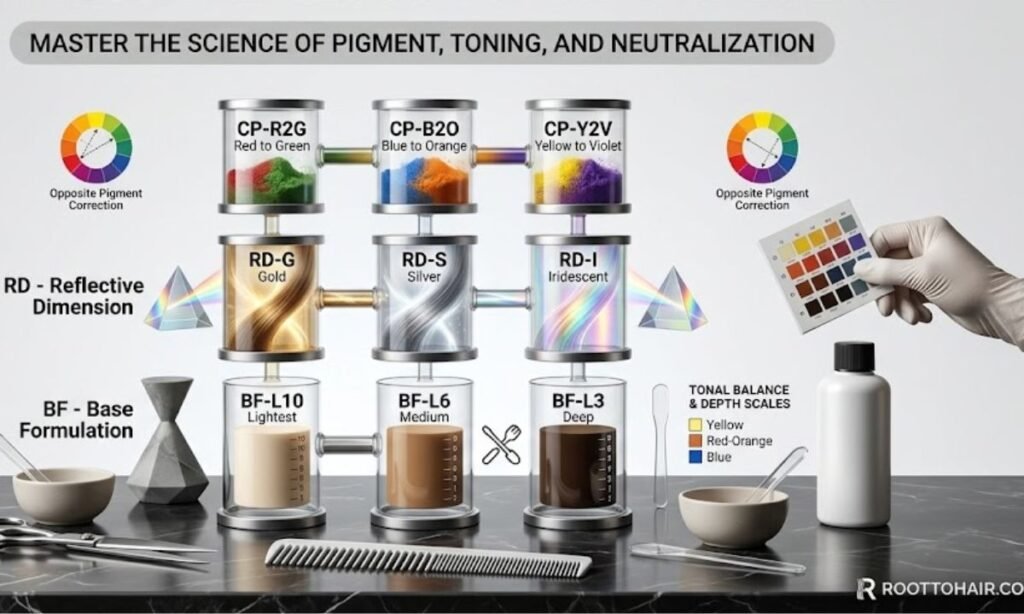
Formulas for Neutralizing Unwanted Warm Tones
To neutralize warmth, use the Igora color chart to pick the opposite tone. Blue-based ash counters orange, and violet counters yellow.
| Unwanted Tone | Neutralizing Tone | Result |
| Yellow | Violet | Cleaner blonde |
| Orange | Blue-based ash | Cooler mid-tone |
| Red | Green-based matt | Less red cast |
Pro Tip: Check the level before you neutralize. If hair is too dark, toner will not shift the warmth much and lifting is needed first.
Frequently Asked Questions
What is the Igora color chart used for?
It helps you pick the right level, tone, and line before you color.
What is the difference between Igora Royal and Vibrance?
Royal is permanent with strong coverage, while Vibrance is a softer demi-permanent option.
How do I read an Igora shade number?
The first number is the level, and the numbers after the dash are the tones.
Which Igora toner removes yellow tones?
A violet-based toner works best against yellow.
Can I convert an Igora color chart shade to another brand?
Yes, match the level and tone, but always do a strand test.
Conclusion
The Igora color chart makes shade selection simpler once you know how it works. Start with the line, then read the level and the tone numbers.
Royal gives permanent coverage, Vibrance gives soft gloss, and BlondMe handles lighting. Toners then refine the final tone.
Together, these tools let you plan color with more confidence.
Use the Igora color chart alongside your real hair level, past color, and skin undertone. Match the shade to your base and choose the lowest developer that works.
Always do a strand test before the full application. A small test saves time and protects your hair.
That simple habit turns any Igora color chart shade into a result you will like.





































3 thoughts on “Igora Color Chart: Royal & Vibrancy Shades, Toners & Formulas”